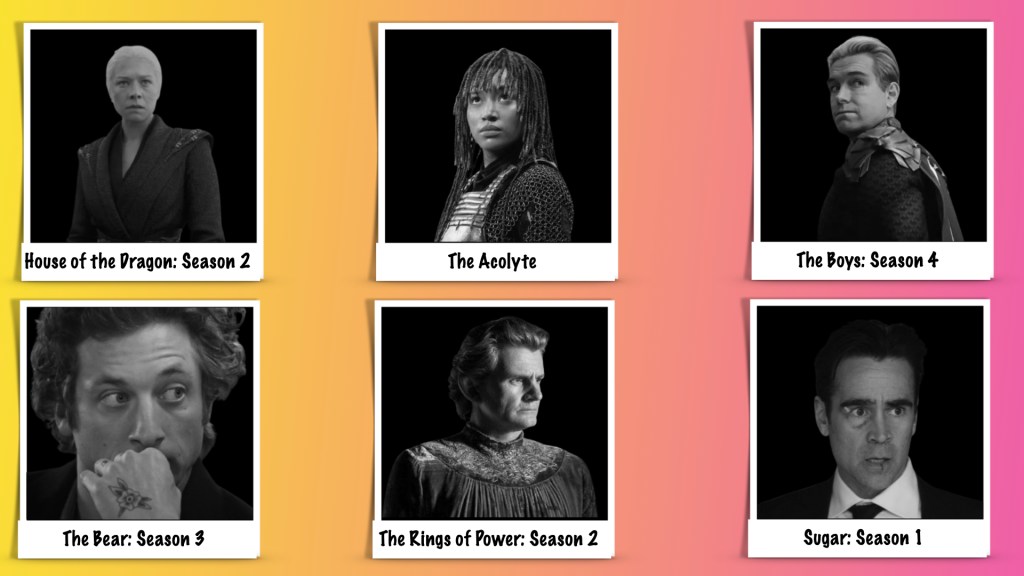
(L-R, top row) HOUSE OF THE DRAGON (Max); THE ACOLYTE (Disney+); THE BOYS (Prime Video). (L-R, bottom row) THE BEAR (Disney+/Hulu); THE RINGS OF POWER (Prime Video); SUGAR (Apple TV+).
In the final of the three previously announced ‘2024 TV Highlights Thus Far’ review compilation articles, I take a look at some of the most high-profile series of the year, including two dueling fantasy shows, but also an underseen Apple TV+ gem with a plot development you have to see to believe.
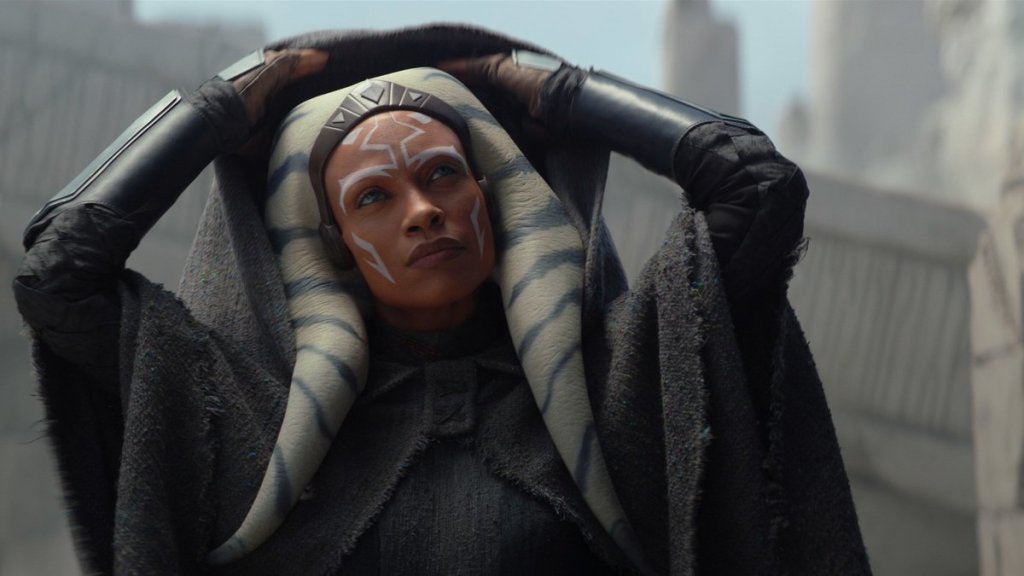
Rosario Dawson as Ahsoka Tano in AHSOKA — PHOTO: Disney+ / Lucasfilm.
Series created by Dave Filoni — Episodes directed by Dave Filoni, Steph Green, Peter Ramsey, Jennifer Getzinger, Geeta Vasant Patel, and Rick Famuyiwa.
Ever since the now-Disney-owned Star Wars franchise ended its sequel film trilogy to mixed reception in 2019, the stories about a galaxy of heroes set a long time ago have had its live-action portion relegated to streaming television, even though its films once revolutionized and forever changed Hollywood. On the one hand, it makes sense to try to grow the franchise on the small screen and win over new audiences that may one day follow the lasersword-wielding heroes back to the big screen. However, what I find to currently be the case is that rather than telling bold new stories to gain a new audience on the small screen, what the head honchos at Lucasfilm are doing is, instead, servicing die-hard fans. Now, this isn’t necessarily a bad thing if the shows are executed at a relatively high level, but, more often than not, what we have been getting are these almost vapid easter-egg-filled series that either don’t have enough meat on the bone to justify a full series (and thus ought to have been a film instead) or a series that doesn’t have enough episodes to have complete and rich story and character arcs.
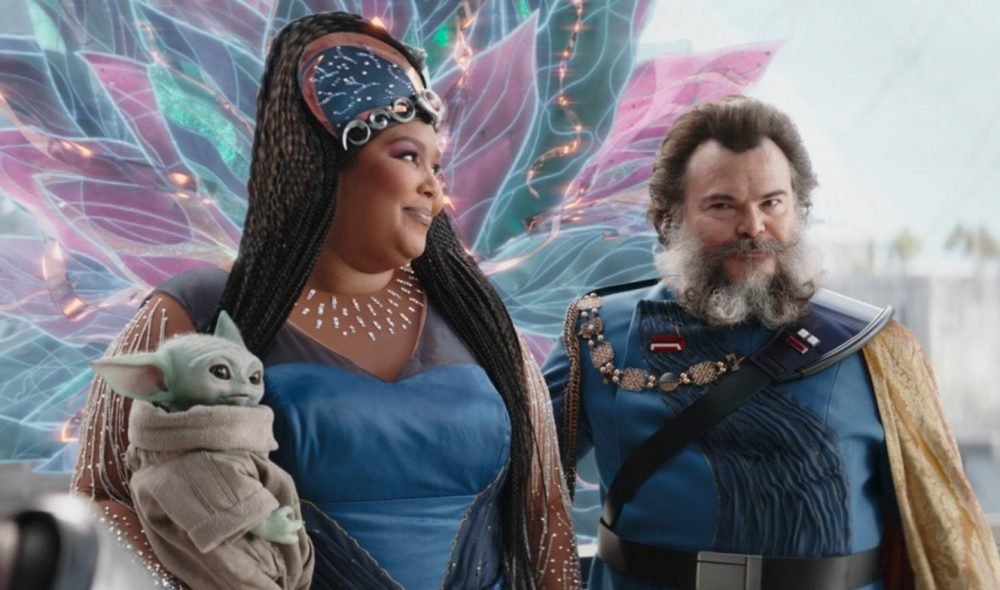
Lizzo and Jack Black in THE MANDALORIAN in THE MANDALORIAN, exclusively on Disney+. — PHOTO: Lucasfilm / Disney+.
Series Created by Jon Favreau — All Episodes Available on Disney+ Now.
To a certain extent, The Mandalorian was once the kind of show that united the Star Wars fanbase after the divisive sequel trilogy. However, the show that spun off from the excellent second season of the show — The Book of Boba Fett — was not only uneven, it also undid the very end of The Mandalorian season two through these episodes that were always more episodes of The Mandalorian than The Book of Boba Fett, even though they were sandwiched into the latter show. Since then, live-action Star Wars on Disney+ has featured the very satisfying but safe nostalgic Obi-Wan Kenobi show, as well as the outstanding course-correcting dark and mature Star Wars series Andor. It was always going to be hard for this third season to live up to Andor, but what is really frustrating is that it doesn’t even live up to its own previous seasons. The third season of The Mandalorian is a little bit of a disappointment.
With my best television shows of 2022-list having now been released, it’s time to stop delaying these awards posts. Just like the last few years, I’m splitting up my awards into two parts. This post — the first part — celebrates the best in television, superhero storytelling, gaming, and in music. The film awards will be revealed in an upcoming post, but, for now, we’ve got a lot of great stuff to get to. So, let’s do that!
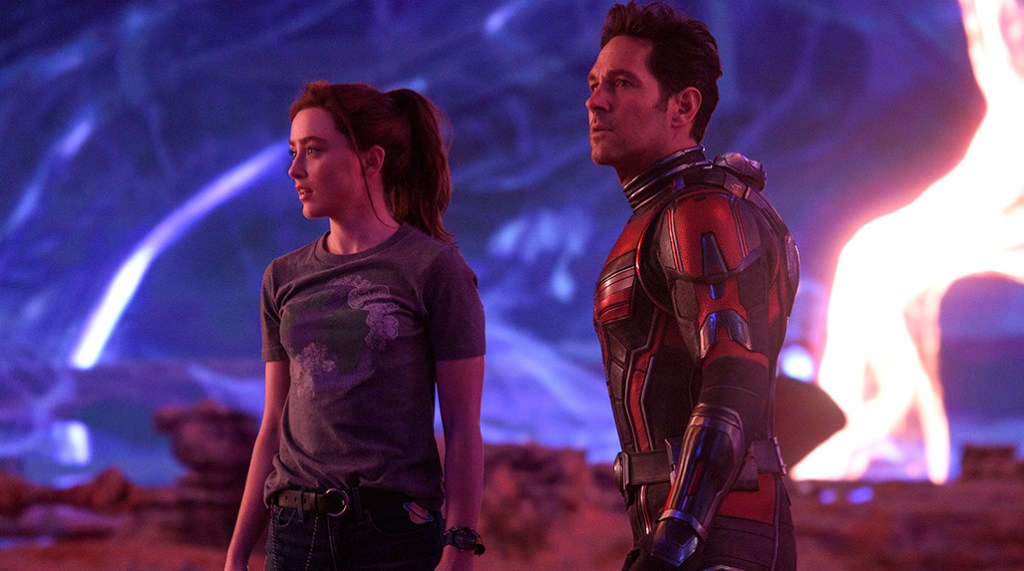
Kathryn Newton as ‘Cassie Lang’ and Paul Rudd as ‘Scott Lang’ in Ant-Man and the Wasp: Quantumania — PHOTO: Marvel Studios / Walt Disney Studios Motion Pictures.
Directed by Peyton Reed — Screenplay by Jeff Loveness.
Trilogies in the Marvel Cinematic Universe aren’t really trilogies. You can’t watch the Iron Man or Captain America trilogies without knowing what happens in the Avengers films. Or, of course, you can, but it would be a strange exercise as those trilogy films eventually reference other films, are reliant on those other films’ setup, or are direct continuations of a film that isn’t technically in that very trilogy. This has also been true of the Ant-Man trilogy. If you just watch Ant-Man and Ant-Man and the Wasp (both directed by Peyton Reed), you’ll definitely have some questions about why Paul Rudd’s Scott Lang is under house arrest and about what the hell happened in the 2018 sequel’s mid-credits scene, in which most of the cast suddenly disappeared (thus stranding Scott Lang in the so-called Quantum Realm). Similarly, those who have decided to live under a rock (or simply ignore every other Marvel movie — including two of the biggest films of all time) would probably be really confused as to what happened between the 2018 sequel and this 2023 sequel. I suspect very few people would find themselves in that situation, but I mention all of this because the interconnected nature of the incredible achievement that is the Marvel Cinematic Universe (MCU) can be both very exciting and confusing depending on who you ask.
As the year is coming to an end, it makes a lot of sense to me to look back on the year that is coming to a close. Although it isn’t yet time for me to announce my 2022 year-end lists and awards winners (they’ll be released in January and February 2023), this is the right time to take a look at the ten most-read articles and reviews that I wrote this year. Let’s have a look at what caught your eye this last year.
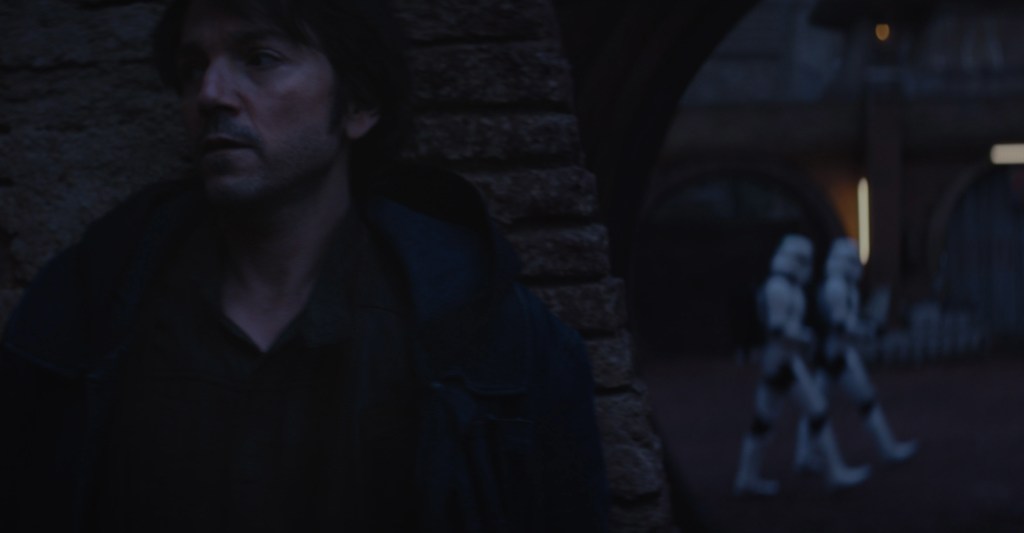
Series Created by Tony Gilroy — Available on Disney+ now.
Since Disney acquired the rights to Star Wars, it has been somewhat of a bumpy ride. Their so-called sequel trilogy features a safe-but-satisfying opener (The Force Awakens), an excellent and thrilling second film that divided the fanbase and revealed toxicities (The Last Jedi), and a conclusion that, in trying too hard to satisfy toxic fans, went back on what the previous film had set up and ended the trilogy on a whimper (The Rise of Skywalker). Even the spin-off films have divided opinions due to them over-explaining things that needed no explanations. As live-action Star Wars has embraced streaming, it has been with similar ups and downs. The Mandalorian is a bonafide hit (but in its most memorable moments it has still clung to fan service). The Book of Boba Fett was good in glimpses but its best episodes are essentially episodes of The Mandalorian. Finally, though richly satisfying, Obi-Wan Kenobi was a safe and fan-service-laden limited series that was yet another reminder of how insular Star Wars storytelling can often feel. As a huge Star Wars fan, it pleases me greatly to be able to affirm that ANDOR, a prequel spin-off series of Rogue One: A Star Wars Story, is a breath of fresh air in that it is a mature, dark, and gritty series that makes the Empire and the Rebellion feel real again.
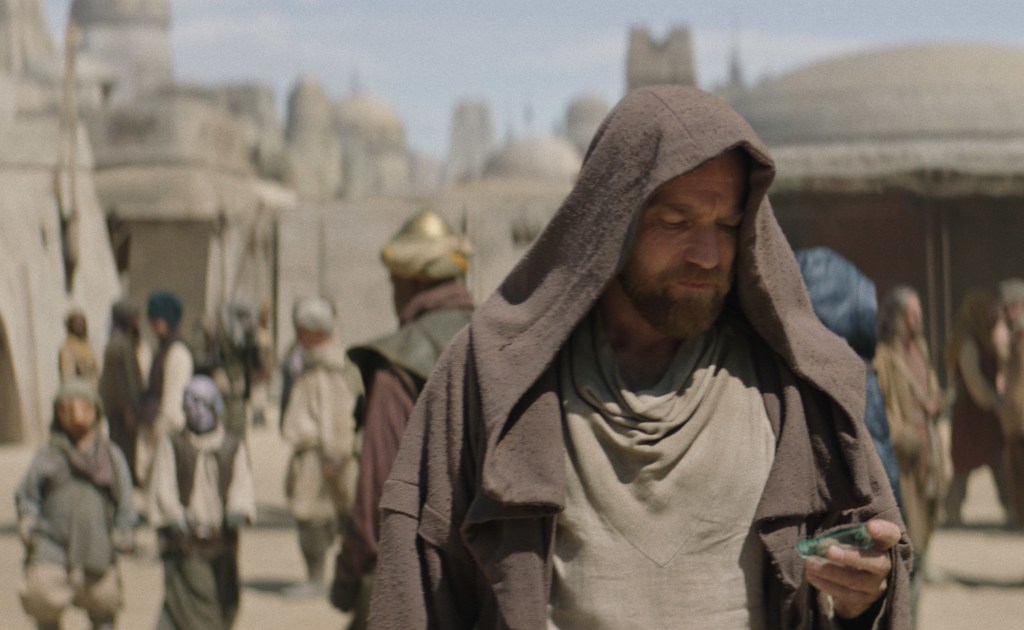
All Six Episodes of the Limited Series Were Directed by Deborah Chow.
Set a decade, or so, after the events of George Lucas’ Star Wars: Episode III – Revenge of the Sith, Obi-Wan Kenobi follows the character of the same name (played by Ewan McGregor, now returning to the role), as he has gone into hiding on Tatooine, where he is watching over young Luke Skywalker from afar. Sith Inquisitors are still hunting for Jedi throughout the galaxy, including Kenobi who Reva (played by Moses Ingram), the Third Sister, is especially interested in. However, Obi-Wan Kenobi is forced out of hiding after young Princess Leia Organa (played by Vivien Lyra Blair) is kidnapped by criminals. Kenobi is Leia’s only hope, and that is exactly what Reva, who orchestrated the kidnapping, had expected and hoped for. As Kenobi leaves Tatooine, he has to reconnect to the Force, but this also means that he risks being confronted by the Inquisitors or even Darth Vader.
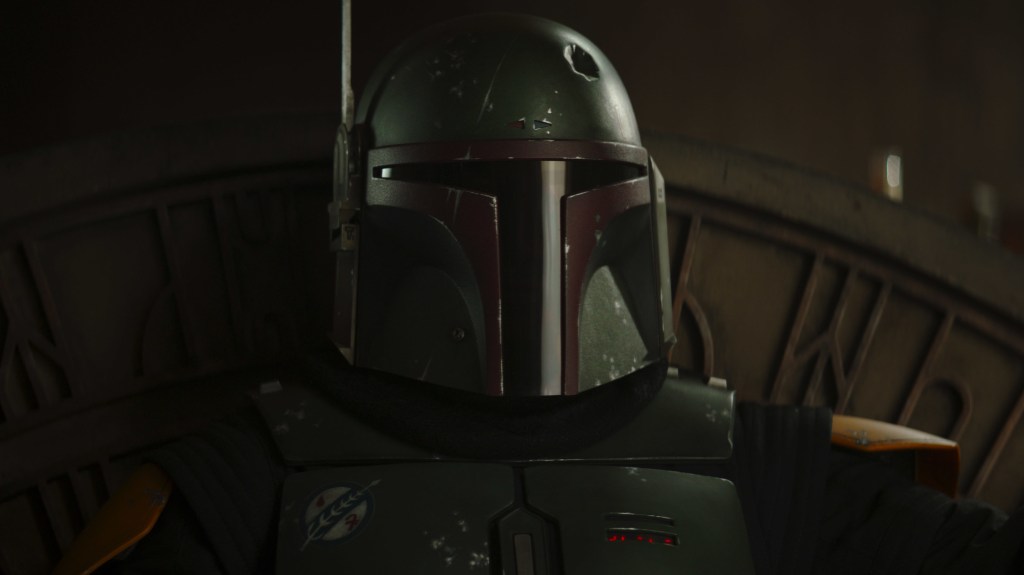
Boba Fett (Played by Temura Morrison) in Lucasfilm’s THE BOOK OF BOBA FETT, exclusively on Disney+. — PHOTO: Lucasfilm / Disney+.
Series Created by Jon Favreau — All Episodes Are On Disney+ Right Now.
Jon Favreau’s The Book of Boba Fett is a spin-off of the extremely popular Disney+ Star Wars live-action series The Mandalorian. The Book of Boba Fett follows the titular character (played by Temura Morrison), who became a fan-favorite character in the Original Trilogy (and who made his in-universe return in The Mandalorian), as he tries to become the new daimyo of Tatooine for the purpose of controlling the territory that once belonged to Jabba the Hutt. But he isn’t the only one who wants to control what can and can’t happen on the desert planet.
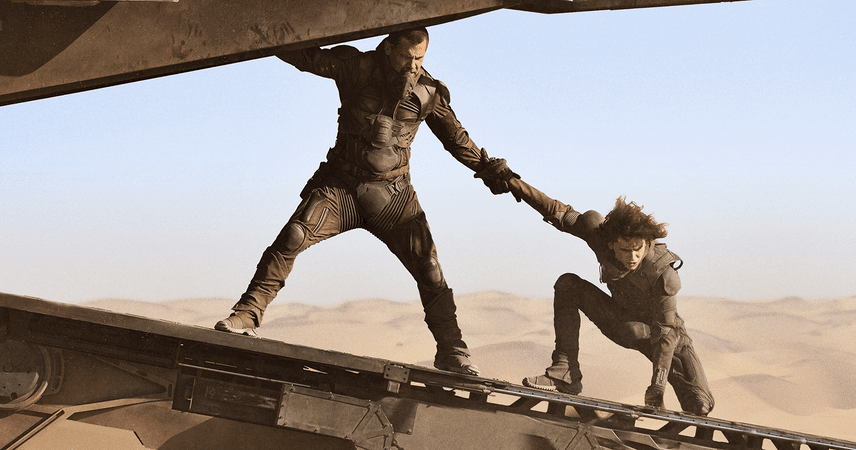
Josh Brolin, left, as Gurney Halleck and Timothée Chalamet, right, as Paul Atreides in Denis Villeneuve’s DUNE — Photo: Warner Bros. Pictures / Legendary Pictures.
Directed by Denis Villeneuve (Blade Runner 2049) — Screenplay by Jon Spaihts, Denis Villeneuve, and Eric Roth.
When science-fiction neophytes first lay their eyes on the marketing material for Denis Villeneuve’s latest science-fiction film, Dune, they should be forgiven, if they immediately remark that it looks like an imitation of Star Wars — or other similar films. Obviously, they would be under a false impression, but, after all, it is a little bit strange that one of Star Wars‘ most obvious sources of inspiration — Frank Herbert’s 1965 novel Dune — has not previously generated a widely known or appreciated adaptation.
In fact, the Dune property is perhaps especially renowned for being difficult to adapt. Famously, Alejandro Jodorowsky tried but failed to get an adaptation off the ground, while David Lynch’s adaptation from 1984 was critically panned. Those ‘failed’ attempts are, in fact, more widely known than the Sci-Fi Channel mini-series that the franchise also spawned. Legendary Pictures and Warner Bros. have now entrusted auteur Denis Villeneuve with the job of adapting Frank Herbert’s rich, influential, and dense source material, and I think that was a very smart decision.

 I'm Jeffrey Rex