Today, the 18th of February 2015, Danish Netflix released the episodes that have aired on ABC of Marvel’s Agent Carter. This is my first time watching and reviewing it, though I am aware of the fact that most Americans have had the opportunity to watch it.
For the uninitiated, Marvel’s Agent Carter is about Margaret ‘Peggy’ Carter – the love interest of Steve Rogers in Captain America: The First Avenger. They decided to create the show due to the popularity of the Marvel One-Shot titled Agent Carter. Now back to basics. I really love the cast of Agent Carter. Hayley Atwell is back as Peggy Carter, and is joined by James D’Arcy, Chad Michael Murray and Enver Gjokaj. Gjokaj already appeared as a NYPD cop in The Avengers, so that should be annoying for True Believers.
Peggy is a strong character, and the show, thankfully, doesn’t hide that. She’s confident – the hero of her own story. D’Arcy’s Jarvis has a weird introduction, but quickly evolves into the lovable British assistant he was meant to be. Gjokaj’s character is very nice to Peggy, whereas Chad Michael Murray’s character is much more arrogant – and definitely a hotshot.
The information dump in this episode is huge, which is to be expected when watching a show about the 1940s – and especially since it’s about the timeline of Captain America: The First Avenger. But – the scene introducing Carter’s roommate has one awful line of information dump – one that’s absolutely unnecessary.
There are some nice reference in between the story and its information dump – and I actually thought this episode did much better than the Agents of S.H.I.E.L.D. pilot in appeasing me, and appealing to my interests. This show definitely has potential, and it should improve in due time – seeing as it isn’t as tied down to the MCU timeline as Agents of S.H.I.E.L.D.. Finally, I’d like to add that the villains of the show aren’t that original. Their internal interaction was basically stolen from Fringe – and they don’t seem scary.
The following is a review of the third episode of AMC’s Better Call Saul, which premiered in Europe on Netflix this morning.
Here’s Johnny! – This week’s Better Call Saul easily manages to captivate its audience by continuing to obscure the origin of Saul Goodman Jimmy McGill, while giving us another glimpse at Jonathan Banks and Michael Mando’s characters. But I’ll get to that, because while these characters’ transformation and evolution is extremely interesting, the opening of this episode managed to pique my interest. Continue reading “REVIEW: Better Call Saul – “Nacho””→
The following is a review of the second episode of AMC’s Better Call Saul, which premiered in Europe on Netflix this morning.
If you were, like I was, worried about how (and if) they would handle Breaking Bad-style action on a show like Better Call Saul – then you got your answer in this episode. Though front-heavy, this episode gives us an idea of where Saul Goodman’s Jimmy McGill’s story goes from here. Continue reading “REVIEW: Better Call Saul – “Mijo””→
The following is a review of the first episode of AMC’s Better Call Saul, which premiered in Europe on Netflix this morning. Don’t expect a complete recap of the episode.
I’ve seen a lot of spin-offs over the years. Some work – Stargate Atlantis, Frasier – some just don’t – Joey, Stargate Universe. It’s all about keeping the feel of a franchise, without overtly copy-pasting – and making something great out of characters that might’ve once been little more than stock characters. In this – the first ever Better Call Saul-episode – we are treated to a very interesting take on the greatest attorney from one of TV’s best ever shows.
I think we all feared the worst, when it came to Better Call Saul. Sure, Gilligan would still be involved, but nothing’s safe when it comes to spin-offs. Thankfully, AMC, Vince Gilligan, and Peter Gould have given us an interesting new show – one including nostalgia, but, as it turns out, also including substance.
Just like Breaking Bad, this show is absolutely gorgeus. It’s a treat to watch, and I commend the people working behind the camera. Now, I don’t think I ever doubted the writing team – I had expectations – but my main worry was that the show was centered on a character that they could fail to make interesting or poignant.
The opening five-or-so minutes give us everything we need to set off – it’s believable. We’re given an idea of what happened to Saul Goodman after the events of Breaking Bad. We need to believe that this is the guy from the best ever AMC show, and I do believe that will be the biggest challenge for this show – but if you watched the remainder of the episode, then you’re left with a good taste in your mouth.
Bob Odenkirk’s character is as hilarious as always, but we see a different side of him when he has to deal with his brother – and the people involved in his real life. This is very promising, and if this episode is anything to go by – we’re in for a very interesting and peculiar ride.
I enjoyed the parts where he had to guide the skaters, and I thought the court room scene was hilarious – in spite of its macabre nature. The feel is still present, Goodman is at his best – and the show looks amazing.
During the episode, and in particular at the very end of it, we are treated to a lot of familiar faces – and the cliffhanger of the episode left me wanting more. The first episode did its job. I still have my trepidations, but I am hopeful – and this episode was very promising.
There will be no review grade/score for single episodes.
On the 30th of January Square Enix released the very first episode of Dontnod Entertainment‘s Life is Strange. Very much like the classic Telltale-style of game, this is an interactive, episodic, story-heavy game. The game is about Max Caulfield a female student at Blackwell Academy – whereat she studies photography. Max is a very shy girl, and as the game progresses you are thrown into very clear-cut choices – be heroic, friendly – or be a bully, be nosy. In that respect, the choices seem like those in the inFAMOUS games by Sucker Punch, and thus I don’t think it has that punch that Telltale has – at least not yet.
Again, unlike Telltale-games, the dialogue isn’t very strong – and at times it didn’t feel very natural. Also, I would’ve liked a more experienced Voice Actor as the main character – but then again, everyone starts somewhere. The first episode introduces you to the rewind-mechanic – meaning that you can reverse time. When handled well, this can be fun to do – and I thought it was in the opening episode.
The story is cute – with many inside references – and there are a lot of plotpoints to work out in the episodes to come. The game has a lot of stock characters – the shy girl, the mean girls, the spoiled brat, the jocks, the (to us) not-so-secret admirer, and hipster characters.
The story is really entertaining when you interact with Chloe, an old friend that’s changed a lot since you last saw her. Her family is troubled, and she’s gotten herself into a lot of trouble. An interesting subplot in this game is the disapperance of Rachel Amber – I have some ideas – but we’ll have to see about that. One thing’s for certain, Chloe is in need of help.
As I mentioned, the dialogue isn’t very good – and I’d add that there are some cringeworthy moments. It has a lot of potential though, and I am excited to see what comes next. The art-style has its ups and downs, and it is extremely annoying to constantly have problems with lips not synced with the voiceacting. It runs much smoother than Telltale games, but with that having been said – background characters aren’t that detailed. I do prefer the art-style of Telltale – but the level of quality is much higher here.
I am excited about the future of this game. As a pilot it works really well, the story is interesting – if you snoop around you’ll get some ideas – and it ends with everyone having an idea of what’s to come.
The following is a full written review of Marvel’s Star Wars #1 – Written by Jason Aaron, with art by John Cassaday – Month of Release: January 2015.
At 2014’s San Diego Comic Con, Marvel Comics revealed that they were releasing three new series in early 2015. Star Wars, Star Wars: Darth Vader (Both Monthly), & Star Wars: Princess Leia (Limited Run). All three of the aforementioned early 2015 Star Wars series take place right after Star Wars: Episode IV – A New Hope. I might review the other opening issues as well, and I will continue to review this series if the story is respectful.
Warning – the following brief plot-summary might contain spoilers.
Star Wars #1: Skywalker Strikes follows the original cast of Star Wars, as they try to bring down an imperial weapons facility. The gang pose as negotiators for Jabba the Hut, and everything goes fine – until, suddenly, Darth Vader arrives. Leia orders Chewbacca to take a shot at Vader, but they’re out of luck, obviously. Meanwhile, Luke Skywalker saves slaves – and Leia & Han get into an argument. While Han & Leia try to find a way out of the facility, followed by the liberated slaves, Luke hears the voice of Obi Wan – and runs into Darth Vader.
The story is very entertaining – as fun as you’d expect it to be. The dialogue is very good for the main characters, but I took issue with the sudden information dump by C-3PO in the beginning of the issue – I would expect the exposition to interweave better in a high stakes comic book. Still, this feels like Star Wars.
I’ve got to say that I am impressed by the cover art, and the overall look of the universe in the comic book. It looks absolutely great. There is, however, one thing that disappointed me. At times the likeness was off – especially for Luke Skywalker. At times he looked like more like a Ellen DeGeneres lookalike, than a young Mark Hamill.
I often say that it was my first nerd-love, and it was – yet I’ve never actually read Star Wars comic books until now. I didn’t know they existed until a few years ago. Had I known, I would’ve been a lot happier – methinks. Now, how do I feel this comic book overall feels to me compared to the films, shows etc. that I’ve watched? It fits perfectly within the narrative of the original trilogy. Same feel, same look – same mood. Spot on.
At the end of the issue, you see some preview pages for Star Wars: Darth Vader & Star Wars: Princess Leia. While it would be impossible to make a statement on the story based on preview pages, I loved the look of Star Wars: Darth Vader, but I’m iffy about the look of Star Wars: Princess Leia.
Final Grade: A- – The feel and look of Star Wars is captured in this entertaining mission. For full list of Comic Book Review grades go here.
This post acts as a brief piece of information. In this post I will try to jot down the important events in Pop-Culture that this blog will take special care of – as well as prepare the readers for what kind of posts are a part of 2015 on I’m Jeffrey Rex.
Sometimes sequels just aren’t called for. In the sequel to the 1994 comedy classic, Dumb and Dumber, we follow Lloyd and Harry once again go on a trip across America – this time in search for the daughter of Harry, who has been adopted. There’s some added emotional weight added to the film, seeing as Harry desperately needs to find a kidney-donor.
That’s the overall frame for this feature length journey, and it’s complete with fun nods to the original film like specific dream sequences ending in a certain way, and the vehicle on the film’s poster. Jim Carrey and Jeff Daniels are, of course, back – but while they both act out the comedy extremely well, they aren’t given a lot to deal with. I just don’t feel that a huge chunk of this movie is funny at all – primarily around the time of the point of no return in the third act. That’s not to say that it’s not funny at all, because of course Daniels and Carrey are funny – but most of the jokes are not really that memorable – and the film isn’t instantly quotable.
The thing is that the film borrows a lot of the plotpoints and quotes from the original film – and thus takes some fanservice and turns them into wasted moments of material that feels copypasted. Sadly, I also felt that the parts of the plot that weren’t ‘copypasted’ were predictable. Daniels and Carrey are the real highlights of the film, for there’s nothing else to be excited about. The plot feels similar to the original, the jokes feel similar to the ones in the original and the sidecharacters aren’t that exciting.
While I didn’t hate this movie, I feel that I have to add that the people next to me were so disappointed that they left the film after 30 minutes – and I’m sure they weren’t the only ones wishing they were somewhere else… And that’s sad, ’cause it’ll never get old seeing Jeff Daniels and Jim Carrey having fun together.
Overall Score:4.7 out of 10. Though not completely without laughs or fanservice, this film remains nothing more than yet another comedy classic sequel – and not a single one of them are very good. I loved the original, but this one lost its magic – perhaps this was a missed opportunity.
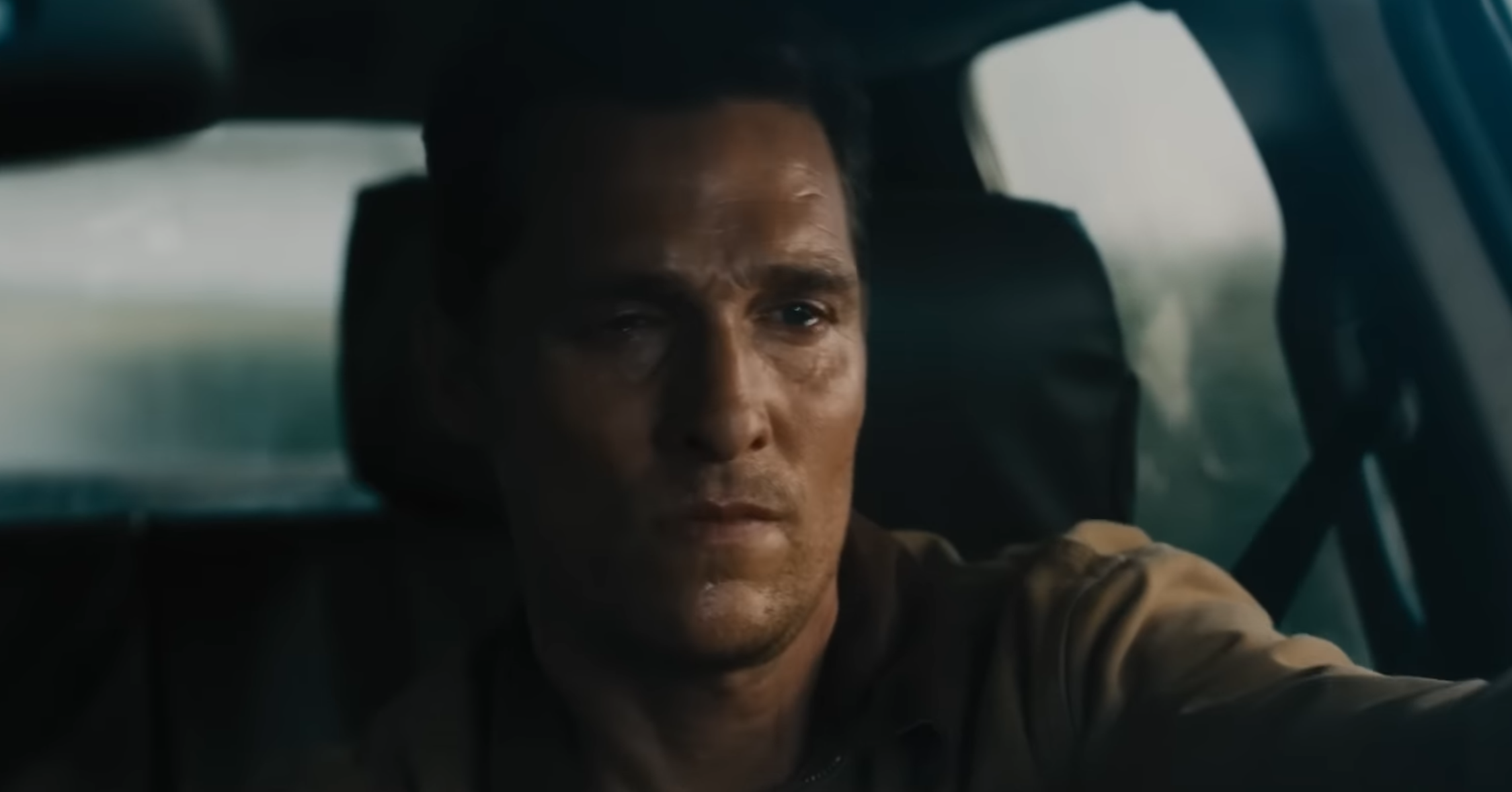
Matthew McConaughey in INTERSTELLAR — PHOTO: Warner Bros. Pictures (Still image from trailers).
The following is an updated review of Christopher Nolan’s Interstellar. It was updated in March 2026, as I felt, upon rewatch, the final score needed to be upped, while the writing did not reflect my current voice.
Christopher Nolan’s Interstellar follows Cooper (played by Matthew McConaughey), a NASA test pilot-turned-farmer and father of two, as he attempts to secure a future for his children, who are living in a difficult situation that threatens to only get worse. With violent dust storms and worsening conditions, Earth is falling apart, and the future of humanity is in question. When Cooper’s daughter discovers an anomaly, it becomes the starting off point for a journey that will take him far away, as Cooper is thrown into something much bigger than him and his family, i.e., interstellar travel to potentially save humanity. Cooper’s daughter, Murphy (played by multiple people, but chiefly Jessica Chastain), doesn’t agree with his decision to partake in the journey, as it means leaving them on Earth for what could be decades (and possibly forever), but he feels that he must take this chance to secure a life for his children. As Cooper goes on the mission to travel through a wormhole, encounter a black hole, and evaluate distant planets, the story truly begins.
With the focus on a father-daughter relationship and risky missions into space, this may sound like Michael Bay’s Armageddon, but this film is much more ambitious, scientifically savvy, and cerebral than that. Don’t get me wrong, the aforementioned film can be enjoyable, but the small plot points of films like Armageddon are processed much better here in Interstellar by the Nolans. The themes in this film revolve around family, self-sacrifice, and love. The film stars Matthew McConaughey, Jessica Chastain, Michael Caine, and Anne Hathaway, all of whom turn in instantly iconic performances. Shepherded by one of the most intelligent and gifted filmmakers of our time, Christopher Nolan, they deliver what I am comfortable in saying is one of the most breathtaking space-set adventures put to the big screen. There is also an epic surprise cameo in this film that blew me away. I’d like to add that the scenes involving Michael Caine have a lot of weight to them, and that there’s an overall message in those scenes (retrod in the scenes involving the special surprise actor). A message created by poet Dylan Thomas, which is absolutely breathtaking and at times quite emotional. It is a perfect use of a perfect poem.
The film is chock-full of memorable scenes, but none is more emotionally impactful than those that revolve around a message-in-a-bottle communication system, as Cooper sees the effect the sands of time have had on his family and his relationships back on Earth. It is an almost torturously affecting aspect of the film. McConaughey does some of his best work in the scenes wherein he receives videos from Earth. At its core, this really is a film about saving your family, and the sacrifices one is willing to make for love. Those expecting more of a horror sci-fi going in will be disappointed. Nolan, instead, aims for a balancing act of realism and reality-defying love. He focuses so much on theoretical science, but he never forgets that the story inherently has space operatic aspects. The blend works wonderfully, as it is not only satisfying from a cerebral standpoint, but also when it comes to tugging at your heartstrings. It also features breathtaking science-fiction visuals, as Nolan puts awe-inspiring alien planets, a black hole, and reality-defying locations to the big screen. It truly deserves to be watched on the biggest screen possible. It is arguably Nolan’s best-looking film to date.
Though I loved the film, I do think that one may struggle with it and have a less-than-stellar experience if they’re unable to properly relax in the film through suspension of disbelief. Also, though the film does a great job of building a credible father-daughter relationship, I do think the father-son relationship feels underdeveloped. Its biggest swing is in the final act, though, where some elements can feel a little bit clunky or confusing. The extent to which you love this film will depend on how willing you are to suspend your disbelief and go with the emotional core of what is happening rather than overthinking the details of it.
Though the film has an iffy final act, with perhaps a tad too much Hollywood-sweetness added to it, this is a great example of a proper space opera with foundations in a somewhat realistic portrayal of integral sci-fi aspects, but which is unafraid of throwing itself headfirst into the beating heart of the film, even if it may defy our sense of reality. The visuals, performances, and technical prowess make this a near-masterpiece of science-fiction filmmaking with the potential to become a true classic.
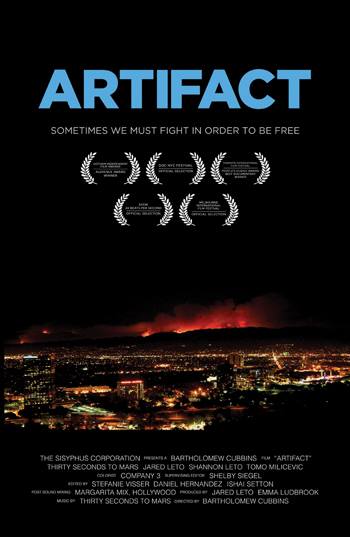
The documentary Artifact, directed by Jared Leto (as Bartholomew Cubbins), tells the story of how his band Thirty Seconds to Mars fought the record label EMI. In what is an interesting tale of wronged people fighting back in real life – we are also introduced to the rest of the music world – and we see just how unjust labels are in today’s society.
Now, I’ve said multiple times that I’m a big fan of Thirty Seconds to Mars, but I’ve tried to remain as unbiased as possible in reviewing this documentary. I fully expected to see how their own journey was, but I was surprised at how encompassing their journey was. Not only do we follow the Letos and Tomo, but we also hear from leading musicians from Linkin Park, System of a Down and so on and so forth. It’s really interesting to get an idea of what they went through, and what musicians generally go through – getting bankrupt because of their record label. It’s a sad story, and as Jared reflects later – even if they win, is there really anything to cheer for.
The documentary touches upon David v Goliath, and the idea that you should ‘stick it to the man’ – but one thing that surprised me was how uncentralized the documentary was. What I mean is that this isn’t just the central story of them battling the record label, and other musicians struggling. A big part of the documentary is about showing everyone the origin of the band. I like hearing it, but I don’t think it’s the time or place for this origin story.
Overall Score:7.7 out of 10. An entertaining documentary that showcases the frustrating lives of modern day musicians. While interesting, though, it does tend to veer from the theme at hand by showcasing an origin story.




 I'm Jeffrey Rex