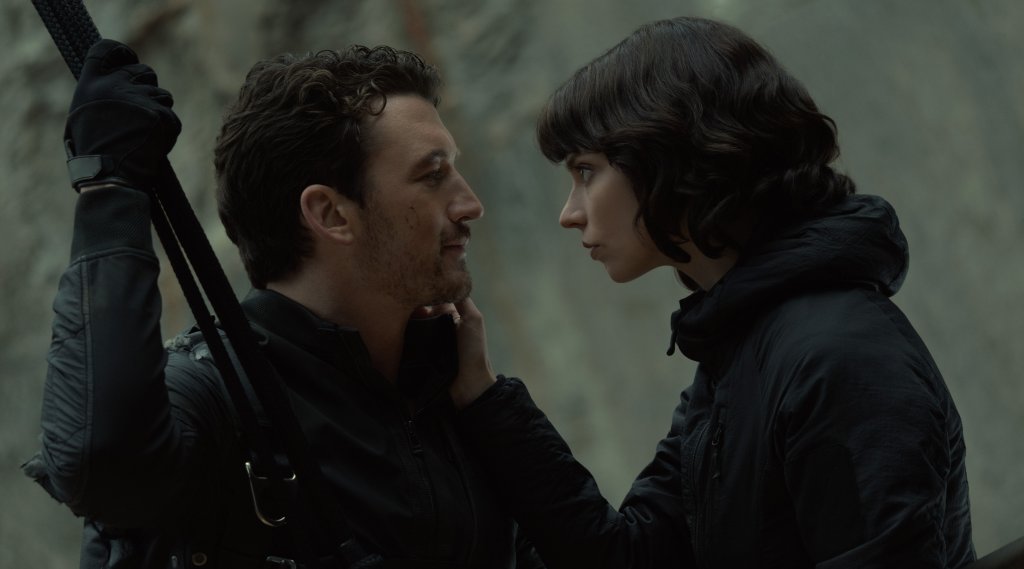
Miles Teller and Anya Taylor-Joy in “The Gorge,” now streaming on Apple TV+.
Directed by Scott Derrickson — Screenplay by Zach Dean.
Scott Derrickson’s The Gorge follows two elite snipers, an American man named Levi Kane (played by Miles Teller) and a Lithuanian woman named Drasa (played by Anya Taylor-Joy), as they are both independently recruited for a top-secret mission in the middle of nowhere. At some unknown place in the world, there are two watchtowers standing across from each other, one representing the Western Bloc and another representing the Eastern Bloc. Each watchtower is guarded by mechanized turrets and bombs, and between the two watchtowers is a giant long hole in the ground — hence the title. Levi and Drasa have been hired to do maintenance on the weaponry and, at the same time, defend the world from what is hidden inside the mysterious valley. As they are the only two people in the vicinity, Drasa and Levi establish a connection, but when one of them accidentally falls down into the valley, everything changes and top secrets are revealed.
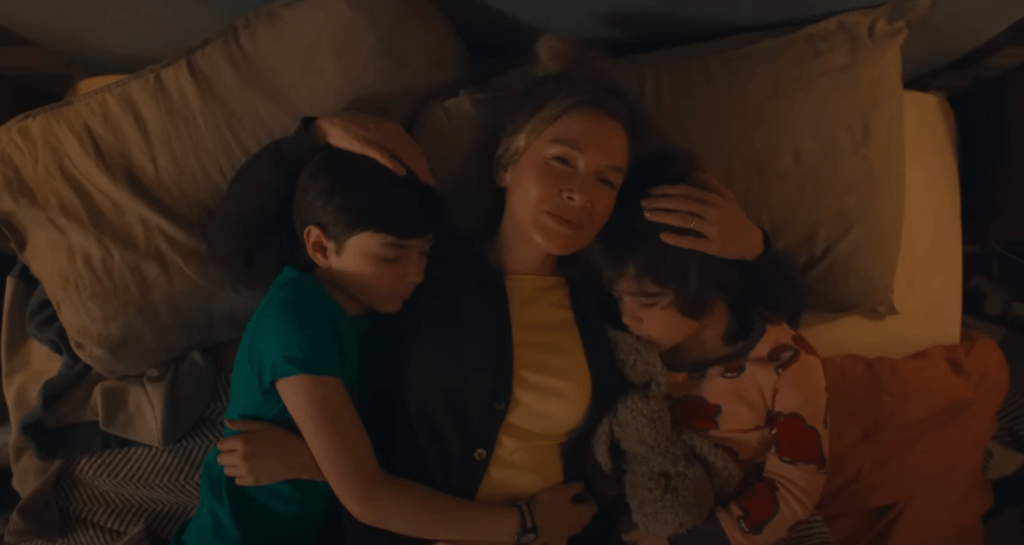
Renée Zellweger as Bridget Jones (in the middle) in BRIDGET JONES: MAD ABOUT THE BOY — PHOTO: Universal Pictures (Still image from trailers).
Directed by Michael Morris — Screenplay by Helen Fielding, Dan Mazer, and Abi Morgan.
Based on the Helen Fielding novel of the same name and, obviously named after the iconic song, Bridget Jones: Mad About the Boy finds Bridget Jones (still played by Renée Zellweger) at a particularly challenging moment in her life. Her husband, Mark Darcy (played by Colin Firth), has passed away, and she and their two children now struggle with grief in their own ways. At the same time, though, so many people around her are suggesting that Bridget should get back out there and date again. Back on the market, she develops a surprising romantic connection with a much younger man (played by Leo Woodall), while she also gradually grows closer to a schoolteacher (played by Chiwetel Ejiofor).
Glen Powell as Gary Johnson in Richard Linklater’s Hit Man — Photo: Brian Roedel / AGC Studios.
Directed by Richard Linklater — Screenplay by Richard Linklater and Glen Powell.
Loosely based on a Skip Hollandsworth magazine article from Texas Monthly, Richard Linklater’s Hit Man follows Gary Johnson (played by Glen Powell), a professor of psychology and philosophy who moonlights for the New Orleans police department during sting operations. While out on his second job, Gary is asked to step into a suspended colleague’s role as a fake hitman. It turns out that Gary, a slightly dorky professor with little-to-no social life, is a natural at pretending to be someone he is not, to improvise, and to get the criminals who had sought out the services of a hitman to confess to him that they want to order a murder from him. Not only is Gary a natural at it, but he also appears to love the thrill of it, as well as the ways he can come up with outfits and hitman-looks tailored to the ‘clients.’ As he becomes more and more comfortable being someone else, he, too, becomes a different person, and soon he becomes both sympathetic and attracted to one of his clients.
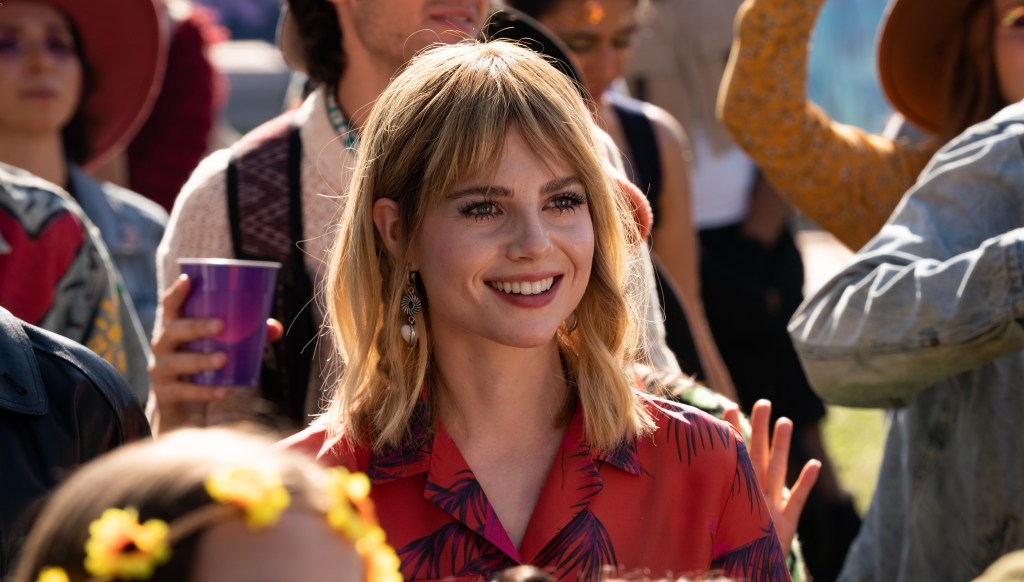
Lucy Boynton in Ned Benson’s THE GREATEST HITS — PHOTO: Disney+ / Hulu.
Directed by Ned Benson — Screenplay by Ned Benson.
Ned Benson’s The Greatest Hits is a romantic fantasy film that follows Harriet Gibbons (played by Lucy Boynton), a woman mourning her boyfriend Max (played by David Corenswet) who recently died in a car crash. To recover emotionally, she takes part in grief support group meetings, but she doesn’t know how to move on because whenever she hears a song that she listened to while she and Max dated, she is emotionally transported through time to the moment she heard it, while, for everyone else, it just looks like she is passing out or having a seizure. Harriet has become obsessed with the idea that she can use this condition and/or ability to travel in time and prevent Max’s death. However, she is also starting to become emotionally involved with another member of the support group named David (played by Justin H. Min).
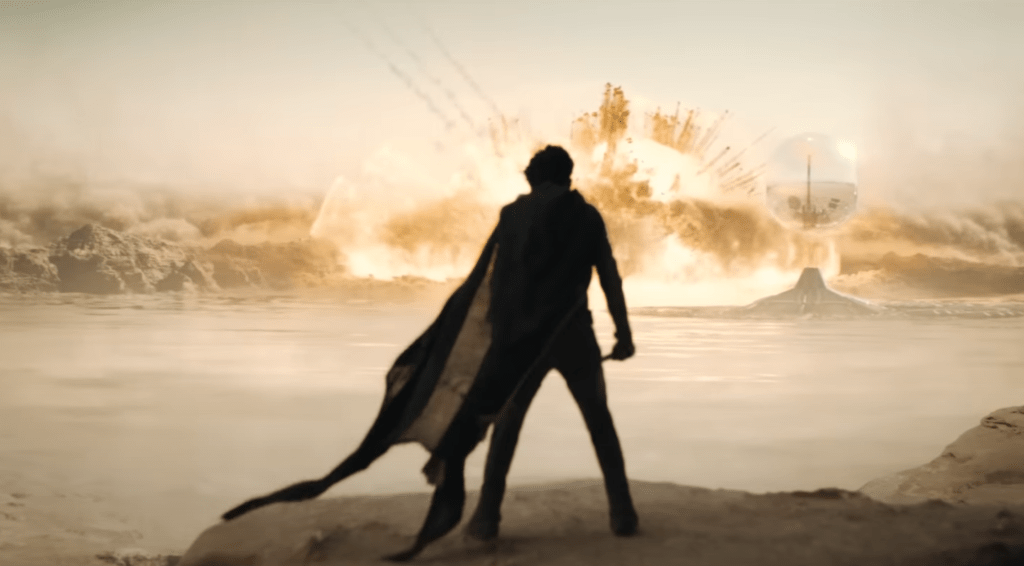
Timothée Chalamet as Paul Atreides in DUNE: PART TWO — PHOTO: Warner Bros. Pictures.
Directed by Denis Villeneuve — Screenplay by Denis Villeneuve and Jon Spaihts.
I don’t know if I’ve ever told this story before, but I have this vivid memory where — when I was probably around the age of ten — I looked up at my mother and asked her a question. I had either just seen The Lord of the Rings: The Return of the King, or else it was about to come out and I knew it was going to be the last film in the trilogy. With a note of sadness in my voice, I looked up at my mother and asked her something along the lines of “What happens after the Lord of the Rings? Will we ever get anything as good as that ever again?” You have to understand that in those early 2000s, we were being treated to fantasy filmmaking of the highest order with Peter Jackson’s Tolkien adaptations, while Sam Raimi was hard at work on Spider-Man 2 following the success of the first one, and after George Lucas’ Star Wars: Episode II — Attack of the Clones, we all knew that there was only a single film left in the so-called prequel trilogy. At the age of ten, I was blown away by what I was seeing, but I could also see an end to what we were getting. I wasn’t quite sure if this was a once-in-a-lifetime kind of perfect storm for fantasy and blockbuster filmmaking or not. Of course, in the years to come, Hollywood would go on to shovel dozens upon dozens of films with similar aims down our collective pop culture gullet, in an attempt to recapture what was so addicting and marvelous about Jackson, Raimi, and Lucas’ films. Hollywood, we must admit, often failed to recapture that. Now, it’s not like the Lord of the Rings, Star Wars, or Spider-Man is dead and buried — not by a long shot — but there is an argument to be made that none of those franchises have ever been afforded the same level of creative freedom for its principal filmmakers as was the case back then. So, what did my mother say? Well, with generosity and kindness in her voice, she assured me that, of course, major motion pictures with that sense of scale, scope, and artistry were not going away for good. She assured me that I had so much more to look forward to. My mother was right. Every so often something comes along that both feels like a throwback to the days when creative freedom was to be expected for filmmakers but which also feels like the perfect utilization of modern sensibilities and technical mastery. Denis Villeneuve’s two-part adaptation of Frank Herbert’s iconic science-fiction novel Dune is the perfect modern example of that. I feel so lucky. Now more than twenty years after my mother reassured me about the future of filmmaking — though perhaps not in as many words as I put it above — I have had the wonderful opportunity to watch Denis Villeneuve’s Dune: Parts One and Two in theaters with my mother, and both times the French-Canadian filmmaker has managed to both transport us to another world full of fantasy and science-fiction wonders, but also remind us — both mother and son in love with film’s transportive power — of the kind of storytelling that we love with all of our hearts.
Andrea Riseborough and Domhnall Gleeson in Alice & Jack.
Series Created by Victor Levin.
In the last weekend of January, the full season of Alice & Jack, a British series soon to be released later this February on Channel 4 in the UK and in March on PBS in the US, was released on Denmark’s DRTV (the Danish Broadcasting Corporation’s online streaming service), which was a relatively big surprise to me. Created by Destination Wedding and 5 to 7 writer-director Victor Levin but directed by Hong Khaou and Juho Kuosmanen, the romance-drama series starring Domhnall Gleeson, Andrea Riseborough, Aisling Bea, Aimee Lou Wood, and Sunil Patel tells the story of two on-and-off lovers over the course of years as they struggle with relationships, parenthood, heartache, and poorly timed love. For six episodes, we follow them through their lives from 2007 all the way up to this current decade.
Franz Rogowski and Adèle Exarchopoulos in PASSAGES — PHOTO: SBS Distribution.
Directed by Ira Sachs — Screenplay by Mauricio Zacharias, Ira Sachs, and Arlette Langmann.
Ira Sachs’ Passages follows Tomas (played by Franz Rogowski), a German filmmaker who lives in Paris, at the end of the production of his latest film. At the subsequent wrap party, Tomas’ partner Martin (played by Ben Whishaw), an English printer, refuses to go out on the dance floor with him, but Agathe (played by Adèle Exarchopoulos), a young primary school teacher, would very much like to dance with Tomas. In the heat of the moment, Tomas and Agathe lock eyes, share a connection and go to Agathe’s home where they have sex. The next morning Tomas arrives back at his and Martin’s apartment, and, though his instinct is to initially be deceitful about what had happened, Tomas fairly quickly decides to come clean (and quite directly) to Martin about what had happened and how he feels about it. An inwardly upset Martin kisses Tomas, and they continue their relationship, which only seems more doomed when Tomas carries on with his dalliance with Agathe. As Tomas’ relationship with Agathe intensifies, whereas his relationship with Martin deteriorates, Tomas tries to control his love life in a way that doesn’t take the emotional well-being of others into account.
Renate Rensve’s ‘Julie’ waking up after a blur of a night thanks to having partaken in psychedelic mushrooms in Joachim Trier’s VERDENS VERSTE MENNESKE — PHOTO: SF STUDIOS / TriArt Films.
Directed by Joachim Trier — Screenplay by Eskil Vogt and Joachim Trier.
At the end of last month, I turned thirty years old. In the build-up to that turning of a corner, I must admit that I was feeling some kind of quarter-life crisis. Turning thirty reminded me that I should probably rewatch (and finally review) Joachim Trier’s The Worst Person in the World (Norwegian Title: Verdens Verste Menneske), for reasons that will be obvious to those who are familiar with it, but if you aren’t, then please read on and I’ll elaborate. In any case, The Worst Person In the World is the much-lauded third film in Joachim Trier’s acclaimed Oslo Trilogy, the first two films of which — Reprise and Oslo 31. August — I reviewed just last year. As I pressed play and rewatched the Danish-born Norwegian director’s Oscar-nominated hit, I’ll admit that it hit me harder than it had on my first viewing. It is yet another example of the kind of intelligent filmmaker that Trier is, and I suspect it will carve its own place as a true classic for how it speaks to the quarter-life crisis.
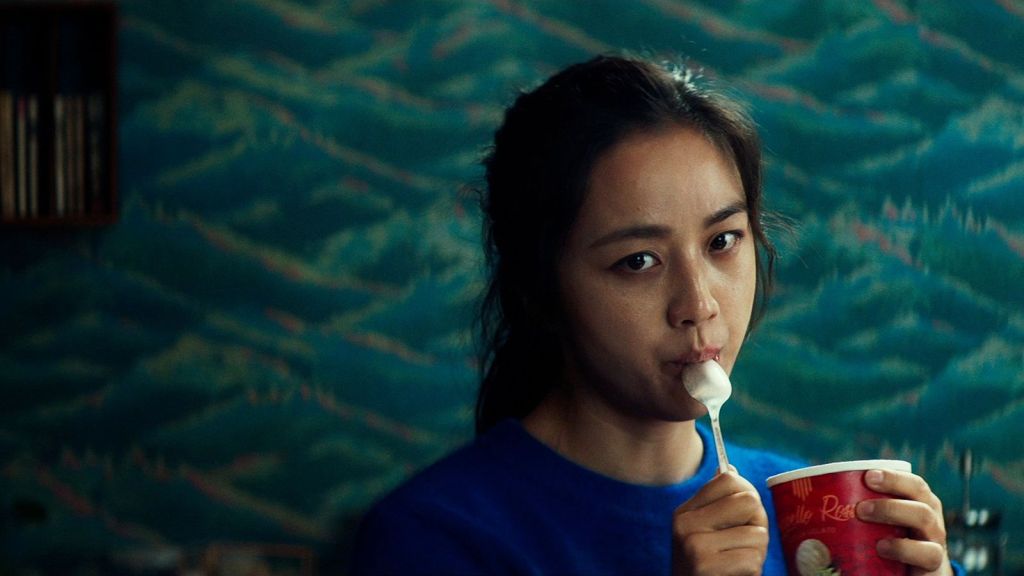
Since the release of Park Chan-wook’s 2016 period piece masterpiece The Handmaiden, longtime fans of his have had to wait quite a while until his next feature film. Since then he has co-written Lee Kyoung-mi’s The Truth Beneath, worked on short films with his brother, produced the Daveed Diggs-led series adaptation of Bong Joon-ho’s Snowpiercer, and directed the underseen but quite strong limited series adaptation of John le Carré’s The Little Drummer Girl. Six years is a long time to wait for a new film from such a gifted auteur. Now that I’ve finally had the chance to see his latest film, Decision to Leave, it brings me great joy to state that it was worth the wait. Decision to Leave, which earned Park Chan-wook the Best Director award at the Cannes Film Festival, is one of his best films.
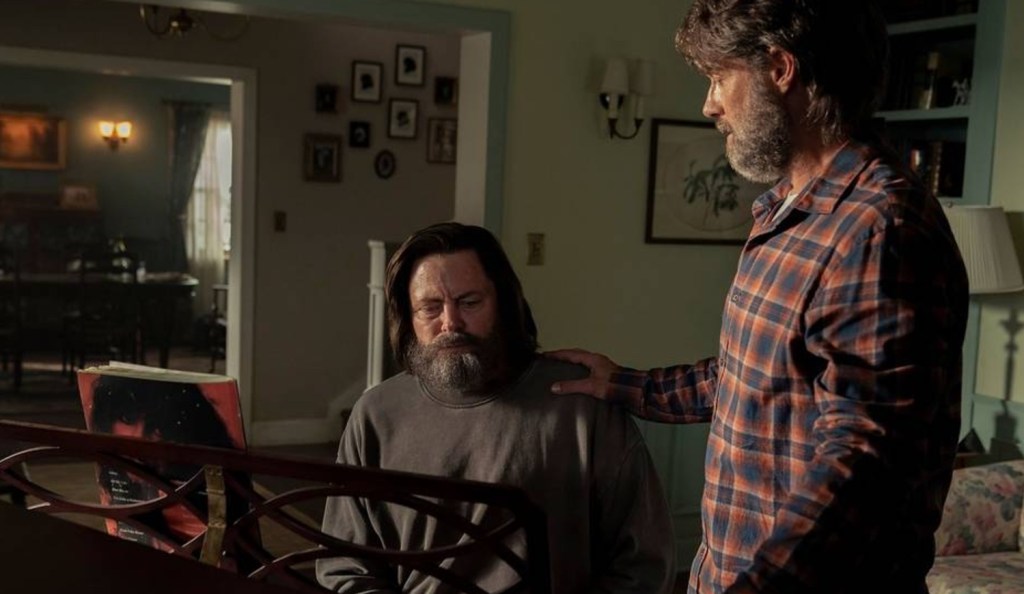
Nick Offerman as Bill and Murray Bartlett as Frank in HBO’s THE LAST OF US — PHOTO: HBO / Liane Hentscher.
The following is a recap and review of the third episode of HBO’s The Last of Us. Expect story spoilers.
In the third episode of the first season of the HBO adaptation of the masterful video game franchise known as The Last of Us — titled Long Long Time — Joel (played by Pedro Pascal) and Ellie (played by Bella Ramsey) make their way toward the home of two of Joel and Tess’ allies. As they make their way and Joel tells Ellie about the pre-and post-outbreak world, we get to know Bill (played by Nick Offerman) and Frank (played by Murray Bartlett) in an expanded flashback that takes us all the way to ‘the present day.’ Long Long Time was directed by Peter Hoar (Daredevil; It’s A Sin) and written by Craig Mazin (Chernobyl).





 I'm Jeffrey Rex