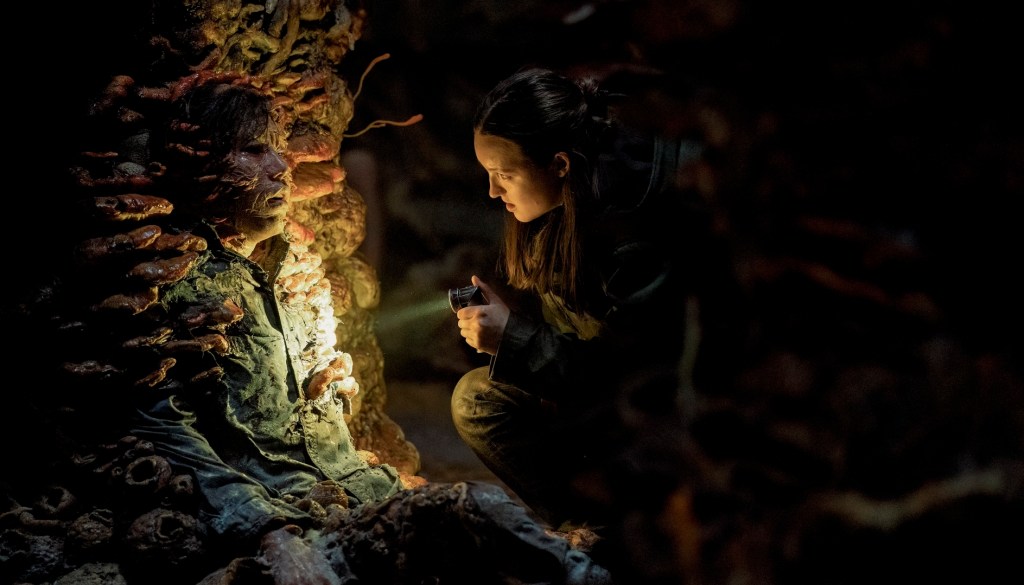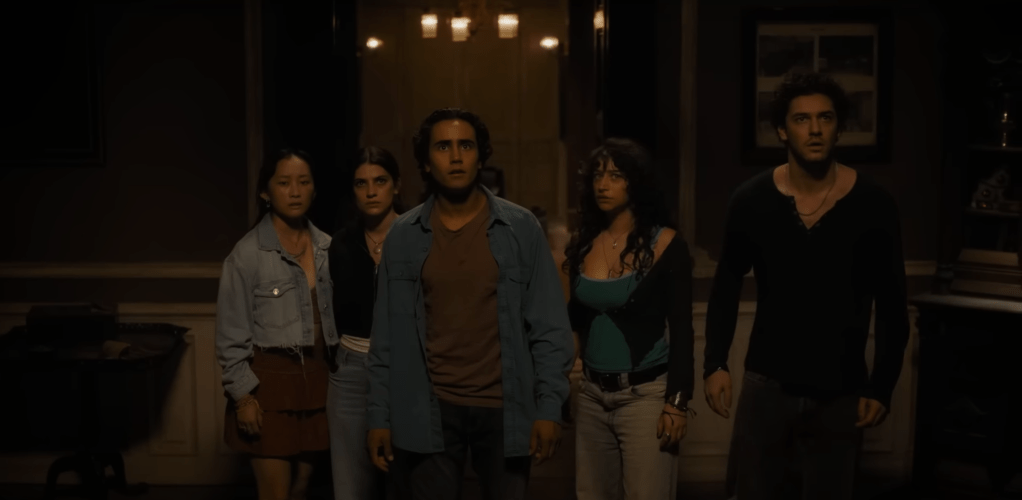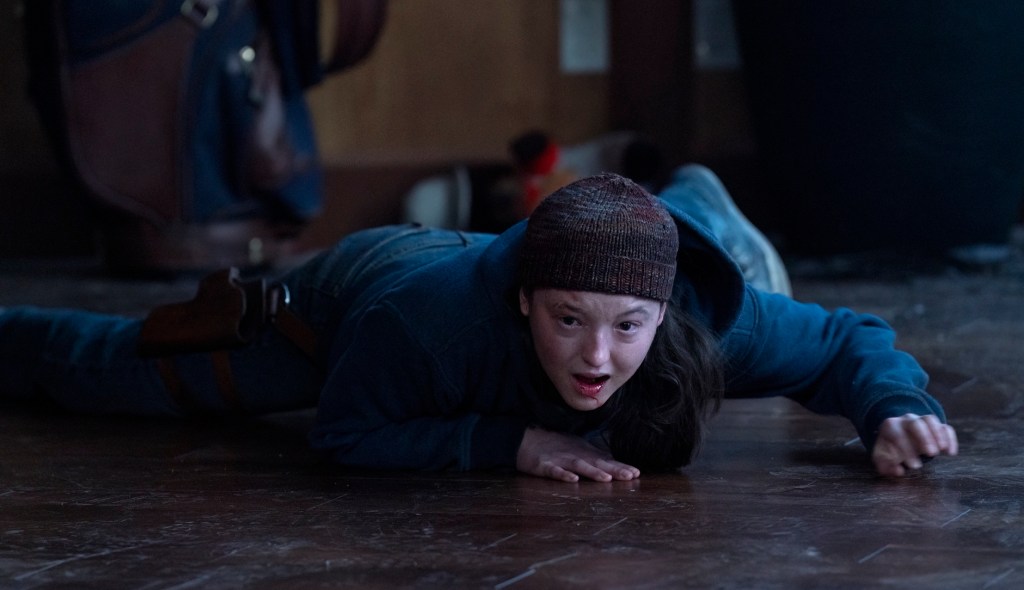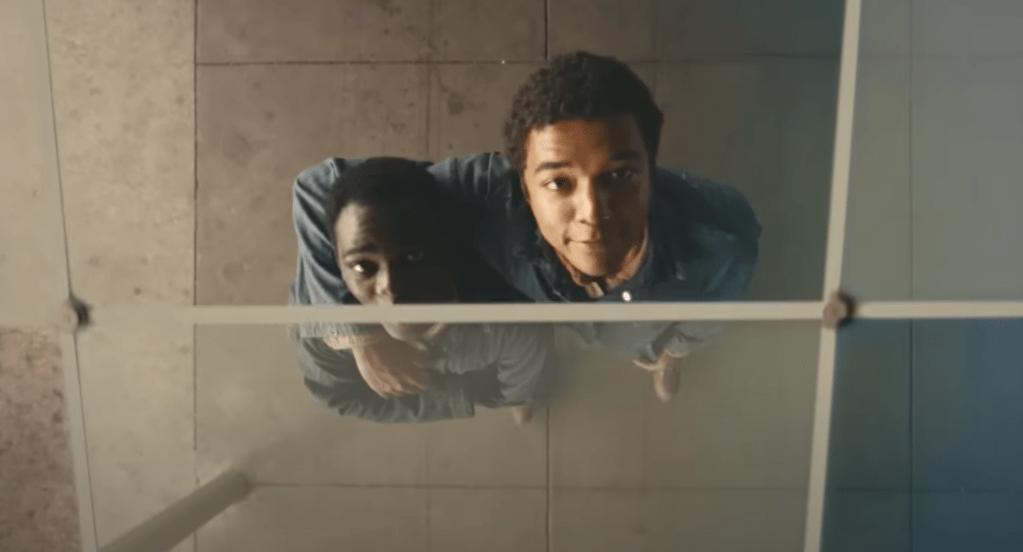
Ethan Herisse and Brandon Wilson in NICKEL BOYS — PHOTO: Amazon MGM (Still image from trailers).
Directed by RaMell Ross — Screenplay by RaMell Ross and Joslyn Barnes.
Based on Colson Whitehead’s 2020 Pulitzer Prize winning novel The Nickel Boys, RaMell Ross’ Nickel Boys follows a smart and politically engaged young African-American man named Elwood Curtis (played primarily by Ethan Herisse) who, in 1960s America, is wrongfully convicted of grand theft auto while hitchhiking on his way to college. Elwood, due to being underage, is then sent to Nickel Academy, a so-called ‘reform school,’ where he befriends a boy named Turner (played by Brandon Wilson) and experiences racial segregation and abuse.
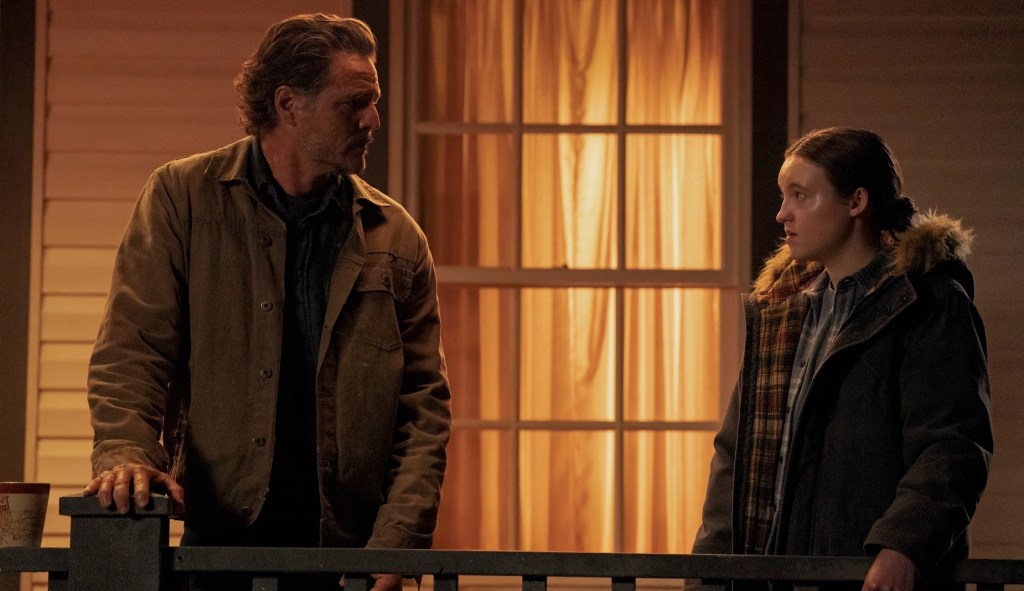
Ryo Nishikawa in EVIL DOES NOT EXIST — PHOTO: Incline / Janus Films.
Directed by Ryusuke Hamaguchi — Screenplay by Ryusuke Hamaguchi.
Ryusuke Hamaguchi’s Evil Does Not Exist follows Takumi (played by Hitoshi Omika), a single father, who lives with his daughter (played by Ryo Nishikawa) in the snowy Japanese mountainside village of Mizubiki. When, one day, the local community is confronted by representatives of a corporation seeking to establish a glamping site there, he and his neighbors and friends voice their concerns about the plan and the possible pollution it would lead to. Later, when the representatives try to influence Takumi, things transpire that causes our lead to panic.
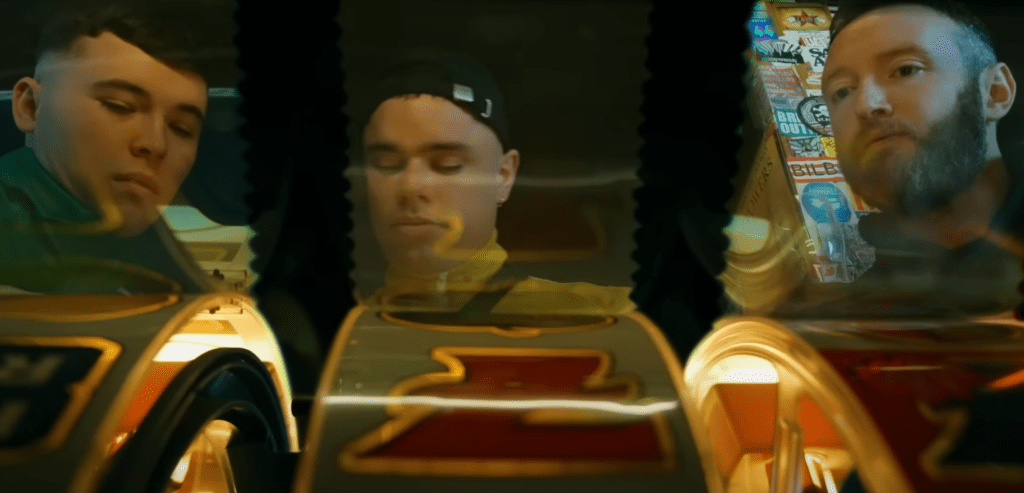
Liam Ó Hannaidh, Naoise Ó Cairealláin, and JJ Ó Dochartaigh in KNEECAP — PHOTO: Sony Pictures Classics (Still image from trailers).
Directed by Rich Peppiatt — Screenplay by Rich Peppiatt.
Writer-director Rich Peppiatt’s Kneecap tells the story of the rise of the real-life Belfast-based Irish hip-hop group known as ‘Kneecap.’ In Belfast, we meet Liam Ó Hannaidh (played by himself) and Naoise Ó Cairealláin (played by himself), two young men who have been raised on the beliefs of an Irish republican, Arlo (played by Michael Fassbender), who has faked his own death to avoid being caught by authorities. When, one day, Liam is arrested after attending a party where drugs were being widely spread, he refuses to speak English to the authorities opting instead to speak Irish Gaelic, which frustrates the protestant authorities. Therefore they reach out to JJ Ó Dochartaigh (played by himself), a music teacher at a school that teaches Gaelic, so that he can translate the conversation at the station as an interpreter. Following this encounter, JJ, Liam, and Naoise get together to record Irish Gaelic hip-hop, perform it, and bring attention to the language that they feel is not properly recognized. This all happens at a moment in time when JJ’s girlfriend, Caitlin (played by Fionnuala Flaherty), is getting into politics to campaign for an Irish Language Act.
Laurie Babin and Juliette Gariépy in Pascal Plante’s RED ROOMS — PHOTO: Entract Films (Still image from trailers).
Directed by Pascal Plante — Screenplay by Pascal Plante.
Pascal Plante’s Red Rooms (original title: Les Chambres Rouges) is a dark psychological thriller that follows a Montreal-based model named Kelly-Anne (played by Juliette Gariépy), who has an unhealthy interest in the trial of Ludovic Chevalier (played by Maxwell McCabe-Lokos), a man accused of having murdered three young women. The trial, which has become somewhat of a media circus, has attracted different kinds of people, including Clémentine (played by Laurie Babin), a woman who is portrayed as a fan of Chevalier and who believes he is innocent. As the trial moves forward, Kelly-Anne, who has an interest in computer technology, and Clémentine form a friendship, but their intentions don’t seem to align.
Top Row (L-R): FALLEN LEAVES (B-Plan Distribution / Pandora Film); C’MON C’MON (A24). Bottom Row (L-R): THE SALESMAN (Film Iran / Memento Films); The Dead Don’t Hurt (Scanbox Entertainment).
In this post, I’ll give you my thoughts on my first Aki Kaurismäki experience, a 2-time Cannes award winning Farhadi film, an underseen Joaquin Phoenix film, and Viggo Mortensen’s latest film as a writer-director.
We’re now in 2025. Granted, it’s only the first day of the new year, but, hey, we have to accept that 2024 is now in our collective rearview mirror. Like has become tradition on this website, I start every year by listing the ten articles or reviews written in 2024 that were the most popular based on views. At the very end of the article, I’ll even reveal what non-2024 written output was the most popular in the year to which we have now all said goodbye. Let’s get to it!
Colin Farrell and Cristin Milioti in THE PENGUIN — PHOTO: Macall Polay/HBO.
I watched so many television (and/or streaming) shows this year. In my notes, I was trying to jot down all of the shows that I had seen and, given that I also watch a lot of movies every year, I was even a little bit shocked at how much time I spent watching entertainment (especially because I was very busy with other stuff this year). But, hey, I do love crashing and/or chilling in front of the television, watching a good show, and then jotting down my notes. And, you know, there were a lot of good shows this year. Some of the shows that it hurts to have to leave off the list this time around are Bad Sisters, Disclaimer, The English Teacher, Under the Bridge, The Boys, and Sugar (and I could, honestly, go on). But there can only be ten shows on this list, and let’s now have a look at what shows made it!
Paprika Steen and Nikolaj Lie Kaas in Thomas Vinterberg’s FAMILIES LIKE OURS — PHOTO: Per Arnesen/TV2.
Series created by Thomas Vinterberg.
Dogme95 co-founder Thomas Vinterberg has had quite the career. He burst onto the scene with his sophomore effort, the Cannes-darling and Danish classic The Celebration, and, though he struggled in the early 2000s overseas, he rebuilt his career on home soil with Submarine and The Hunt, the latter of which was a particular international success critically and with awards bodies. In the mid-to-late 2010s, he took another stab at filmmaking overseas with Far From the Madding Crowd and Kursk (with the Danish drama The Commune sandwiched in between the two). Then, at the very beginning of the 2020s, his binge-drinking dramedy Another Roundtook him to new heights as he not only accepted an Oscar and a BAFTA for the picture but also became the first-ever Danish filmmaker to be nominated for Best Director at the Academy Awards. Now, he has turned to TV, as he has crafted a television series about the calamitous potential of climate change that works as an eye-opener and much more. For me, it’s been one of the most interesting shows of 2024.
Ralph Fiennes in Edward Berger’s CONCLAVE — PHOTO: Focus Features (Still image from trailers).
Directed by Edward Berger — Screenplay by Peter Straughan.
How do you follow up successfully directing a German-language version of All Quiet On the Western Front to critical acclaim and multiple little golden men statues from the Oscars? It’s a good question, and it is exactly the kind of challenge German filmmaker Edward Berger had in front of him. Now, two years later, we have our answer with Conclave, as Berger has crafted yet another adaptation of a major novel. This time around his film is a big screen adaptation of Robert Harris’ 2016 thriller novel of the same, and his adaptation was written by Peter Straughan, a BAFTA-winning co-writer of Tinker Tailor Soldier Spy. Straughan’s writing and Berger’s direction are paired with a stellar cast spearheaded by Ralph Fiennes, together that trio has brought us a political thriller for grown-ups that is deeply engaging.
Mikey Madison as the title character in Sean Baker’s ANORA — PHOTO: Neon (Still image from trailers).
Directed by Sean Baker — Screenplay by Sean Baker.
When Sean Baker walked up to the stage to accept the Palme d’Or prize at this year’s Cannes Film Festival, he stood next to George Lucas, who had just received an honorary award. There the legendary creator of Star Wars, essentially the blockbuster film that changed the direction of American cinema for the next many decades, stood next to perhaps the most well-known American independent filmmaker who was enjoying the biggest moment of his career with his latest film, Anora. Arguably, no two filmmakers could better symbolize the vast breadth of American filmmaking, and here Baker was becoming the first American competitive Palme d’Or winning director in more than a decade (since Malick in 2011). Frankly, for Baker, Anora marks arguably his feature with the most public appeal.