
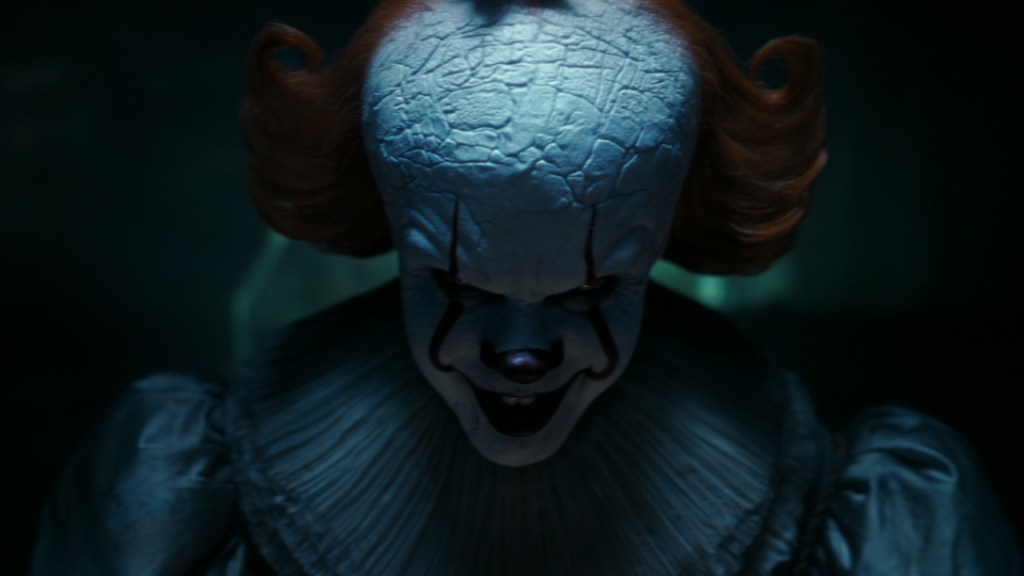
Having a whole HBO show centered around Stephen King’s IT and its iconic character, Pennywise the Dancing Clown, always felt like it would be an obvious success. It’s honestly a little bit strange that it didn’t come sooner, given that the two-part film adaptations, IT: Chapter One and IT: Chapter Two, are two of the highest-grossing horror films ever made (with Chapter One holding the top position). The wait is over as the first season of the films’ spin-off show IT: Welcome to Derry recently ended. Though it received some online fan criticism for taking its time, I found it to be absolutely thrilling. Frankly, I think it’s a lot better than Chapter Two was.
Set in Derry, Maine, in the early 1960s, IT: Welcome to Derry — which was developed by Jason Fuchs, Barbara Muschietti, and IT-filmmaker Andy Muschietti — follows a group of young kids, who all start to experience various horrific events, as they investigate the disappearance of a classmate, who is presumed dead by law enforcement and whose disappearance has resulted in the projectionist at the local cinema, Hank (played by Stephen Rider), being named the prime suspect. Meanwhile, Leroy Hanlon (played by Jovan Adepo), a US Air Force Major who has recently moved to the town with his family, gradually becomes more and more involved in a confidential plan to uncover the evil that appears to permeate the town at specific points in history.
Now, of course, having a season of television in this universe pretty much means that you have to focus on a group of kids given its villain, still, the show ran the risk that the show would feel old hat. Therefore, it has to be said up top that one of the major reasons why this show works is that the young cast in the show is excellent. Although some play characters which are one-dimensional, I thought they all carried their characters well and turned in strong work. I particularly have to highlight Arian Cartaya, who plays Rich Santos, and Matilda Lawler, who plays Marge Truman, the two of whom, in particular, have a great rapport. They helped to make this season of television emotionally investing and genuinely moving.
Ultimately, I absolutely loved the show. I think it got a lot out of its scares, which are often both inventive and boundary-testing for TV. You could even argue that some of these scares are even more horrifying than some of the highlight sequences from the films. Sure, some CGI in early episodes can take you out of the reality of the show, and, sure, it takes some time for Pennywise to appear in the show. But I really dug the patient approach as the IT character isn’t just Pennywise. That said, once the Pennywise form of the antagonist does show up, Bill Skarsgård turns in a phenomenal monstrous performance as one of the horror genre’s biggest icons. In certain episodes, his work is the standout element.
The primary significant negative notes, for me, were that 1) the army storyline doesn’t fully work as it never felt genuine or appropriate for the subject matter (despite it being a good way to introduce a key character from Stephen King’s universe, who is played really well by Chris Chalk), and 2) while the excellent episode titled The Black Spot was a real highlight partially given there are great individual shots in the big fire scene that nails the claustrophobic element, too much of the firey sequence just looked orangey and endless, so much so that your sense of the location drifted away.
Although I also, on the whole, liked the season finale and how things were wrapped up, I don’t think it was an entirely smooth landing for the show. There are several reasons for this, one of which is that it felt like it was made up of a lot of late additions or reshoots (given 1) the townwide fog obscuring everything, thus making it easy to film on a closed studio set, 2) young actors looked older and spoke in a more modern fashion, and 3) a dagger’s sudden Tolkien-esque effect on people felt thrown in at the last minute). The season finale also felt quite rushed, and some moments stretched credulity. I will also say that there are a few lines in the season finale that are a little bit too on the nose.
If the show can continue with this way of patiently building a season of television, carefully planting Kingverse easter eggs, while primarily caring about creating great character dynamics and giving Skarsgård room to build on his work in the films, then they’ve got a great formula to work with for future seasons. That said, there is a quite significant revelation in the season finale that I have mixed feelings on, as it is both quite an interesting new perspective on the perspective of IT, but also potentially a change that makes the world of the show seem much smaller.
– Review written by Jeffrey Rex Bertelsen.

 I'm Jeffrey Rex