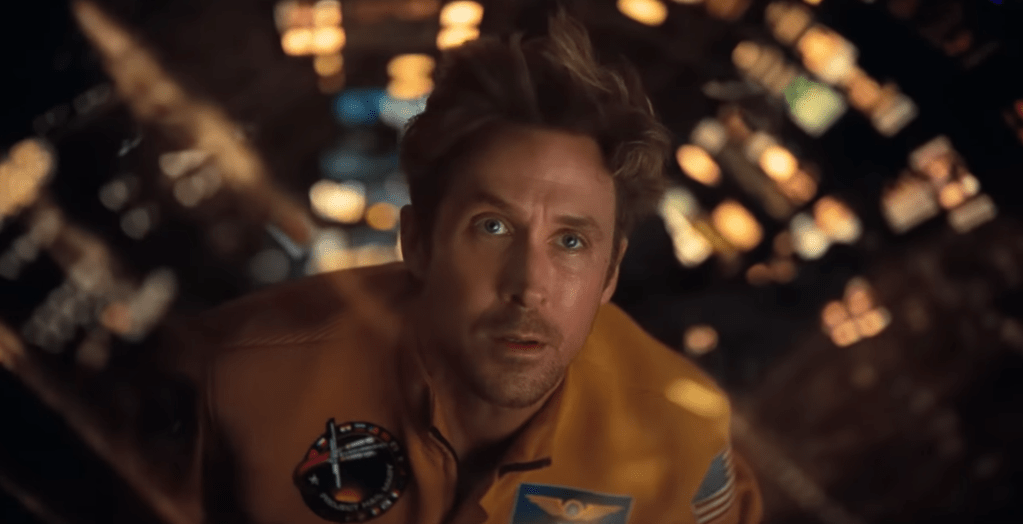
Ryan Gosling in PROJECT HAIL MARY — PHOTO: AMAZON MGM STUDIOS (Still image from trailers).
Directed by Phil Lord and Christopher Miller (21 Jump Street; The LEGO Movie) — Screenplay by Drew Goddard (The Martian).
Based on the Andy Weir novel of the same name, Phil Lord and Christopher Miller’s Project Hail Mary follows Dr. Ryland Grace (played by Ryan Gosling), a former molecular biologist and middle school teacher, who wakes up on a spacecraft several light-years away from Earth with no memory of how he got there. As Grace’s memory slowly comes back to him, he investigates the spacecraft and finds that he is the sole survivor of a three-person crew sent out to find out how we can stop an extinction-level event from further harming Earth. A microorganism known as Astrophage, which is exponentially increasing its size, appears to be dimming our Sun and several stars in our solar neighborhood. The crew, including Grace, was sent out to figure out why Tau Ceti is the only unaffected star in the vicinity. Unsure about how to carry out his mission, Grace eventually comes into contact with an alien entity, which he dubs ‘Rocky,’ and its own glorious spacecraft. When Grace finds a way to communicate with Rocky, named so because of his ‘pile of rocks’-like body, Grace figures out that they’re there for the same reason. So, he now must figure out how to save lives at home and light-years away from our solar system.
Bugonia marks the 4th collaboration between multiple Oscar-winning actress Emma Stone and the most famous filmmaker of the so-called ‘Greek Weird Wave’ (and in a row, no less). Their latest film together is an English-language remake of Jang Joon-hwan’s black comedy titled Save the Green Planet!, a South Korean film released in 2003. Though initially conceived as an opportunity for Jang, the original filmmaker, to direct the English-language remake of his own film for an international audience (not unlike what Ole Bornedal did with his English-language Nightwatch remake in the 1990s), it is now, instead, a fascinating instance in which a European auteur is adapting an Asian original story though in a North American setting. In a way, that almost intercontinental approach is fitting for a film about people who may or may not come from different worlds in more ways than one. It’s also, frankly, a really effective film.
Varang (played by Oona Chaplin), leader of the Mangkwan tribe, in 20th Century Studios’ AVATAR: FIRE AND ASH.
Directed by James Cameron — Screenplay by James Cameron, Rick Jaffa, and Amanda Silver.
It’s time to return to Pandora. Avatar, James Cameron’s original otherworldly sci-fi epic franchise, is often criticized for lacking a significant cultural impact when compared to franchises like Star Wars, Marvel, DC, or TheLord of the Rings. And yet, here we are again, and audiences are already flocking to the theaters around the world to travel back to a world populated by tall blue-skinned aliens with braids that can connect with other life forms. One of the highest-grossing (and most expensive, notably) franchises remains a spectacular cinematic event with state-of-the-art visual effects and performance capture technology. The latest film in the franchise, Avatar: Fire and Ash, is equally breathtaking visually, but there are key narrative and dialogic issues, as well as a general sense of repetitiveness, that hold it back from matching the level of the previous films.
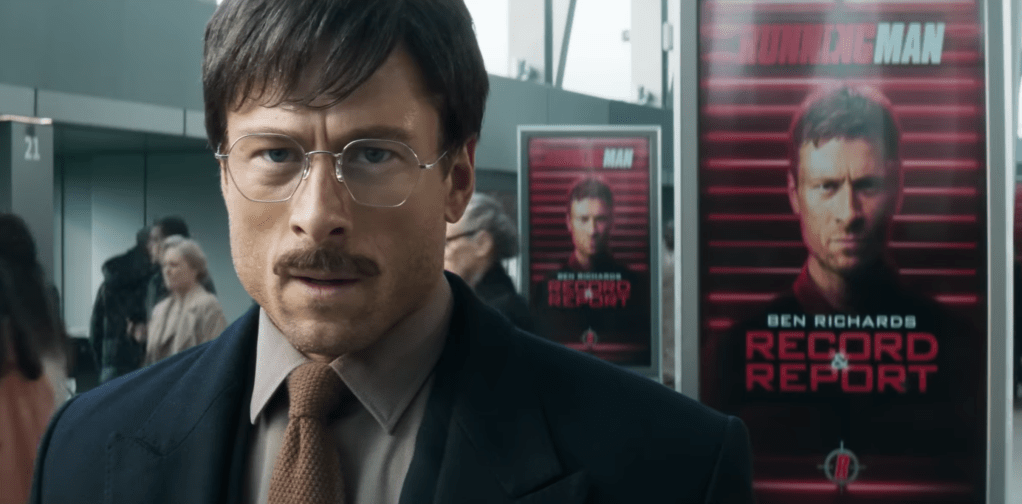
Glen Powell (as Ben Richards) in disguise in THE RUNNING MAN — PHOTO: Paramount Pictures (still image from trailers).
Directed by Edgar Wright — Screenplay by Michael Bacall and Edgar Wright.
The British writer-director Edgar Wright has a fairly significant fanbase, and I think of myself as part of that fanbase. Ever since he burst onto the scene with his second feature, Shaun of the Dead, the first film in his Cornetto trilogy, Wright has been widely praised for his distinctive brand of comedy and his distinctive visual inventiveness that has seen his film stand out for their comedically fast and/or precise editing or the way the films sometimes are paired extraordinarily well with music, with Baby Driver being his best example of that. His latest effort as a director is an adaptation of Stephen King’s sci-fi novel (written under a pseudonym), The Running Man, which was previously adapted into an Arnold Schwarzenegger sci-fi action vehicle (despite being a product of its time, it does have its moments, as well as a very good performance from Richard Dawson). It is a story that I can totally understand why it is being put on the big screen again, because that Schwarzenegger flick can be improved upon. Does Wright succeed with that challenge? Well, I’d say that he mostly does, but not by as much as I imagined he would. This is not as smooth a film as the ones Wright has become known for.
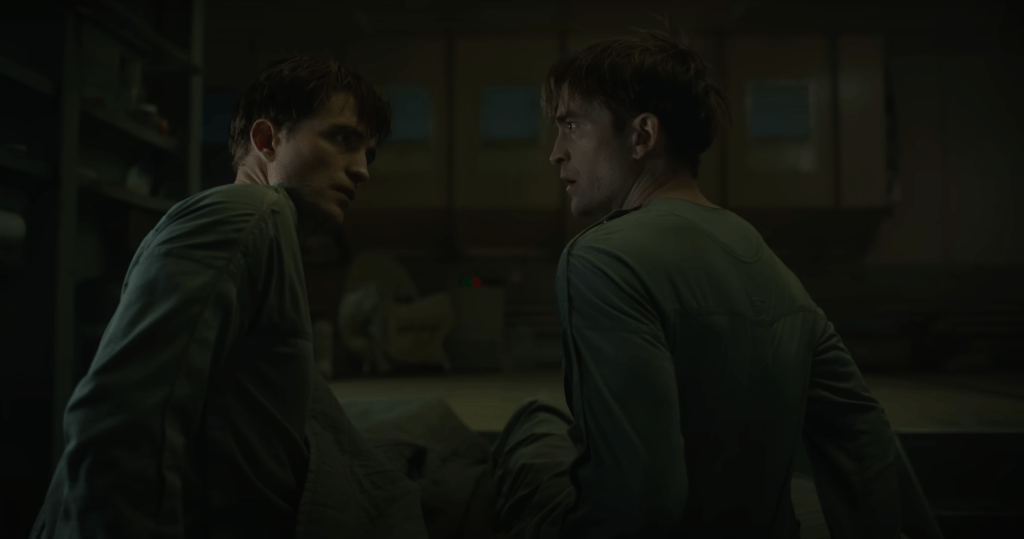
Robert Pattinson and Robert Pattinson in Bong Joon-ho’s MICKEY 17 — PHOTO: Watner Bros. Pictures (Still image from trailers).
Directed by Bong Joon-ho — Screenplay by Bong Joon-ho.
It boggles the mind that it’s been more than half a decade since the release of Bong Joon-ho’s Parasite, the first non-English language feature to win Best Picture at the Academy Awards. Director Bong’s Oscar-winning magnum opus is a widely recognized 21st Century masterpiece, and, thusly, the director’s follow-up to such an achievement would always be hotly anticipated, especially given the fact that his next release was a blockbuster-budgeted American studio release. In fascinating fashion, Bong Joon-ho has spent his Hollywood blank cheque, or carte blanche, on a scathing but funny political satire sci-fi flick about the way capitalist governments, whose leaders may use religion to gain and exercise power, view and treat the common person, women, and foreign territories, as well as its inhabitants. Bong Joon-ho’s Mickey 17, an adaptation of Edward Ashton’s novel Mickey7, is ambitious, messy, strangely predictive about the time we’re in, and very much a Bong Joon-ho film, even though it is very different from Parasite.
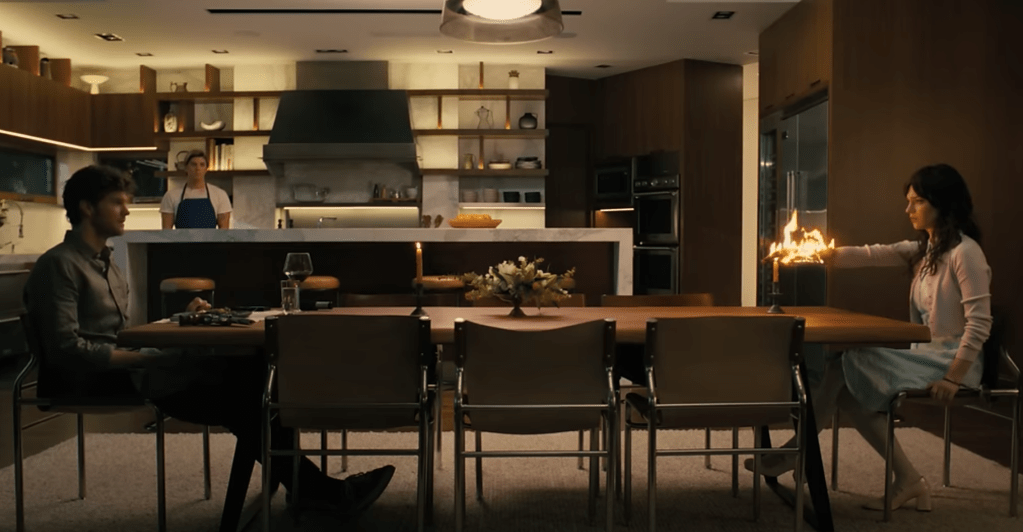
A burning Iris (played by Sophie Thatcher) sitting across from Josh (played by Jack Quaid) in COMPANION — PHOTO: Warner Bros. Pictures (still image from trailers).
Directed by Drew Hancock — Screenplay by Drew Hancock.
In the marketing for this film (more on this later), trailers have highlighted the fact that this new genre-bendy flick is the product of the studio behind The Notebook, arguably the most well-known American romance film, and the creators of Barbarian, the hugely surprising horror film with multiple tricks up its sleeves from 2022. It’s a good marketing narrative that does communicate the film’s genre fluidity from one thing to another from certain scenes to certain scenes. But, in actuality, this is the brainchild of writer-director Drew Hancock, a Blue Mountain State writer, who, to be honest, has crafted something quite entertaining for his feature directorial debut.
Cailee Spaeny as Rain face-to-face with a Xenomorph in Fede Alvarez’s ALIEN: ROMULUS — PHOTO: Disney / 20th Century Studios.
Directed by Fede Alvarez — Screenplay by Fede Alvarez and Rodo Sayagues.
The Alien franchise can mean a lot of different things depending on the person you ask. For some, Alien, due to the original Ridley Scott 1979 classic, is Jaws (or a haunted house horror movie) set in space. Others think more fondly of James Cameron’s arguably equally iconic sequel, Aliens, which injected Scott’s blue-collar space-set horror flick with action adrenalin and a militaristic focus, while still keeping its key distrust of corporations at the heart of the film. I wonder if the subsequent divisive-to-middling sequels and spin-offs only further complicated the core audience’s understanding of what an Alien film is supposed to be. When Ridley Scott returned to shepherd the franchise and meld it with some of the ideas of his Blade Runner film in both Prometheusand Alien: Covenant, they, too, divided opinion. While some embraced Prometheus‘ ambitious ideas and a key performance, others rejected them wholesale, perhaps because it wasn’t enough of an Alien film or for its specific answers (or lack thereof) as a prequel film, though I acknowledge that some may feel that to be an oversimplification of people’s problems with it. In any case, Scott responded with Alien: Covenant, which continued the overarching narrative started in Prometheus, but also, at the same time, sometimes felt like an effort to compromise and satisfy those that felt Prometheus was too different. The naysayers weren’t won over by Alien: Covenant, which, I contend, is actually an extremely underappreciated film, and the film was a box office disappointment. Seven years later, we now have the first Alien film since Disney acquired 20th Century Fox titled Alien: Romulus, which is a solid and suspenseful horror throwback. However, truth be told, it is also maybe a little bit too safe of a film given the big choices and risks that directors like Ridley Scott, James Cameron, and David Fincher have taken over the years.
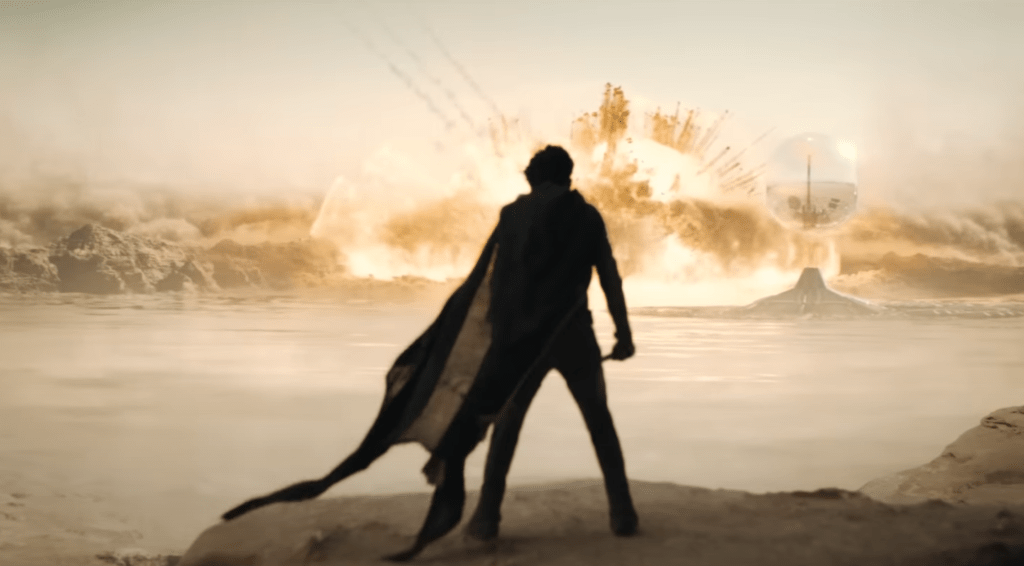
Timothée Chalamet as Paul Atreides in DUNE: PART TWO — PHOTO: Warner Bros. Pictures.
Directed by Denis Villeneuve — Screenplay by Denis Villeneuve and Jon Spaihts.
I don’t know if I’ve ever told this story before, but I have this vivid memory where — when I was probably around the age of ten — I looked up at my mother and asked her a question. I had either just seen The Lord of the Rings: The Return of the King, or else it was about to come out and I knew it was going to be the last film in the trilogy. With a note of sadness in my voice, I looked up at my mother and asked her something along the lines of “What happens after the Lord of the Rings? Will we ever get anything as good as that ever again?” You have to understand that in those early 2000s, we were being treated to fantasy filmmaking of the highest order with Peter Jackson’s Tolkien adaptations, while Sam Raimi was hard at work on Spider-Man 2 following the success of the first one, and after George Lucas’ Star Wars: Episode II — Attack of the Clones, we all knew that there was only a single film left in the so-called prequel trilogy. At the age of ten, I was blown away by what I was seeing, but I could also see an end to what we were getting. I wasn’t quite sure if this was a once-in-a-lifetime kind of perfect storm for fantasy and blockbuster filmmaking or not. Of course, in the years to come, Hollywood would go on to shovel dozens upon dozens of films with similar aims down our collective pop culture gullet, in an attempt to recapture what was so addicting and marvelous about Jackson, Raimi, and Lucas’ films. Hollywood, we must admit, often failed to recapture that. Now, it’s not like the Lord of the Rings, Star Wars, or Spider-Man is dead and buried — not by a long shot — but there is an argument to be made that none of those franchises have ever been afforded the same level of creative freedom for its principal filmmakers as was the case back then. So, what did my mother say? Well, with generosity and kindness in her voice, she assured me that, of course, major motion pictures with that sense of scale, scope, and artistry were not going away for good. She assured me that I had so much more to look forward to. My mother was right. Every so often something comes along that both feels like a throwback to the days when creative freedom was to be expected for filmmakers but which also feels like the perfect utilization of modern sensibilities and technical mastery. Denis Villeneuve’s two-part adaptation of Frank Herbert’s iconic science-fiction novel Dune is the perfect modern example of that. I feel so lucky. Now more than twenty years after my mother reassured me about the future of filmmaking — though perhaps not in as many words as I put it above — I have had the wonderful opportunity to watch Denis Villeneuve’s Dune: Parts One and Two in theaters with my mother, and both times the French-Canadian filmmaker has managed to both transport us to another world full of fantasy and science-fiction wonders, but also remind us — both mother and son in love with film’s transportive power — of the kind of storytelling that we love with all of our hearts.
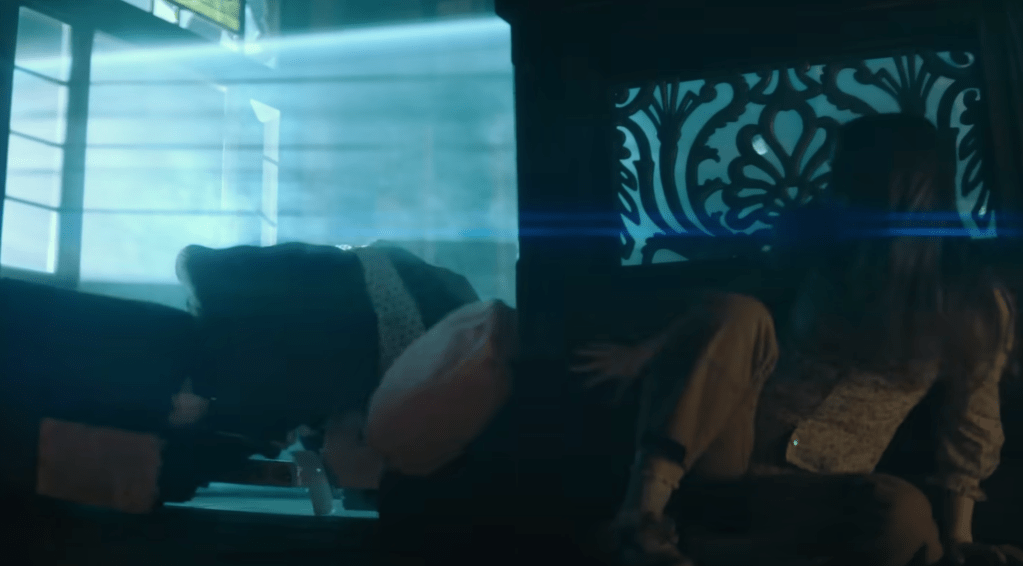
Kaitlyn Dever hiding from an Alien in NO ONE WILL SAVE YOU — PHOTO: 20th Century Studios.
Directed by Brian Duffield — Screenplay by Brian Duffield.
It is possible to sometimes find true hidden gems in the vast library of streaming services. Frankly, sometimes studios opt to dump strong films onto streaming services, even though the film in question possesses a clear and obvious theatrical release potential. This is one of those occasions. Brian Duffield’s NO ONE WILL SAVE YOU is the kind of horror science-fiction film that knows exactly what it is and how it can carve out its own place among the many inspirations that will probably be clear for most people to see. It’s exactly the kind of film that I would go crazy for in theaters, but which we have been provided with from the comfort of our own homes. Subscribers of Hulu (or Disney+ depending on your location) have been given a special little science-fiction invasion film about alienation and a specific alien home invasion.
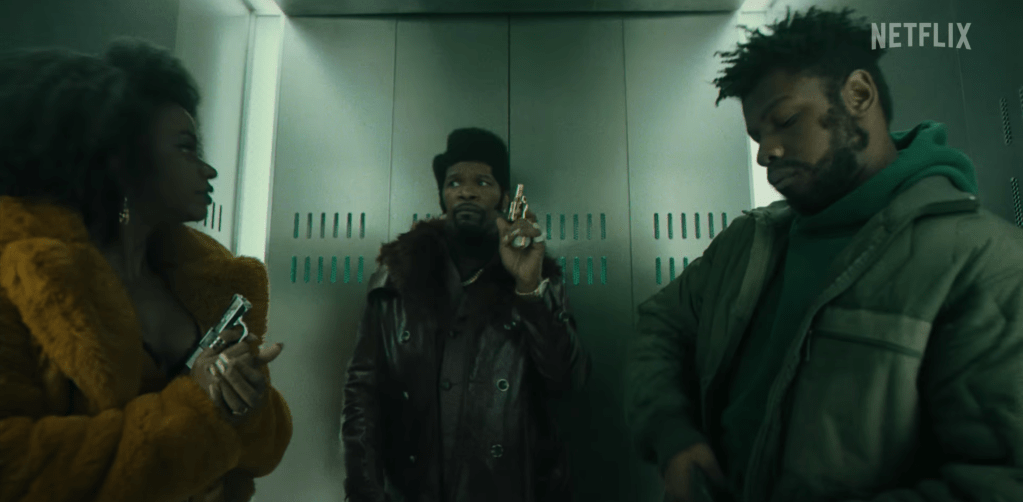
(L-R) Teyonah Parris, Jamie Foxx, and John Boyega in THEY CLONED TYRONE — PHOTO: NETFLIX.
Directed by Juel Taylor — Screenplay by Tony Rettenmaier and Juel Taylor.
Last week, moviegoers flocked to theaters — most of them dressed in pink — and walked down the pink carpet to take part in the movie event of the year known as Barbenheimer — i.e. the simultaneous release of Greta Gerwig’s Barbie and Christopher Nolan’s Oppenheimer. We were lucky to have two films that were so excellent released on the same day so that people of all ages could celebrate movie theaters all over the world. However, that same weekend, there was also a third film released that cineastes ought to check out. Released on Netflix just last week, Juel Taylor’s feature directorial debut They Cloned Tyrone is a genuinely funny and stylized sci-fi comedy that I highly recommend to audiences looking for something special from the comfort of their own home.




 I'm Jeffrey Rex