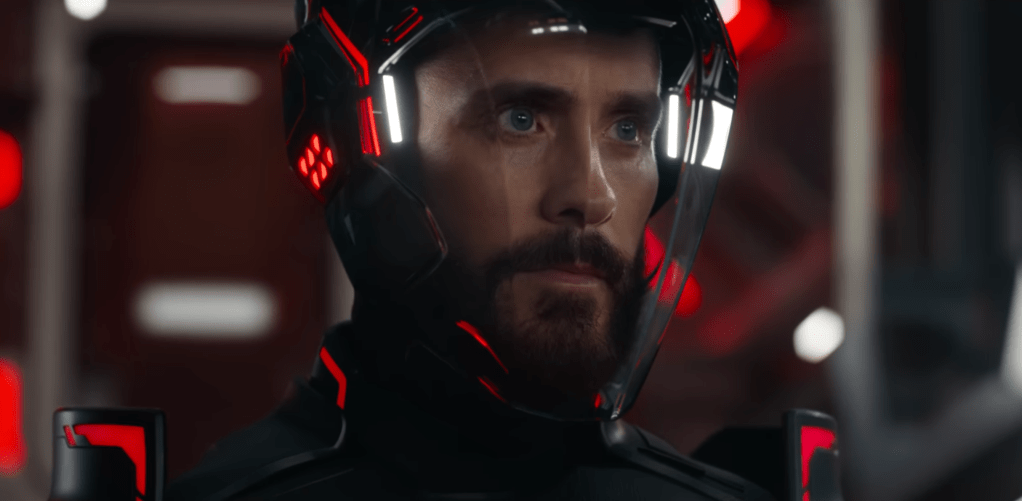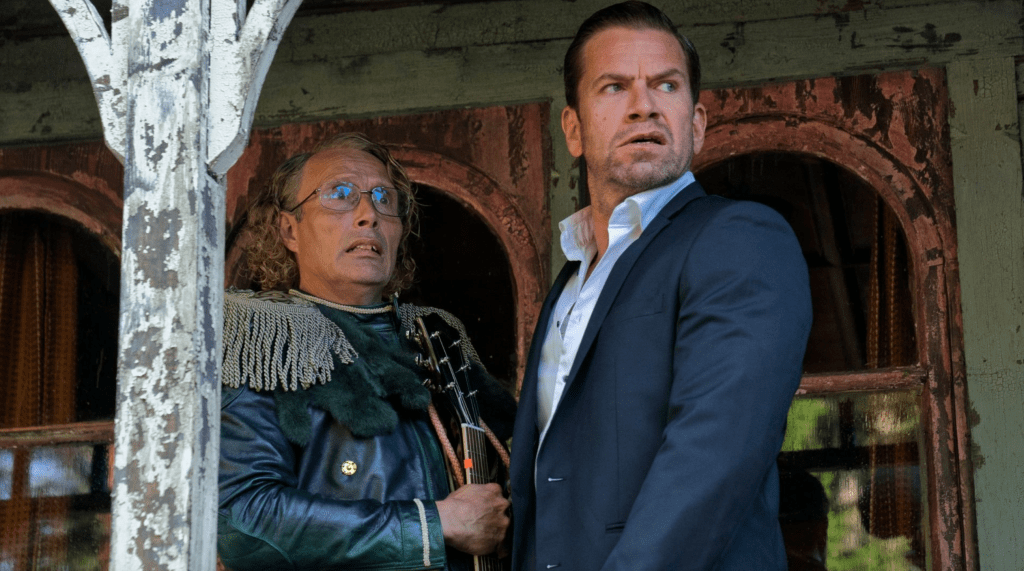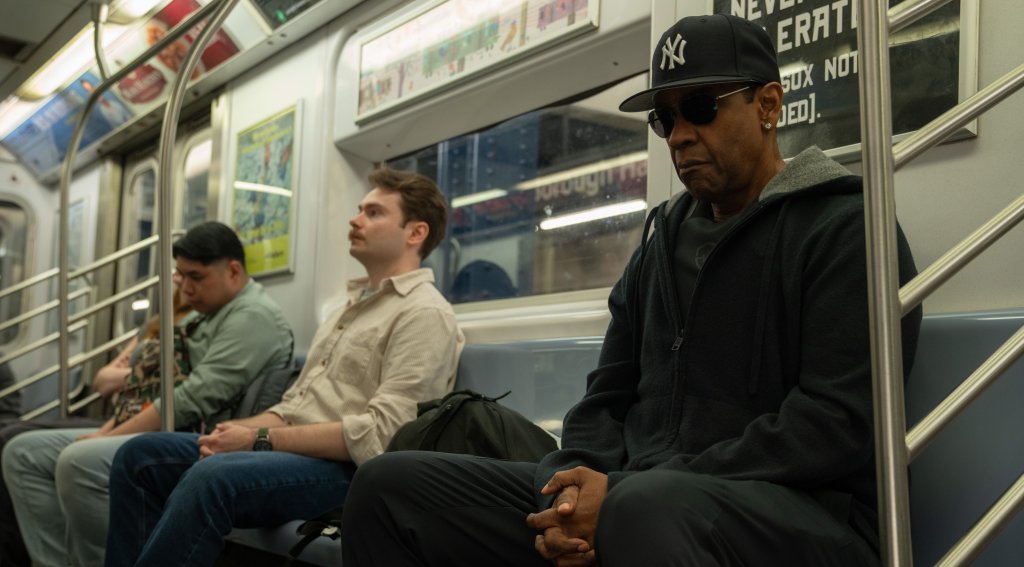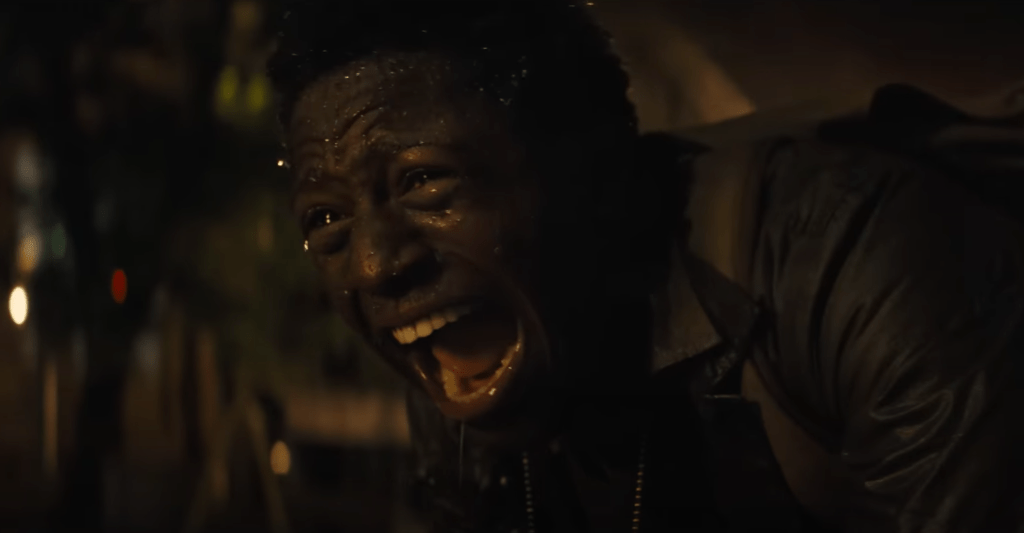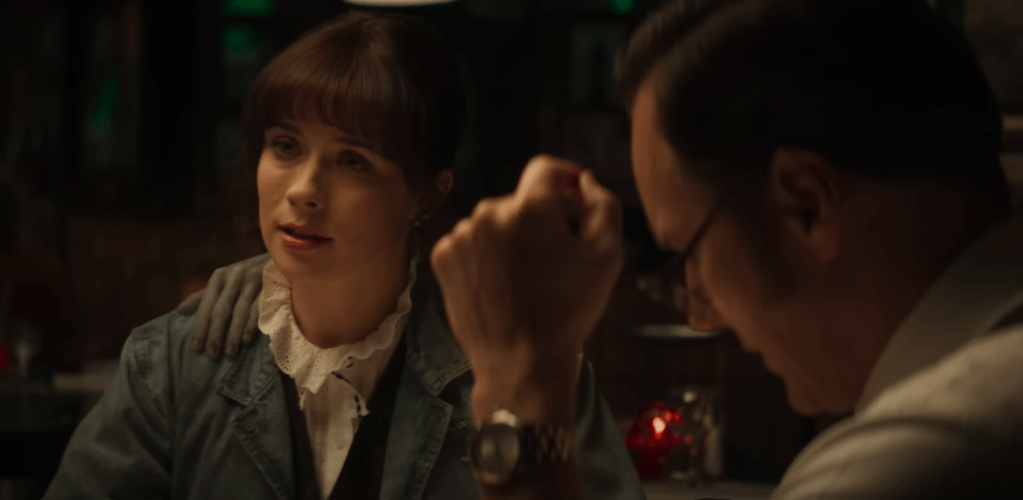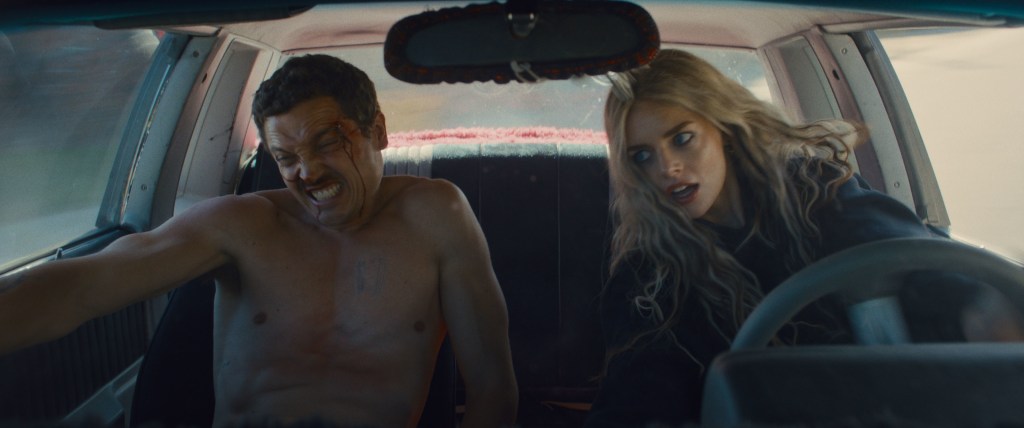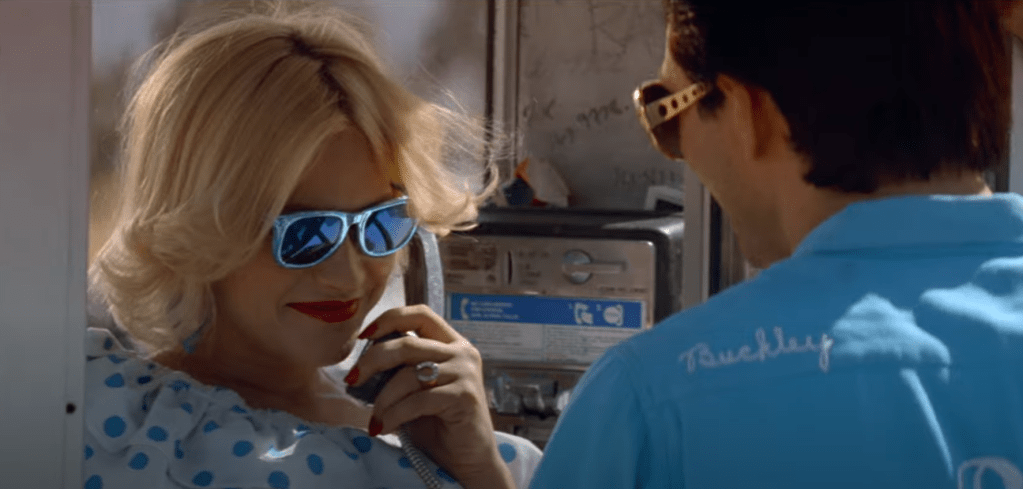
Cory Michael Smith, Steve Carell, Ramy Youssef, and Jason Schwartzman in MOUNTAINHEAD — PHOTO: HBO / Macall Polay.
Directed by Jesse Armstrong — Screenplay by Jesse Armstrong.
How do you follow up the wild success of audience and critic-favorite Succession, which earned its creator, Jesse Armstrong, four Emmys (one for each season) for writing? Jesse Armstrong opted for an HBO film, Mountainhead, that, although not explicitly connected to the universe of Succession, feels somewhat related to the corporate, capitalist, and inheritance satire that put him on the map globally. However, though it occasionally does capture the right feeling of that show, Mountainhead doesn’t quite manage to say anything new.
John Krasinski, Domhnall Gleeson, and Natalie Portman in “Fountain of Youth,” now streaming on Apple TV+.
Directed by Guy Ritchie — Screenplay by James Vanderbilt.
Guy Ritchie’s Fountain of Youth follows siblings Luke (played by John Krasinski) and Charlotte Purdue (played by Natalie Portman) as they eventually team up to go on an adventure to find — yep, you guessed it — the fountain of youth. While Charlotte works as a museum curator in London, Luke steals paintings to complete a job for Owen Carver (played by Domhnall Gleeson), a billionaire who is searching for the fountain of youth to prevent his own death from a terminal illness. Luke and Charlotte’s paths cross when he steals a painting from the museum where she works, resulting in her losing her job. When one thing leads to another, she reluctantly joins their mission, while Interpol, as well as a secret society dedicated to protecting the fountain, is chasing them.
Tom Cruise as Ethan Hunt hanging on to an airborne upside-down yellow biplane in MISSION: IMPOSSIBLE – THE FINAL RECKONING — PHOTO: Paramount Pictures (Still image from trailers).
Directed by Christopher McQuarrie — Screenplay by Christopher McQuarrie and Erik Jendresen.
When Mission: Impossible first took the leap from being a 1960s and 1970s TV series to being a cinematic franchise capable of rivalling both the most iconic spy thriller films and action extravaganzas in 1996, it was Tom Cruise’s first film as a producer. Now, 29 years later, Cruise has become Hollywood’s biggest movie star, and the film series is supposedly (if the marketing and promotion are to be believed) about to conclude with the aptly titled Mission: Impossible – The Final Reckoning, the eighth film in the series. The film features both some of the best sequences in the entire film series, but also one of the messiest opening acts of any of the films.
Trailer title card — PHOTO: Netflix (Still image from trailers).
Directed by Matt Palmer — Screenplay by Matt Palmer and Donald McLeary.
In 2021, Netflix pleased horror fans with the nostalgic horror-slasher trilogy of films, adapting R.L. Stine’s Fear Street series from director Leigh Janiak. Janiak’s films all had clear style, grisly horror sequences, and well-done references to their cinematic inspirations. They were all quite solid films that got their hooks into a certain audience, and it put Fear Street on the map for Netflix. So much so that I had, honestly, been looking forward to seeing how Netflix would follow up the relatively successful trilogy. Four years later (and, notably, without Leigh Janiak in the director’s chair), we now finally have that next step. Fear Street: Prom Queen also tries to be a nostalgic slasher flick, but it fails in most departments and, frustratingly, fumbles the goodwill that the first three films had earned.
Tony Todd in FINAL DESTINATION: BLOODLINES — PHOTO: Warner Bros. Pictures (Still image from trailers).
Directed by Zach Lipovsky and Adam Stein — Screenplay by Guy Busick and Lori Evans Taylor.
It was only a matter of time before the recent trend of legacy sequels, including in horror, would make its way to the Final Destination franchise, which burst onto the scene with James Wong’s iconic 2000 entry but stalled after Steven Quale’s Final Destination 5 in 2011. Now the horror movie franchise, which is built around a Rube Goldberg machine-esque chain reaction focus on Death’s design as a direct result of someone having cheated death, has been resurrected a quarter of a century after the release of the original film. I’ll admit that I was concerned that the inevitable legacy sequel would just be a quick cash grab, but I’m happy to report that it’s, in actuality, one of the sharpest films in the entire series. It’s clear from the first scene to the last that this was made by filmmakers who have a lot of love for these films and who understood fully what makes these films tick.
Directed by Stephen Chbosky (The Perks of Being a Wallflower) — Screenplay by Liz Maccie.
Stephen Chbosky’s Nonnas is a biographical dramedy that follows Joe Scaravella (played by Vince Vaughn), an Italian-American man, who is grieving the loss of his mother. Hoping to honor her and his grandmother’s memory, Joe, against the wishes of his closest friend Bruno (played by Joe Manganiello), uses his mother’s life insurance money to open a restaurant in her name wherein Italian grandmothers — ‘nonnas’ — will cook the dishes they know best. But that is easier said than done, as the grandmothers have a lot of opinions about how things are done in the kitchen and, notably, because Joe has no idea how much it’ll take to open a restaurant. Meanwhile, Joe hopes to rekindle an old romance with his high school sweetheart named Olivia (played by Linda Cardellini).
Anna Kendrick in ANOTHER SIMPLE FAVOR — PHOTO: Amazon Studios (Still image from trailers).
Directed by Paul Feig (Ghostbusters) — Screenplay by Jessica Sharzer and Laeta Kalogridis.
Set several years after the events of the first film, Paul Feig’s Another Simple Favor still follows content creator Stephanie Smothers (played by Anna Kendrick), who is now also known as an amateur sleuth and a true crime novelist. One day, at a book signing event, Emily (played by Blake Lively), also known as Hope, shows up to meet with Stephanie, after Emily had recently been released from prison. But, according to Emily, this isn’t really a confrontation as much as it is a very public invitation to Emily’s upcoming wedding. Emily is marrying into an Italian crime family, and she would like Stephanie to tag along and serve as her maid of honor. Hoping to evade a potential lawsuit and, at the same time, increase her book sales, Stephanie agrees to Emily’s proposal and goes with her to Italy. However, when people from the wedding party start to drop dead, Stephanie suddenly finds herself as the main suspect.
(L-R) David Harbour, Hannah John-Kamen, Sebastian Stan, Florence Pugh, and Wyatt Russell in Marvel Studios’ THUNDERBOLTS* — PHOTO: Walt Disney Studios Motion Pictures / Marvel.
Directed by Jake Schreier (Beef) — Screenplay by Eric Pearson (Black Widow) and Joanna Calo (The Bear).
When it comes to the Marvel Cinematic Universe (MCU), Marvel Studios and fans alike like to think of the series of films in distinct phases, with the first three being known as the Infinity Saga, which culminated in Spider-Man: Far From Home and Avengers: Endgamein the summer of 2019. Since then, the MCU has operated within the so-called Multiverse Saga, which, however, has largely struggled to recapture the spirit, enthusiasm, and success of the first three phases. Phases four and five have had incredible highs (e.g. Spider-Man: No Way Home) but also messy lows (e.g. Captain America: Brave New World), and with Marvel Studios’ latest release, Thunderbolts*, they’re hoping to end phase five on a high and right the ship before the sixth phase of the MCU, which is set to include major event films such as The Fantastic Four: The First Steps and two Avengers films. Whether or not Marvel Studios can recapture the prominent pop culture spot they once held is still very much up in the air, but Thunderbolts* (the asterisk is there for a reason) is definitely a step in the right direction.
(L-R) Ji-young Yoo, Ella Rubin, Michael Cimino, Odessa A’zion, and Belmont Cameli in UNTIL DAWN — PHOTO: Sony Pictures Releasing (Still image from trailers).
After years and years of middling-to-poor video game adaptations, it seems we’re finally at a moment in time when Hollywood is confidently turning video games into beloved and/or successful films or series. We’ve got The Last of Us, Fallout, Sonic the Hedgehog, and The Super Mario Bros. Movie, just to name a few. Now, of course, there are still some duds out there, such as Eli Roth’s Borderlands adaptation, which was largely regarded as one of the worst movies of last year. The latest attempt at turning a popular video game into a successful movie is David F. Sandberg’s Until Dawn from Sony Pictures, with which the studio is hoping to find low-budget horror movie success, like certain studios have become quite known for on a regular basis, but with a video game adaptation. In a lot of ways, Until Dawn makes a lot of sense for that model, and, heck, it should be a success given the horror movie veterans — like Gary Dauberman and David F. Sandberg — they’ve hired to get the job done. But does Until Dawn succeed as a video game adaptation? Frankly, I think it’ll divide opinion.
Michael B. Jordan and Miles Caton in Ryan Coogler’s SINNERS — PHOTO: Warner Bros. Pictures (Still image from trailers).
Directed by Ryan Coogler — Screenplay by Ryan Coogler.
Ryan Googler should be a household name. He burst onto the scene with his incredible feature debut Fruitvale Station, revitalized the modern American sports drama (and an iconic franchise) with Creed, broke box office records with the iconic superhero film Black Panther, and took on the daunting task of making a sequel to his superhero epic, even though it would be without its leading man with Black Panther: Wakanda Forever, following Chadwick Boseman’s tragic passing. Coogler has proven himself to be a commercially viable filmmaker with something on his mind and the skill with which to pull off his ideas breathtakingly. But now he’s finally made something unique and original, despite the genre tropes his film willingly embraces, following years upon years of working with true stories, established characters, or within the Marvel machine. Ryan Coogler’s Sinners is an original vampire period film of which he insisted on having full creative control and future ownership, with a deal that resembles what Quentin Tarantino, among others, have done before him. That was a deal worth fighting for, because Sinners is the kind of instant classic original genre film that will blow people away.