Ti West’s X takes place in the late 1970s and follows a cast of pornographic actors — Maxine (played by Mia Goth), Bobby-Lynne (played by Brittany Snow), and Jackson (played by Scott Mescudi) — and a film crew — producer Wayne (played by Martin Henderson), ambitious amateur director R. J. (played by Owen Campbell), and R. J.’s girlfriend Lorraine (played by Jenna Ortega). They are on a road trip and are headed to a farmhouse, at which they intend to shoot their adult film. However, the owners of the house, an elderly couple, don’t know what they intend to film on their property, and the sight of Maxine awakens a disturbing lust inside the elderly woman that calls the farmhouse her home.
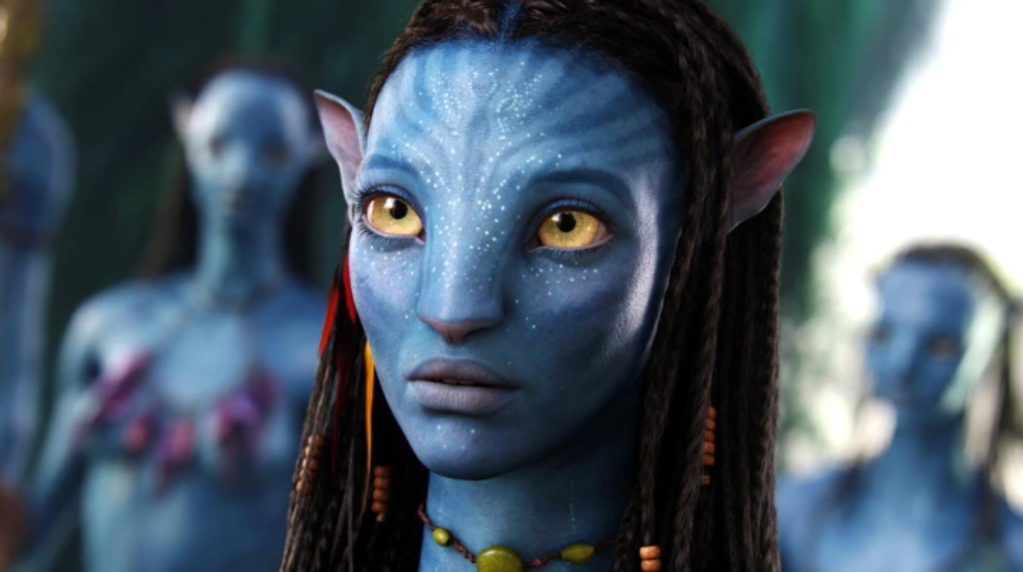
Britain Dalton’s LO’AK interacts and bonds with Payakan, a whale-like creature, in AVATAR: THE WHALE OF WATER — PHOTO: 20th Century Studios / Disney.
Directed by James Cameron — Screenplay by James Cameron, Rick Jaffa, and Amanda Silver.
The long-awaited sequel to Avatar that many have bemoaned was unnecessary (in spite of the original film being one of the biggest films of all time) is here. Frankly, I wasn’t sure it was ever going to come out, but, after a 13-year waiting period, it is finally here. It exists. I was 16 years old when the first film was released. Now I’m 29. The wait is over. And, hey, it’s actually an excellent improvement on the first film. Moreover, it definitely is a must-see transportive theatrical experience.
James Cameron’s late 2000s sci-fi epic is one of the biggest movies of all-time – Photo: 20th Century Fox.
Directed by James Cameron — Screenplay by James Cameron.
Whether it’s due to disbelief, overhype, or that product having been oversold, I think we’ve all been guilty of calling something widely praised or beloved ‘overrated.’ When Avatar first came out, people were perhaps slightly hyperbolic when it came to praising the somewhat allegorical James Cameron sci-fi epic. I was a teenager when it was released, and I remember once standing in line at a Blockbuster as people were over-the-moon excited to own the film on physical media. I hadn’t seen it in theaters and, after having seen it, I struggled to really be as thoroughly overwhelmed by it as other people seemed to have been. I really enjoyed the Leona Lewis song, and I thought it looked really good. I recognized that it was a solid picture, but, when I finally saw it, I do remember thinking something along the lines of “is that what all the fuss was about?” It wasn’t the best thing since sliced bread, which it certainly felt like it had been sold as.
The titular wooden boy in Guillermo Del Toro’s PINOCCHIO — PHOTO: NETFLIX.
Directed by Guillermo Del Toro and Mark Gustafson — Screenplay by Guillermo Del Toro and Patrick McHale – Story by Guillermo Del Toro and Matthew Robbins.
The story of Pinocchio has been told and retold over and over again since Carlo Collodi first wrote it in the 1880s. Nowadays it is mostly known for its classic 1940s Disney adaptation about a wooden boy who wants to be real and who sings the classic line about there being no strings on him. This year, Disney even tried to release a live-action remake which came and went without making much of an impression. Hopefully, fate will be kinder to Netflix’s stop-motion animation film that is directed by Guillermo Del Toro and Mark Gustafson, as it presents a more mature version of the story that updates the classic tale to a time of war.
In Guillermo Del Toro’s Pinocchio (titled thusly, even though he is not the only credited director), Geppetto (voiced by David Bradley) is heartbroken from the loss of his son Carlo decades ago in a bombing raid. On one of his nights out drinking, Geppetto screams angrily to the skies as lightning flashes above, and the woodcarver decides to cut down the pine tree that was planted in his son’s memory. Geppetto goes to work and carves the tree until he has created a wooden boy. When Geppetto passes out, Sebastian J. Cricket (voiced by Ewan McGregor) witnesses a spirit bringing the wooden boy to life as Pinocchio (voiced by Gregory Mann). Adamant that Pinocchio must be exactly like Carlo and be kept away from real-world dangers, Geppetto soon finds out that he cannot control his new lively boy, who gradually becomes more and more interesting to a traveling circus and the Italian government.
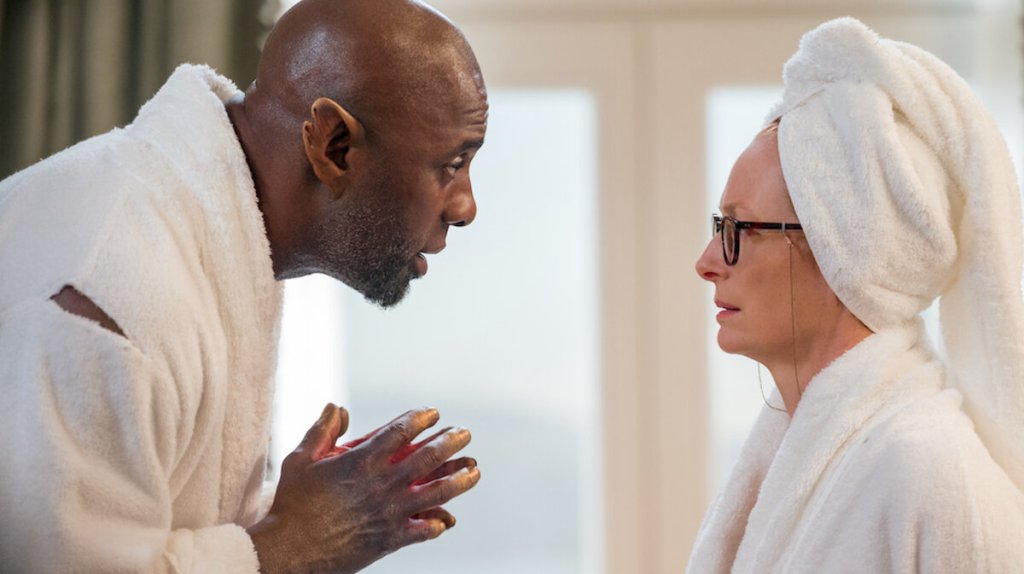
Idris Elba as the Djinn and Tilda Swinton as Alithea Binnie in THREE THOUSAND YEARS OF LONGING — PHOTO: Metro-Goldwyn-Mayer..
Directed by George Miller (Mad Max: Fury Road) — Screenplay by George Miller and Augusta Gore.
Quite clearly a passion project for the Australian filmmaker, George Miller’s Three Thousand Years of Longing is based on A. S. Byatt’s collection of short stories titled The Djinn in the Nightingale’s Eye. It follows a British scholar named Alithea Binnie (played by Tilda Swinton) who, while in Turkey, buys an antique bottle, which, later, unleashes a great and powerful Djinn (played by Idris Elba). The Djinn is desperate for Alithea to make three wishes, but she — as a narratologist with a deep understanding of narrative structures, traits, and tropes — is worried that the Djinn is just a hallucination or possibly even a trickster. In an attempt to convince her, the Djinn tells her his life story.
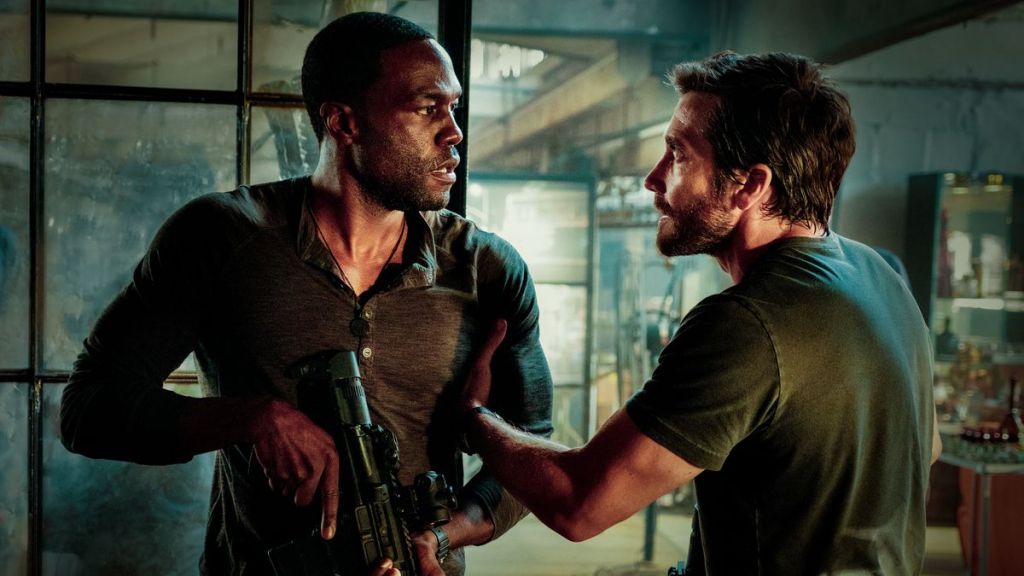
Yahya Abdul-Mateen II and Jake Gyllenhaal in AMBULANCE — PHOTO: Andrew Cooper / Universal Pictures.
Directed by Michael Bay — Screenplay by Chris Fedak.
At this point, I’m starting to get used to the idea of seeing Jake Gyllenhaal in American remakes of Danish films. In 2009, he appeared in Jim Sheridan’s Brothers, a remake of Susanne Bier’s Brødre. In 2021, he appeared in Antoine Fuqua’s The Guilty, a remake of Gustav Möller’s Den Skyldige. And now, in 2022, he stars in Michael Bay’s Ambulance, a remake of Laurits Munch-Petersen’s Ambulancen. I don’t know what it is that draws him to Danish projects. What I do know is that I think Bay’s remake might be an improvement on the Danish film.
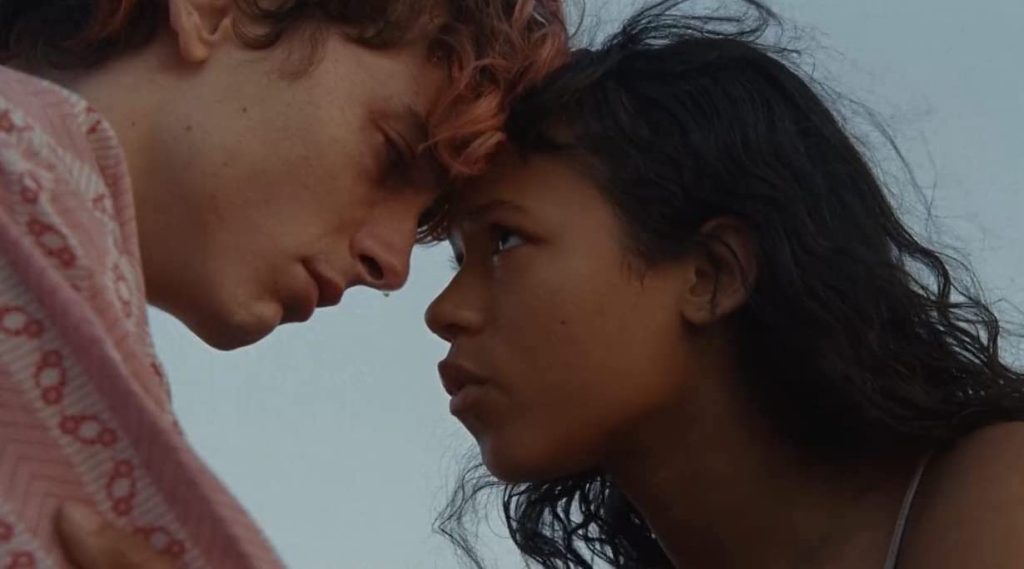
Timothée Chalamet and Taylor Russell in BONES AND ALL — PHOTO: Metro-Goldwyn-Mayer Pictures / Warner Bros. Pictures.
Directed by Luca Guadagnino — Screenplay by David Kajganich.
Call Me By Your Name was my introduction to the work of Italian auteur Luca Guadagnino. In my review of Call Ne By Your Name, I went to great lengths in emphasizing the power of cinema, the universality and transformative nature of Guadagnino’s film, and a couple of the incredibly well-realized performances in said film. Since then, I’ve seen a few additional films of his, but none of them have reached the heights of his 2017 coming-of-age masterpiece. When I first heard about the fact that Guadagnino had made a new coming-of-age film also starring Timothée Chalamet, I became very curious. When I found out that it was supposed to be a cannibal romance film, my eyes widened in surprise. Bones and All, his cannibal romance, is probably my second favorite film of his. That said, it definitely isn’t as easy of a film to, ahem, ‘eat up’ as his 2017 film was.
Directed by James Gunn — Screenplay by James Gunn.
I’ve made it no secret that the Guardians of the Galaxy films mean a great deal to me. I saw the first film in theaters with my family when we greatly needed something to smile about and we all absolutely loved it. It came around at the exact right time, and James Gunn’s spin on these C-List Marvel characters has made them family favorites (and I’m sure that isn’t just true in my family). I’ve often said that it had the potential for a Star Wars-like impact on a generation, and so I thought it was a hilarious and brilliant idea for James Gunn to add to his overarching narrative about this group of Guardians with a holiday special, as Star Wars’ infamous 1978 holiday special is still spoken about to this day. Thankfully, whereas the Star Wars special was criticized so much that it has never been officially rereleased, this Guardians of the Galaxy special feels much more appropriate to the tone of the films it has spun off from. Like how Werewolf by Night was an entertaining Halloween Marvel Studios special presentation, James Gunn’s Christmas special is exactly what I needed to reconnect with the holiday spirit just in time for December.
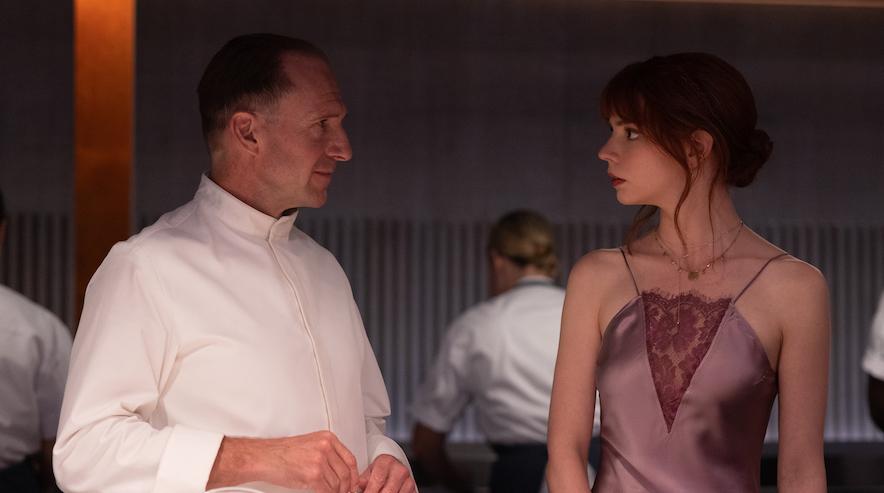
Ralph Fiennes’ Julian Slowik sizes up Anya Taylor-Joy’s Margot, who wasn’t supposed to be there, in THE MENU — PHOTO: Eric Zachanowich / Searchlight Pictures.
Directed by Mark Mylod — Screenplay by Seth Reiss and Will Tracy.
Mark Mylod’s The Menu follows Margot (played by Anya Taylor-Joy) and her food-obsessed boyfriend, Tyler (played by Nicholas Hoult). Tyler has paid for them to go to this highly exclusive restaurant called ‘Hawthorne,’ which resides on this little remote island. Hawthorne is home to the world-renowned chef Julian Slowik (played by Ralph Fiennes) and his highly devoted kitchen staff. Tyler has paid an obscene amount of money to get there because he worships Slowik, and, in actuality, the trip wasn’t originally meant for Margot but rather for his ex-girlfriend. In fact, Margot seems wholly disinterested in the pretentious dishes and overall culture around high-end cooking. She stands out immediately among the guests who also include a food critic that can make or break careers (played by Janet McTeer), tech investors, a past-it actor (played by John Leguizamo), and others. For this evening, Slowik has prepared a detailed but theatrical menu that toys with expectations and that takes aim at his guests. But, eventually, Margot and others start to question whether what is happening is showy high-end cooking or something much more malicious.
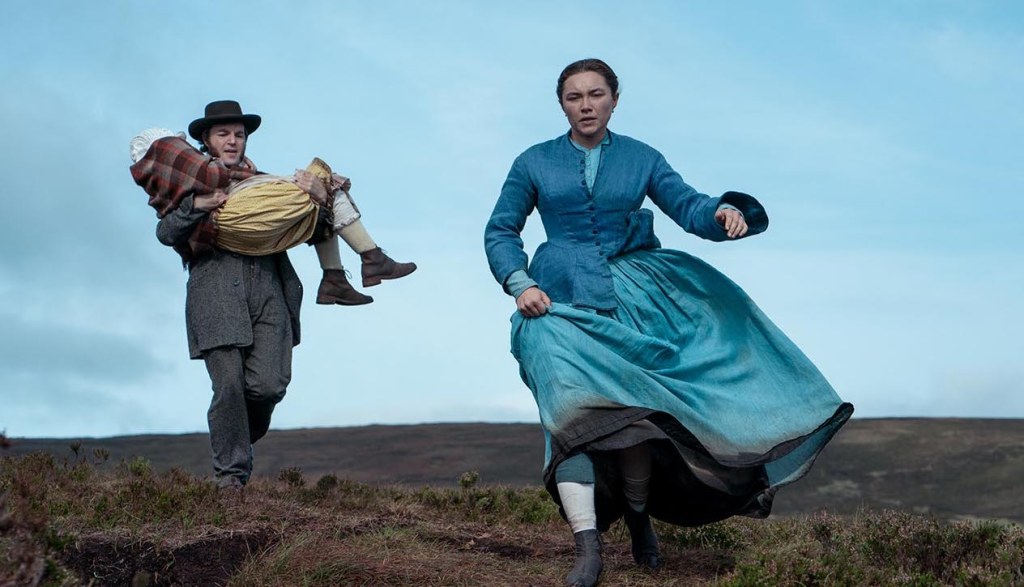
Florence Pugh, right, in Sebastián Lelio’s THE WONDER — PHOTO: Aidan Monaghan / NETFLIX.
Directed by Sebastián Lelio — Screenplay by Emma Donoghue, Alice Birch, and Sebastián Lelio.
General audiences are unlikely to see an opening shot as surprising or even mystifying as the opening shot in Sebastián Lelio’s The Wonder. If you go in knowing that you are about to watch a period drama set in the 1800s, then you’re going to raise your eyebrows when you see what awaits you. Lelio’s first shot shows an empty film set warehouse and a scaffolded house that likely contains a principal set for the film. A female voice sets the mood by way of an absorbing and mysterious narration that emphasizes how the characters in the story cling to and fully believe the stories they tell. As the camera glides into a set containing Florence Pugh in-character, the film begins properly. It is a showy opening that is effective in underlining the questionable reality of the stories we ourselves gather around a television — or inside a theater — to watch, and, even though this framing device is a narrative-breaking technique (not its only fourth wall-breaker in the film) that isn’t wholly unique (just see last year’s HBO Scenes From A Marriage remake), it absolutely is an opening that takes your hand and asks you to partake in the story’s mystery. I think you should accept the offer and the instruction to buy into what you’re seeing.





 I'm Jeffrey Rex