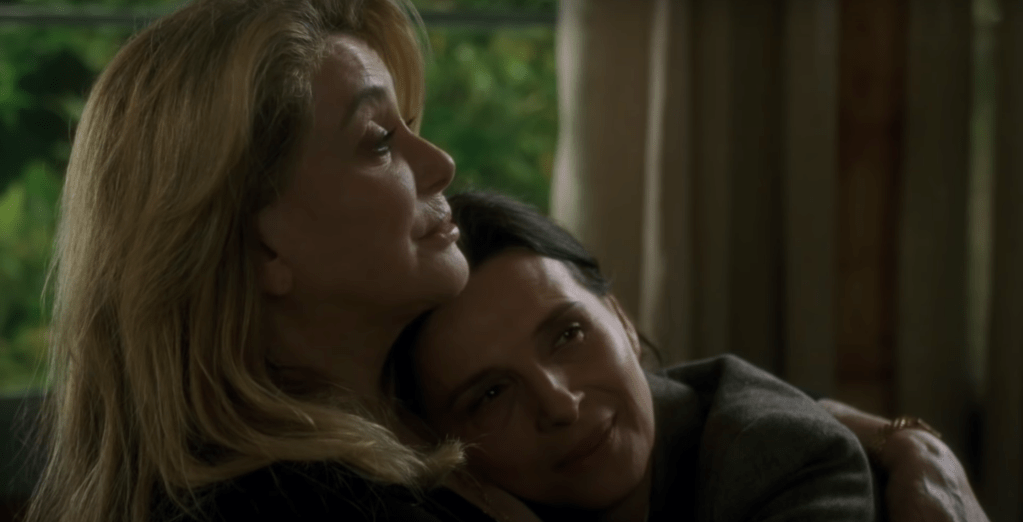
Catherine Deneuve and Juliette Binoche as mother and daughter in Hirokazu Kore-eda’s THE TRUTH — PHOTO: GAGA / LE PACTE.
Directed by Hirokazu Kore-eda — Screenplay by Hirokazu Kore-eda.
The first of his films not to be set in Japan, Hirokazu Kore-eda’s The Truth follows Fabienne Dangeville (played by Catherine Deneuve), an extremely famous French actress, as she welcomes her daughter, Lumir (played by Juliette Binoche), her son-in-law, Hank (played by Ethan Hawke), and her grandddagther, Charlotte (played by Clémentine Grenier), into her home while she’s about to release her memoir and shoot a science-fiction film. Fabienne’s selective memory, the fabricated stories in her memoir, and a talented co-star inspire Lumir to confront her mother about their relationship, as well as their memory of a certain family friend.
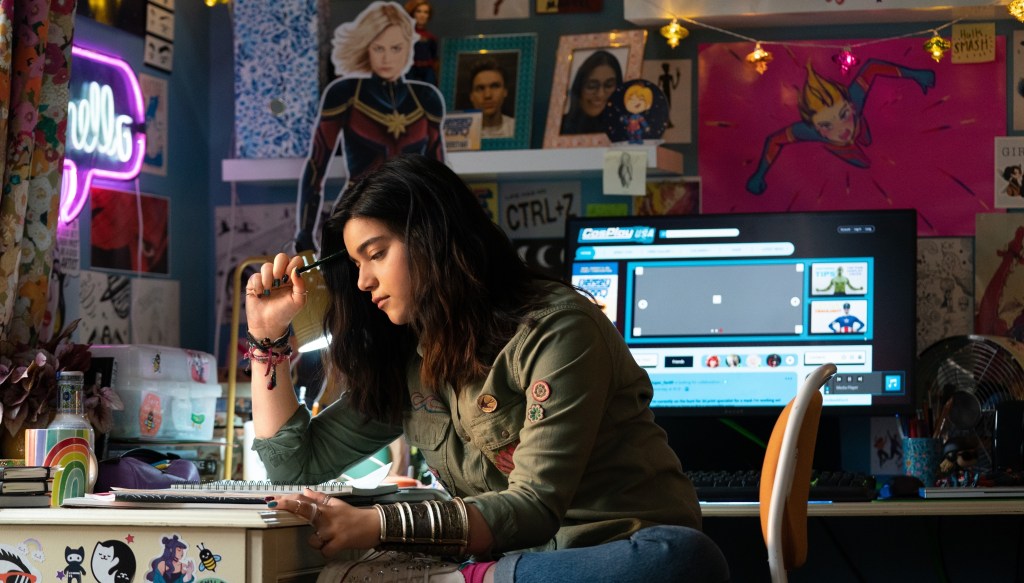
Iman Vellani’s charming performance as ‘Kamala Khan’ is easily the best part of Nia DaCosta’s THE MARVELS. — PHOTO: Laura Radford / Walt Disney Studios Motion Pictures.
Directed by Nia DaCosta (Candyman) — Screenplay by Nia DaCosta, Megan McDonnell, and Elissa Karasik.
Something feels off about retitling the sequel to a billion-dollar hit like Captain Marvel into ’The Marvels.’ While I get that part of the idea is that two characters in this film are both called ‘Marvel’ — Ms. Marvel and Captain Marvel — had it been almost any other major character like, say, Iron Man who teamed up with someone of a similar name like, say, Ironheart, then it almost definitely would’ve stuck by the Iron Man title because of how popular his films are and because of how relatively unknown the secondary character is (even if, like with The Marvels, it were team-up film). After all, you’ll want to stick to the title of the character making you a lot of money. So, why has Marvel Studios abandoned its principal character in the title? Perhaps it’s because a toxic vocal minority of the fanbase had been review-bombing the first film and because said vocal minority has insisted on making the internet a tough place to be a fan of the character. Once upon a time, fandoms were largely regarded as good and uplifting groups of people, but now toxic vocal minorities have ruined it for everyone. Now, I’m not saying that not calling it Captain Marvel 2 is the main reason for this sequel wildly underperforming at the box office (there are a bunch of reasons such as genre fatigue, sexism, and unfortunate release timing as it falls in the middle of industry strikes), but ever since that title was announced I have been disappointed that they didn’t stick to the name of their principal character in the film. I desperately wanted them to underscore their support of the character and, especially, the actress portraying the character.
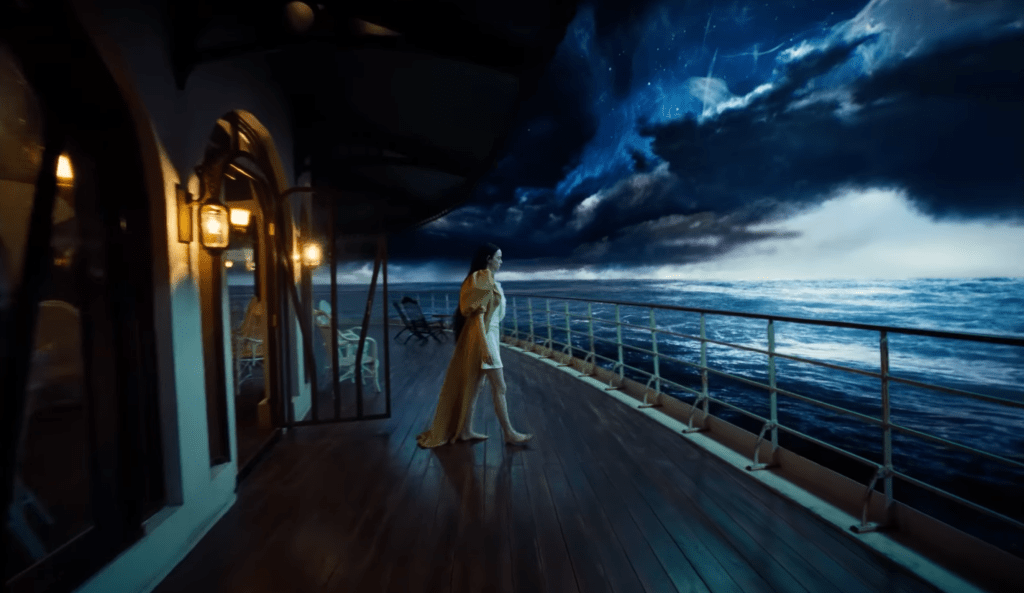
Emma Stone as ‘Bella Baxter’ on a cruise ship looking out to a dazzling view in Yorgos Lanthimos’ POOR THINGS — PHOTO: Searchlight Pictures.
Directed by Yorgos Lanthimos — Screenplay by Tony McNamara.
Greek auteur Yorgos Lanthims’ English-language films have all had a clear and obvious imprint of his on them. We have seen this in the absurdist genre-benders The Lobster and The Killing of a Sacred Deer — both remembered for the characters’ deadpan delivery and Lanthimos’ distinctive style, with the former being a comedy and the latter being something akin to a psychological thriller — but also in the much more accessible period chamber-piece and Oscar-triumph The Favourite. It would’ve been understandable for admirers of his to worry that by becoming more of a ‘name’ in Hollywood that might lead him to abandon his recurring themes or distinctive absurdist style to curry favor in Tinseltown. If you have been concerned about that then rest assured knowing that it is not the case. Rather, his latest feature-length effort Poor Things shows that the European auteur has steered back in the other direction by having his most ambitious English-language feature yet be just as potentially prickly, boundary-testing, strange, and borderline inaccessible for sheer brazenness as his first two English language features. Yorgos Lanthimos’ Poor Things is ambitious, humorous, naughty, and off-kilter in the way art films are sometimes perceived to be by the average moviegoing audience, and, from my perspective, it also happens to be Lanthimos’ best work to date. Poor Things will shock certain audiences, but, make no mistake, Lanthimos’ absurdist and bold female coming-of-age film is one of the very best films of the year. Poor Things gives Greta Gerwig’s Barbie a run for its money when it comes to crowning 2023’s best film about the female experience and male attitudes to female bodily autonomy, agency, and liberation.
(L-R) Jason Statham in MEG 2: THE TRENCH (Warner Bros. Pictures), Halle Bailey in THE LITTLE MERMAID (Walt Disney Studios Motion Pictures), and Rachel Sennott and Ayo Edebiri in BOTTOMS (Metro-Goldwyn-Mayer Pictures).
In this edition of Additional Bite-Sized Reviews, I have had a look at one of the very best and funniest movies of the past year, a live-action remake of an animated classic, and a, for some, much-anticipated summer movie sequel. All of these are 2023 flicks that you may or may not have missed. Click below to learn more about my thoughts on the specific films.
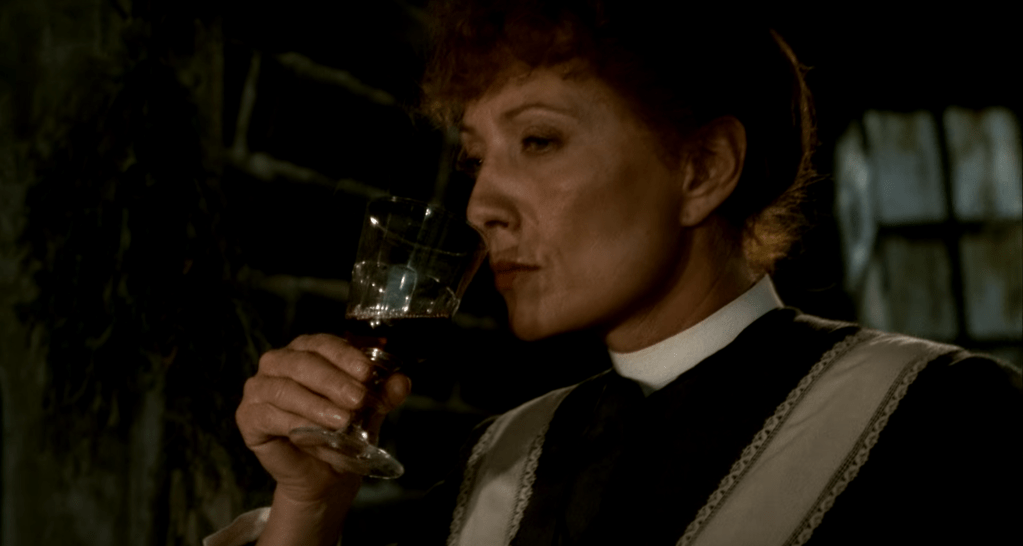
Stéphane Audren in Babette’s Feast — PHOTO: Nordisk Film.
Directed by Gabriel Axel — Screenplay by Gabriel Axel.
Based on the story of the same name from Danish author Karen Blixen (sometimes referred to as Isak Dinesen, which is her pen name), Gabriel Axel’s Babettes Gæstebud (international title: Babette’s Fest) follows Martine (played by Birgitte Federspiel) and Filippa (played by Bodil Kjer), two elderly and deeply religious sisters who take care of the religious community in which they live in a small village on the western coast of Jutland in Denmark. The community hasn’t been the same since the sisters’ father — a respected preacher — passed, the sisters haven’t been able to live out their romantic hopes and dreams because of him, and whenever the townspeople get together, it becomes clear that they are dissatisfied with their predicament. Eventually, a French housekeeper, Babette (played by Stéphane Audren), stops by the sisters’ house and begs to be able to stay with them. The sisters can’t pay her, but they allow her to stay with them and work alongside them. When Babette, one day, finds out that she has won the lottery, she decides that she ought to give back and let the community experience a true and lavish French dinner.
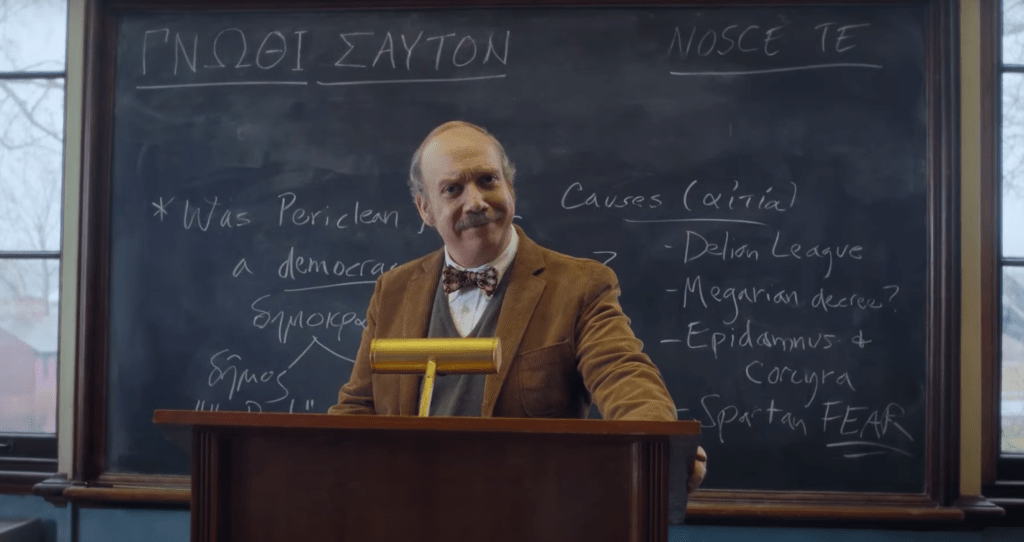
Paul Giamatti’s Paul Hunham commanding his classroom in Alexander Payne’s THE HOLDOVERS — PHOTO: Focus Features.
Directed by Alexander Payne — Screenplay by David Hemingson.
At least up until now, American filmmaker Alexander Payne reached his current awards-wise zenith with his 2004 effort Sideways (also starring Paul Giamatti), which earned Payne an Oscar, a BAFTA, and a Golden Globe award. His positive trend continued with his 2011 and 2013 efforts The Descendants and Nebraska with both being critically acclaimed and the former earning him his second Oscar. That is, however, when he reached his creative nadir as a director with 2017’s Downsizing (starring Matt Damon), which contained an inventive premise about shrinking yourself as a means to combat problems related to overpopulation and global warming. Downsizing was, at best, a mixed bag, and, at worst, a disastrous mess. Despite its strong cast and a fantastic premise, Payne was unable to pull it all together for arguably his most ambitious flick. It makes me happy to be able to report that the latest film in his oeuvre, The Holdovers, is an incredibly charming return to form for the filmmaker in large part thanks to David Hemingson’s sharp writing and the loving performances of three principal cast members.
Julie Christie and Donald Sutherland in Nicolas Roeg’s DON’ LOOK NOW — PHOTO: Casey Productions / Eldorado Films / D.L.N. Ventures Partnership.
Directed by Nicolas Roeg — Screenplay by Allan Scott and Chris Bryant.
Whenever you watch a film two times in a row, you know it has its hooks in you. Don’t Look Now — Nicolas Roeg’s iconic, impressionistic, and occasionally scary psychological thriller based on a Daphne du Maurier short story of the same name — follows John and Laura Baxter (played by Donald Sutherland and Julie Christie respectively) not long after they have recently lost their daughter to an accident by their country home in England. They now find themselves in Venice, Italy, where John has been hired to help restore an ancient church. In the meantime, Laura befriends two elderly sisters, one of whom, Heather (played by Hilary Mason), claims to be clairvoyant and able to see their deceased daughter sitting between them in a restaurant. John, however, is skeptical of clairvoyance, and yet, from time to time in Venice, he sees a small figure wearing a similar red raincoat to that his daughter wore on the day that she died.
Mario, Peach, and Toad in The Super Maro Bros. Movie — PHOTO: Universal Pictures.
Directed by Aaron Horvath, Michael Jelenic, and Pierre Leduc — Screenplay by Matthew Fogel.
In The Super Mario Bros. Movie, brothers and New York City plumbers, Mario (voiced by Chris Pratt) and Luigi (voiced by Charlie Day), accidentally travel through an underground pipe that takes them to another world, but on their way there, they are separated with Luigi being sent to the Dark Lands where he is soon imprisoned by the evil Bowser (voiced by Jack Black), while Mario lands in the Mushroom Kingdom. While trying to reunite with his brother, Mario meets Toad (voiced by Keegan-Michael Key) and Princess Peach (voiced by Anya Taylor-Joy), and they go out on an adventure together. At the same time, Bowser prepares his proposal to Princess Peach, and he is not ready to take no for an answer.
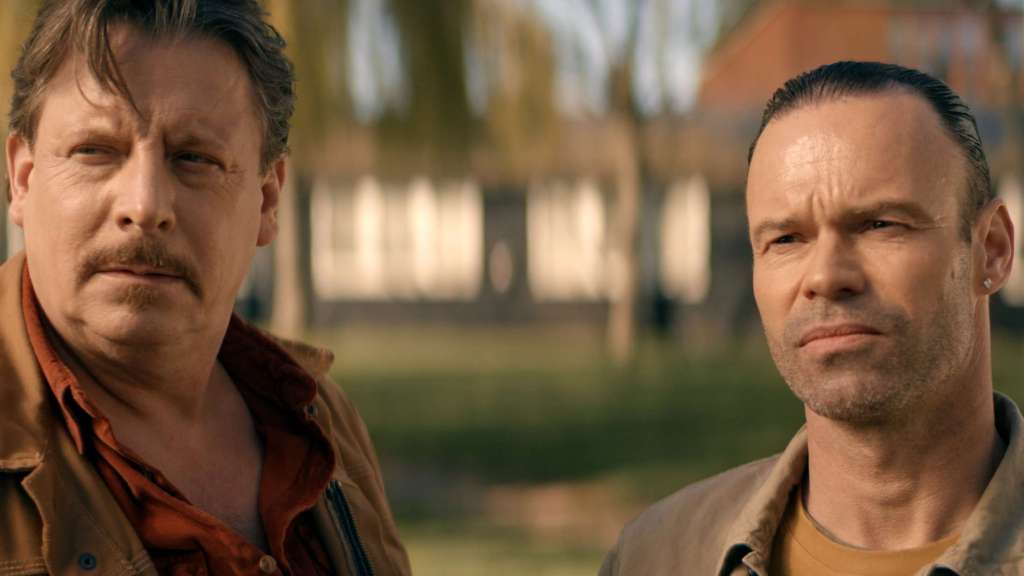
Anders W. Berthelsen and Mick Øgendahl in Rasmus Heide’s ALLE FOR FIRE — PHOTO: NORDISK FILM.
International title: All For Four — Directed by Rasmus Heide — Screenplay by Rasmus Heide and Mick Øgendahl.
In Denmark, comedies built around a group of relative stars or established comedians are extremely popular with audiences, and one of the recent successes of these has been the Alle For (meaning ‘All for’ with the first film being All For One, the second All For Two, and so on and so forth) film series. As these comedies are about small-time criminals and their attempts to make it big, there is an obvious comparison and that is Erik Balling’s Olsen Gang film series (original title: Olsen Banden), which is a beloved and iconic Danish crime comedy film series that spawned remakes in both Norway and Sweden, as well as several spin-offs. The Olsen Gang films are some of the most popular Danish films ever, and, even though the first film was released in the 1960s, most Danish millennials even know the franchise’s formula and their iconic lines by heart. The films are laugh-out-loud funny, well-made, and always supremely well-acted by the original cast. It is clear for all to see that the filmmakers behind the Alle For films desperately want them to be this generation’s Olsen Gang, but while the Alle For films are, admittedly, extremely popular with audiences, they are constantly negatively reviewed by critics, from film to film significant members of the original cast want less and less to do with it, and neither the comedy nor the heart ever comes close to touching what Erik Balling’s films were. Alle For Fire is the latest film in the series, but, unfortunately, it doesn’t come anywhere close to improving on what came before it in the series of films.
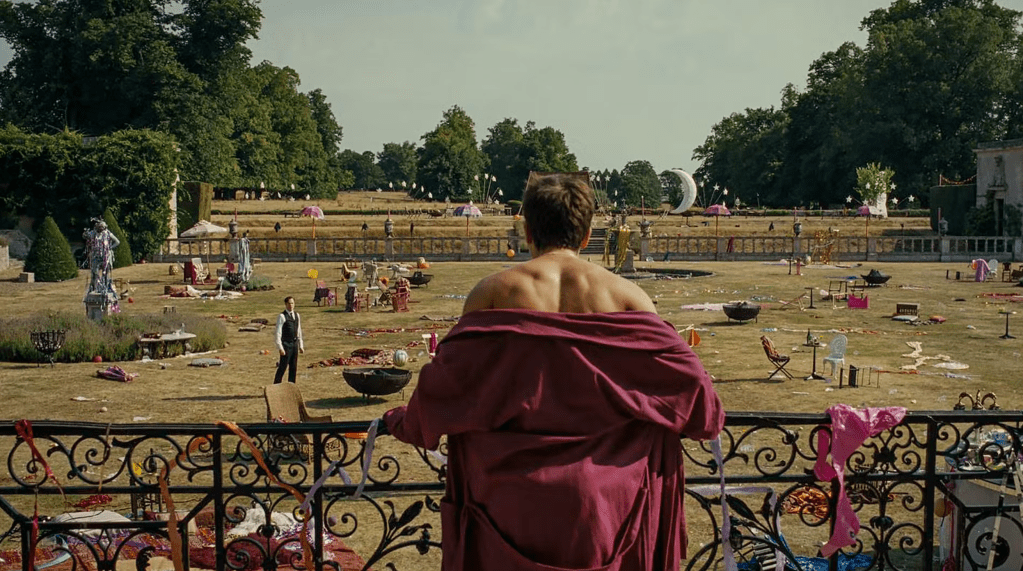
Barry Keoghan as Oliver Quick with his back to the camera in Emerald Fennell’s SALTBURN — PHOTO: MGM and Amazon Studios.
Directed by Emerald Fennell — Screenplay by Emerald Fennell.
There are shades of dark comedy, satire, and horror in Emerald Fennell’s gothic erotic thriller Saltburn. The film is set in 2006 and follows Oxford University student Oliver Quick (played by Barry Keoghan), as he struggles to make friends and fit in among several snobbish borderline celebrities on campus. One day, he befriends Felix Catton (played by Jacob Elordi) when he offers to lend him his bicycle and walk back Felix’s bike with a flat tire. The immensely popular, posh, and privileged Felix proves to be more pleasant than you might expect, and he takes a liking to the nerdy, needy, and neglected ‘Ollie’ who is very polite and whose stories about being from a less fortunate and troubled family intrigue Felix. Ollie, meanwhile, seemingly lusts for both Felix and his status. Eventually, Felix invites Ollie back home to the Catton family castle — known as ‘Saltburn’ — for the summer, so that Ollie can get his mind off tragic news from back home. Once there, he becomes an object of fascination for Felix’s rich family, who, among other things, seem to be taking some pleasure from hearing about the struggles of the less fortunate, until, at some point, they find them boring. This is the case with their ‘hanger-on’ Pamela (played by Carey Mulligan). When he realizes that one day the family may lose interest in him too, Ollie sets out to make himself very popular in the family country house by any means necessary.




 I'm Jeffrey Rex