
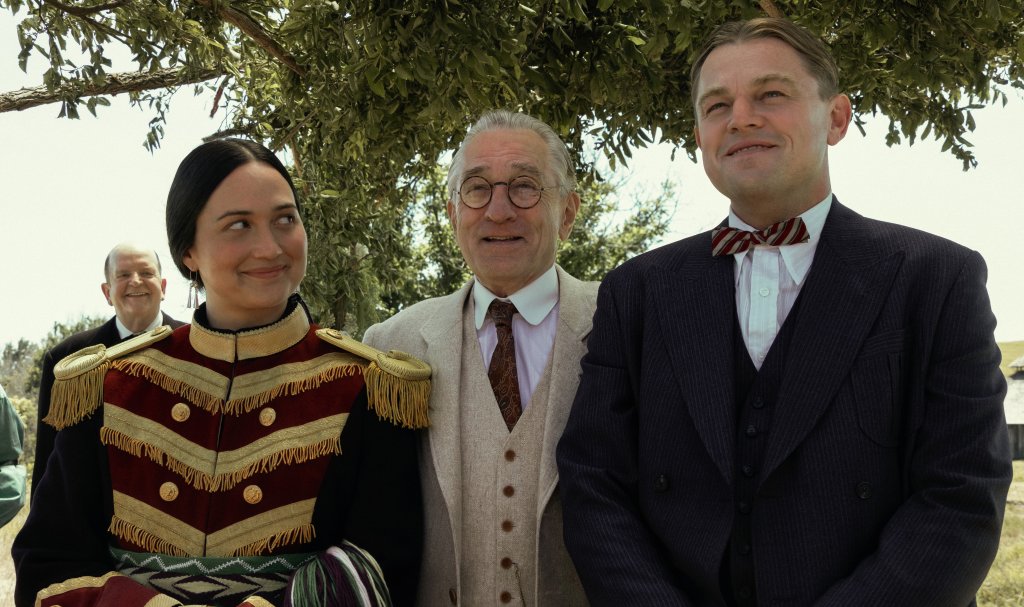
Killers of the Flower Moon (2023) | REVIEW

Lily Gladstone, Robert De Niro, and Leonardo DiCaprio in “Killers of the Flower Moon,” in theaters now — Photo: Apple.

Directed by Martin Scorsese (Taxi Driver; Raging Bull; After Hours; Silence) — Screenplay by Eric Roth (A Star is Born; Dune; Forrest Gump) and Martin Scorsese.

Recently, I’ve been especially interested in how films sometimes act as history lessons to those who watch them, as well as how this can both be a good and a bad thing. Ultimately, films can be made for a variety of purposes depending on which person involved with the project that you’re asking. With films, there is often a commercial goal or an interest in serving as a piece of entertainment, and these aims can sometimes lead to historical films blurring the lines between truth and fiction to such an extent that you do history a disservice. Other times artistic expression is of the utmost importance, and then, of course, there are, indeed, times when films primarily exist to inform and teach. Most of the time, though, the true purpose of a film is a mixture of all of these motivations. Sometimes the artistic expression combines with a purpose to inform and thus the output manages to stand as a reminder of how certain events have been swept under the rug through history by those in power. Because ultimately history books are as easy to manipulate as any other medium. In the case of Killers of the Flower Moon, we have a piece of historical filmmaking that takes an intense look at the moral rot of America in the 1920s and 1930s. It is a bold and epic film about greed, betrayal, complicity, and a disturbingly very real attempt at genocide. It is an American tragedy from a master storyteller who shows for all to see that he understands exactly what his role is in telling this story, as well as who should be telling it.

Continue reading “Killers of the Flower Moon (2023) | REVIEW”

REVIEW: Dune (2021)

Josh Brolin, left, as Gurney Halleck and Timothée Chalamet, right, as Paul Atreides in Denis Villeneuve’s DUNE — Photo: Warner Bros. Pictures / Legendary Pictures.

Directed by Denis Villeneuve (Blade Runner 2049) — Screenplay by Jon Spaihts, Denis Villeneuve, and Eric Roth.

When science-fiction neophytes first lay their eyes on the marketing material for Denis Villeneuve’s latest science-fiction film, Dune, they should be forgiven, if they immediately remark that it looks like an imitation of Star Wars — or other similar films. Obviously, they would be under a false impression, but, after all, it is a little bit strange that one of Star Wars‘ most obvious sources of inspiration — Frank Herbert’s 1965 novel Dune — has not previously generated a widely known or appreciated adaptation.

In fact, the Dune property is perhaps especially renowned for being difficult to adapt. Famously, Alejandro Jodorowsky tried but failed to get an adaptation off the ground, while David Lynch’s adaptation from 1984 was critically panned. Those ‘failed’ attempts are, in fact, more widely known than the Sci-Fi Channel mini-series that the franchise also spawned. Legendary Pictures and Warner Bros. have now entrusted auteur Denis Villeneuve with the job of adapting Frank Herbert’s rich, influential, and dense source material, and I think that was a very smart decision.

Continue reading “REVIEW: Dune (2021)”

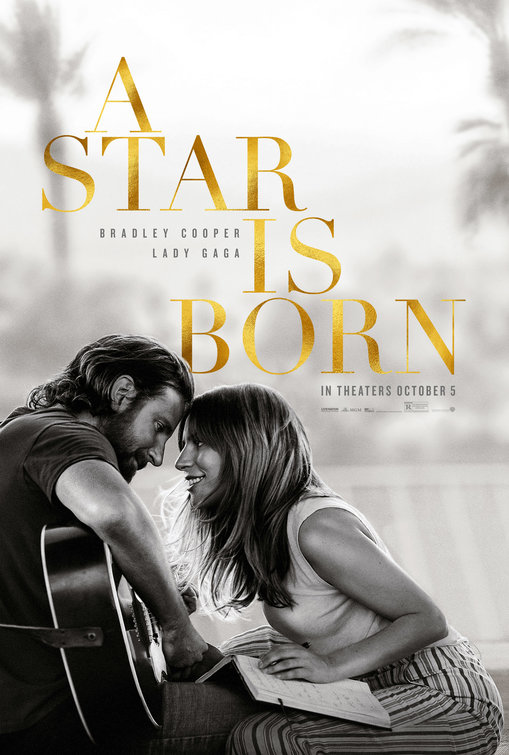
REVIEW: A Star is Born (2018)

Theatrical Release Poster – Warner Bros. Pictures

The following is a review of A Star is Born — Directed by Bradley Cooper.

There is a scene towards the end of the film, where Sam Elliott’s character gives a speech about twelve notes, an octave, and the same story being told over and over again. This feels like first-time director Bradley Cooper’s attempt to justify remaking the A Star is Born story for the third time — the industry is cyclical and only the artists can make new attempts unique.
Continue reading “REVIEW: A Star is Born (2018)”