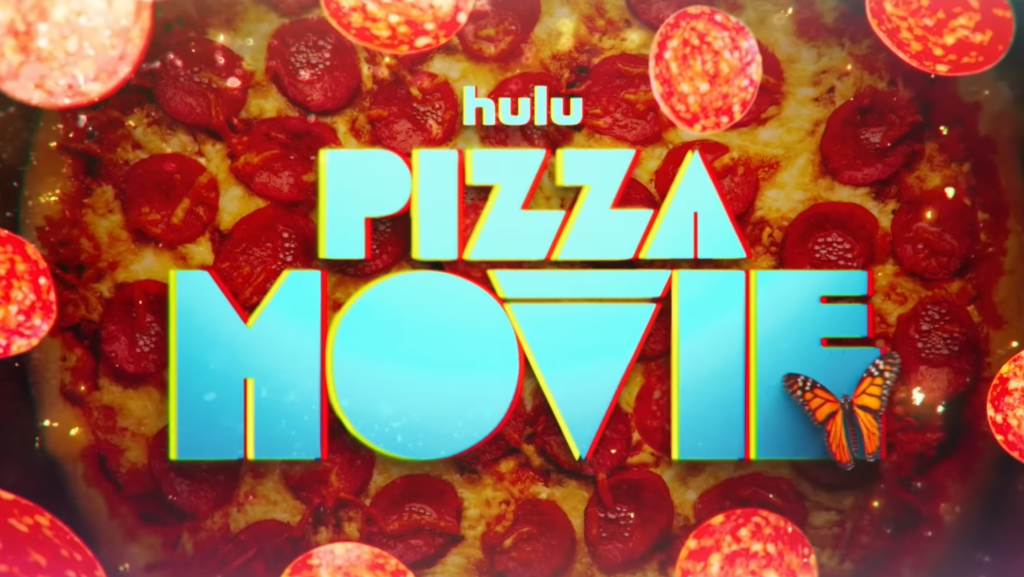
Trailer title card — PHOTO: Hulu / Disney+ (Still image from trailers).
Directed by Brian McElhaney and Nick Kocher — Screenplay by Brian McElhaney and Nick Kocher.
Brian McElhaney and Nick Kocher’s Pizza Movie is a modern stoner comedy that follows Montgomery (played by Sean Giambrone) and Jack (played by Gaten Matarazzo), two college roommates, who find this special drug after it falls out of their ceiling boards. The drug is called ‘M.I.N.T.S.’ but is nothing like mints. It is a hallucinogenic drug that takes them through multiple reality-breaking phases. To avoid a nightmarish final phase, the boys need to eat some pizza before they reach it, but their pizza journey will lead them directly into confrontation with an old friend (Lizzy, played by Lulu Wilson), bullies, extreme RAs (led by Jack Martin’s character, Blake), and the girl (Ashley, played by Peyton Elizabeth Lee) that Montgomery has a massive crush on.
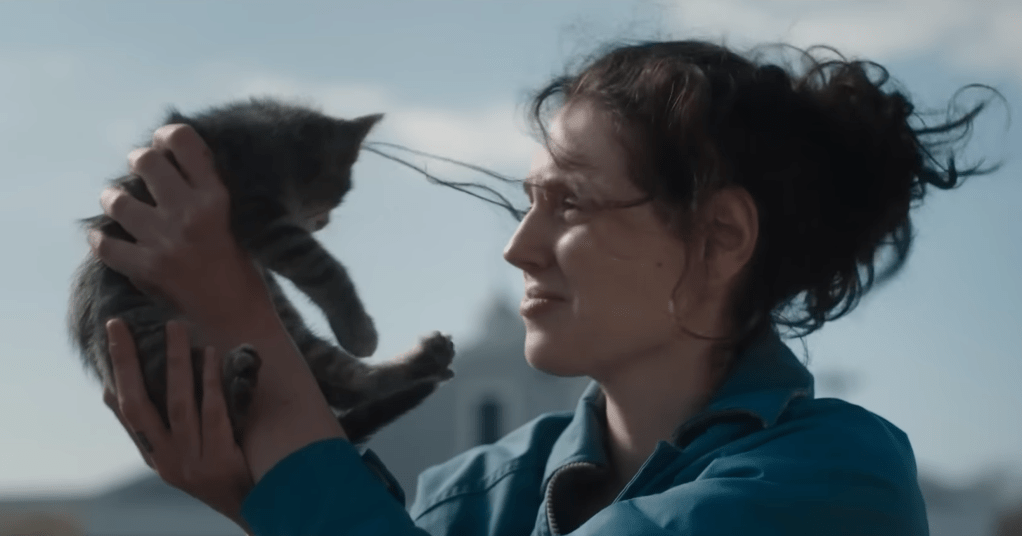
Eva Victor in SORRY, BABY — PHOTO: A24 (Still image from trailers).
Directed by Eva Victor — Screenplay by Eva Victor.
Earlier this week, I sat down to finally watch one of the most discussed and praised directorial debuts of 2025. Eva Victor’s Sorry, Baby has already been celebrated by the National Board of Review as the best directorial debut of last year, and it was recognized with nominations at both the Indie Spirit Awards, Critics’ Choice Awards, the DGA Awards, and the Golden Globes. As such, it is one of the most high-profile independent films of last year, which comes with some pretty high expectations. So, I was naturally very intrigued by it, and, as the film came to a close, I was also very impressed by the narrative and the incredible multi-hyphenate at the center of it.
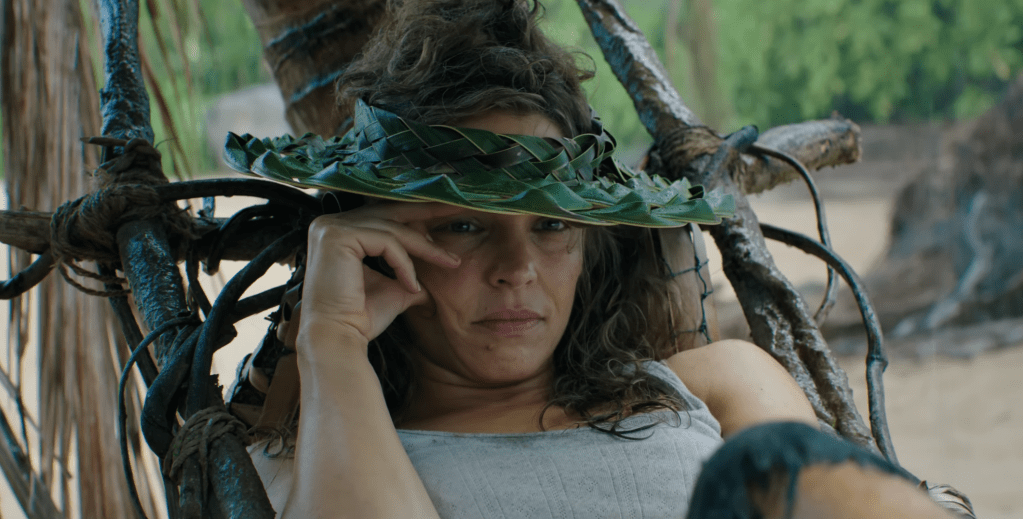
Rachel McAdams as Linda Liddle in 20th Century Studios’ SEND HELP — PHOTO: 20th Century Studios (Still image from trailers).
Directed by Sam Raimi — Screenplay by Mark Swift and Damian Shannon.
As I like to remind my readers, my dad had an open mind when it came to what movies my sister and I were ready to watch at a young age. So, as it turned out, when I was a kid, one of my favorite movie characters was Bruce Campbell’s Ash Williams from Sam Raimi’s Evil Dead films (I even dressed up as Ash for Halloween recently). Of those Evil Dead films, Army of Darkness, especially, holds a special place in my heart. As Sam Raimi then transitioned from indie horror to superhero spectacle (with several studio films in between) with his Spider-Man films, which were released as I was growing up, Sam Raimi quickly became one of my favorite filmmakers. Therefore, I was especially excited when I found out that Raimi was going to have an R-Rated original horror-comedy come out in early 2026. Send Help, in which Rachel McAdams re-teams with her Doctor Strange in the Multiverse of Madness director, is that film, and it is so exciting to be able to say that Raimi’s film not only works but is a strong reminder of what made so many of us fall for his brand of cinema in the first place.
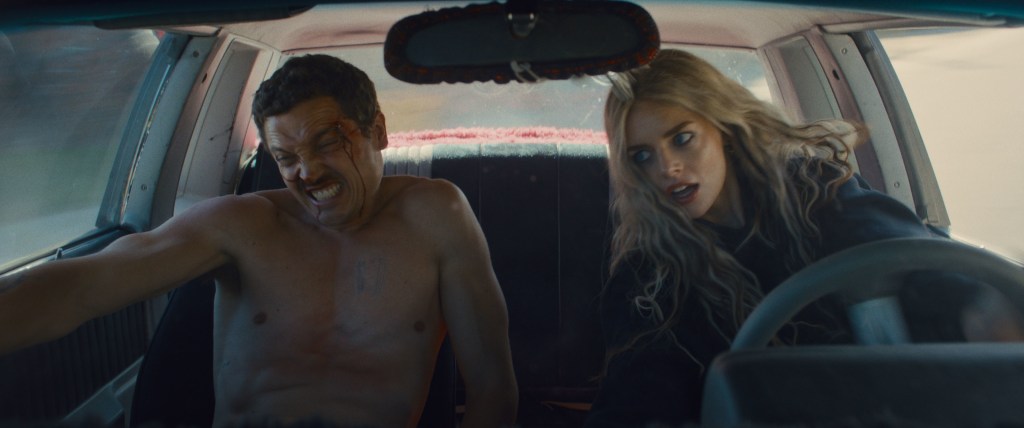
Karl Glusman and Samara Weaving in EENIE MEANIE — PHOTO: 20th Century Studios.
Directed by Shawn Simmons — Screenplay by Shawn Simmons.
Shawn Simmons’ Eenie Meanie is a crime comedy-thriller that follows Edie (played by Samara Weaving), who has a past as a getaway driver. Edie has just found out that she is pregnant, and so she decides to seek out the child’s ne’er-do-well father, John (played by Karl Glusman), whom she hasn’t been with in months. When she shows up at his apartment, however, she becomes entangled in a web of crime to which her former lover is stuck. To save the father of her child, Edie will have to put some of her old skills to good use to do a job.
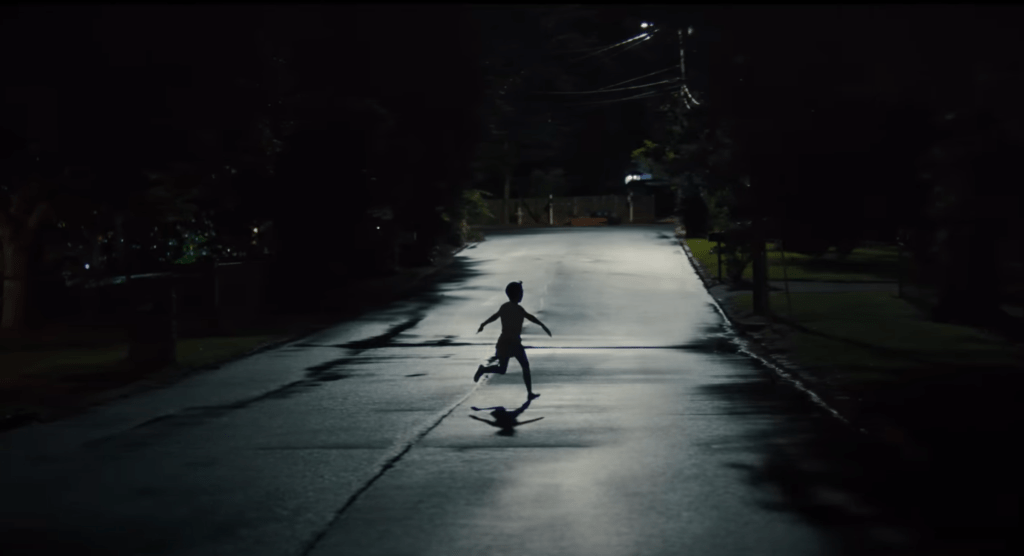
One of the vanishing kids running down the street in Zach Cregger’s Weapons — PHOTO: Warner Bros. Pictures (Still image from trailers).
Directed by Zach Cregger — Screenplay by Zach Cregger.
Whenever an up-and-coming new filmmaker, whose previous film had the makings of a bona fide genre classic, is about to turn in his latest film, you pay attention. You especially pay attention when the filmmaker’s script for his new picture was so highly regarded in the American film industry that it not only launched a bidding war but also, reportedly, got a modern horror master to fire his manager over their failed attempt at securing the distribution rights to it. Such is the case with Barbarian writer-director Zach Cregger and his latest film, Weapons, a multi-perspective horror-thriller with drama and comedy elements that had a memorable and fantastic marketing campaign built around it, and which also, thankfully, turns out to be exactly the kind of must-see thriller epic that I’ve been craving.
Liam Neeson in THE NAKED GUN — PHOTO: Paramount Pictures (Still image from trailers).
Directed by Akiva Schaffer — Screenplay by Dan Gregor, Doug Mand, and Akiva Schaffer.
One of the best pieces of marketing for a film that I’ve seen this year is an ad for The Naked Gun that features Liam Neeson prominently asking viewers to go back to theaters to watch comedy films. At the end of the ad, we hear Liam Neeson do a classic Leslie Nielsen-style fart-machine joke. It is a delightfully silly note to end on, but the message at the heart of the ad rings true. Comedy films have largely been relegated to being streaming fodder. If you want to watch a new comedy film, you’re more likely to find one on Netflix or on Amazon Prime Video than in the movie theaters. For example, Happy Gilmore 2 recently premiered on Netflix, just like the John Cena and Idris Elba vehicle Heads of State premiered on Prime Video. Unfortunately, major comedy stars have flocked to the streaming services and left movie theaters without successful comedies for quite some time. To reignite the spark that would keep comedy movies thriving on the big screen, we now have a reboot or legacy sequel of The Naked Gun, the Leslie Nielsen vehicle from the 80s and 90s, filled with spoof film humor, some of which has become quite iconic. For the legacy sequel, the studio turned to the Lonely Island member Akiva Schaffer, director of Popstar: Never Stop, Never Stopping, as well as producer Seth MacFarlane, with the hopes of finally releasing a good spoof comedy film in the theaters again. Thankfully, with screen legends leading the picture, the reboot of The Naked Gun is a success. It is, undoubtedly, one of the funniest films I’ve seen this year, and I hope it’s the beginning of a new trend where comedy films can once again thrive in theaters.
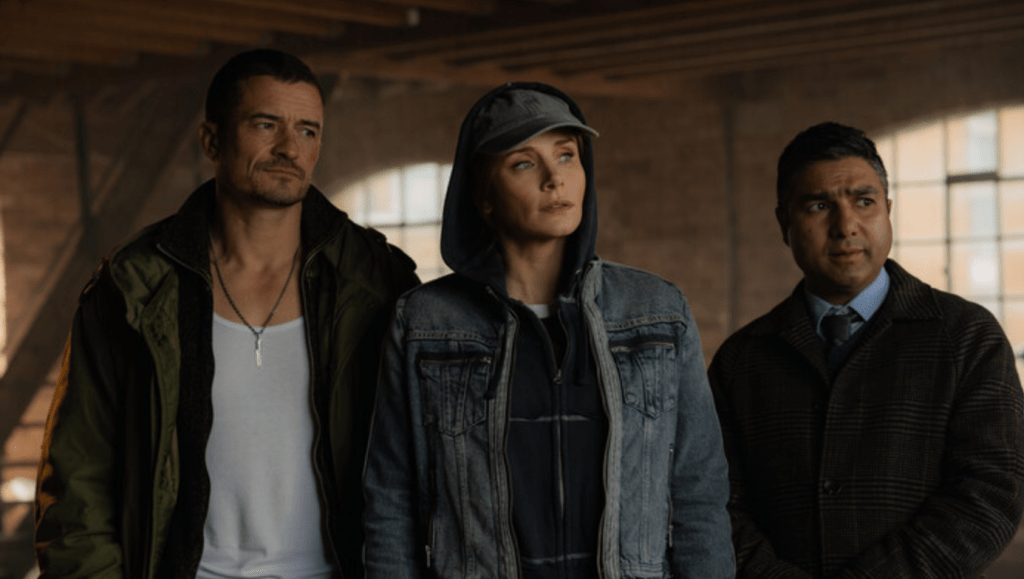
Directed by Tom Kingsley — Screenplay by Colin Trevorrow, Derek Connolly, Ben Ashenden, and Alexander Owen.
Tom Kingsley’s Deep Cover is a crime comedy film about a group of improvisational comedy performers who are hired to use their talents to go undercover in London’s criminal underworld. The film follows Kat Boyles (played by Bryce Dallas Howard), an improv teacher, Marlon (played by Orlando Bloom), a struggling method actor, and Hugh (played by Nick Mohammed), a socially awkward IT worker, who has joined Kat’s comedy group to improve his communication skills and make friends. Their involvement with law enforcement begins when Kat is approached by Detective Sergeant Graham Billings (played by Sean Bean) following one of her comedy shows. Although their first attempt at improvising undercover has some rough edges, they soon find that they’re so convincing that it may get them into trouble.
Trailer title card — PHOTO: Netflix (Still image from trailers).
Directed by Matt Palmer — Screenplay by Matt Palmer and Donald McLeary.
In 2021, Netflix pleased horror fans with the nostalgic horror-slasher trilogy of films, adapting R.L. Stine’s Fear Street series from director Leigh Janiak. Janiak’s films all had clear style, grisly horror sequences, and well-done references to their cinematic inspirations. They were all quite solid films that got their hooks into a certain audience, and it put Fear Street on the map for Netflix. So much so that I had, honestly, been looking forward to seeing how Netflix would follow up the relatively successful trilogy. Four years later (and, notably, without Leigh Janiak in the director’s chair), we now finally have that next step. Fear Street: Prom Queen also tries to be a nostalgic slasher flick, but it fails in most departments and, frustratingly, fumbles the goodwill that the first three films had earned.
Directed by Stephen Chbosky (The Perks of Being a Wallflower) — Screenplay by Liz Maccie.
Stephen Chbosky’s Nonnas is a biographical dramedy that follows Joe Scaravella (played by Vince Vaughn), an Italian-American man, who is grieving the loss of his mother. Hoping to honor her and his grandmother’s memory, Joe, against the wishes of his closest friend Bruno (played by Joe Manganiello), uses his mother’s life insurance money to open a restaurant in her name wherein Italian grandmothers — ‘nonnas’ — will cook the dishes they know best. But that is easier said than done, as the grandmothers have a lot of opinions about how things are done in the kitchen and, notably, because Joe has no idea how much it’ll take to open a restaurant. Meanwhile, Joe hopes to rekindle an old romance with his high school sweetheart named Olivia (played by Linda Cardellini).
Jack Quaid mid-action in NOVOCAINE — PHOTO: Paramount Pictures (Still image from trailers).
Directed by Dan Berk and Robert Olsen — Screenplay by Lars Jacobson.
Dan Berk and Robert Olsen’s Novocaine follows Nathan Caine (played by Jack Quaid), an introverted assistant bank manager, who has the condition known as ‘congenital insensitivity to pain with anhidrosis’ meaning that he doesn’t feel pain and temperature. This diagnosis means that he lives a life defined by his own attempts at protecting himself, by, among other things, avoiding solid foods as he could conceivably bite off his own tongue due to his issues with the sense of feeling. However, one day he runs into someone who could change his life. That person is Sherry (played by Amber Midthunder), an extroverted co-worker, who he is immediately smitten by. They eventually establish a connection, but, right as he is finally starting to discover happiness in his life, she is kidnapped and taken as hostage during a bank robbery. Desperate to save her, he follows in pursuit and is willing to put his body through hell to get her back.


 I'm Jeffrey Rex