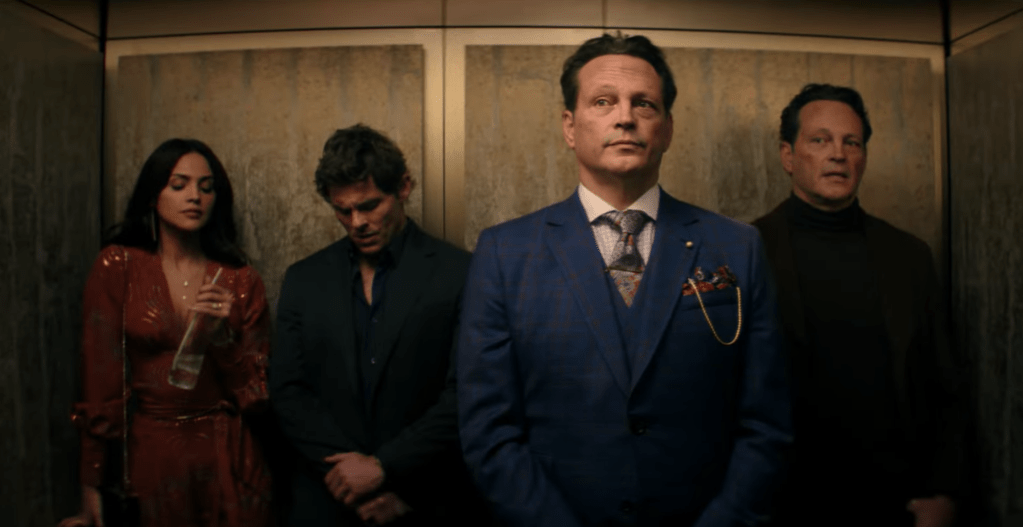
(L-R) Eiza Gonzalez, James Marsden, and Vince Vaughn (x2) in Mike & Nick & Nick & Alice — PHOTO: 20th Century Studios (Still image from trailers).
Directed by BenDavid Grabinski — Screenplay by BenDavis Grabinski.
BenDavid Grabinski’s Mike & Nick & Nick & Alice takes place in a somewhat goofy version of an organized crime world, wherein we meet Quick-Draw Mike (played by James Marsden), who has fallen in love with Alice (played by Eiza Gonzalez). Alice, however, is married to another member of the crime world, Nick (played by Vince Vaughn), who, unbeknownst to Mike, has framed Mike as a so-called rat. Things take a strange turn when Mike agrees to help Nick complete a job. The thing is, Nick needs Mike to chloroform someone who just so happens to look exactly like Nick. Why? Well, one of the two Nicks has used a time machine to stop his past self from making the worst mistake of his life.
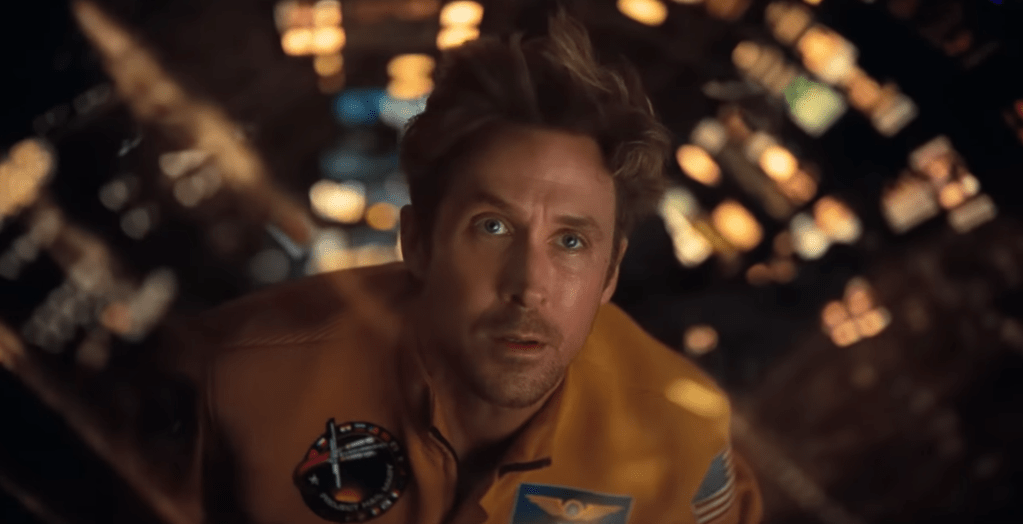
Ryan Gosling in PROJECT HAIL MARY — PHOTO: AMAZON MGM STUDIOS (Still image from trailers).
Directed by Phil Lord and Christopher Miller (21 Jump Street; The LEGO Movie) — Screenplay by Drew Goddard (The Martian).
Based on the Andy Weir novel of the same name, Phil Lord and Christopher Miller’s Project Hail Mary follows Dr. Ryland Grace (played by Ryan Gosling), a former molecular biologist and middle school teacher, who wakes up on a spacecraft several light-years away from Earth with no memory of how he got there. As Grace’s memory slowly comes back to him, he investigates the spacecraft and finds that he is the sole survivor of a three-person crew sent out to find out how we can stop an extinction-level event from further harming Earth. A microorganism known as Astrophage, which is exponentially increasing its size, appears to be dimming our Sun and several stars in our solar neighborhood. The crew, including Grace, was sent out to figure out why Tau Ceti is the only unaffected star in the vicinity. Unsure about how to carry out his mission, Grace eventually comes into contact with an alien entity, which he dubs ‘Rocky,’ and its own glorious spacecraft. When Grace finds a way to communicate with Rocky, named so because of his ‘pile of rocks’-like body, Grace figures out that they’re there for the same reason. So, he now must figure out how to save lives at home and light-years away from our solar system.
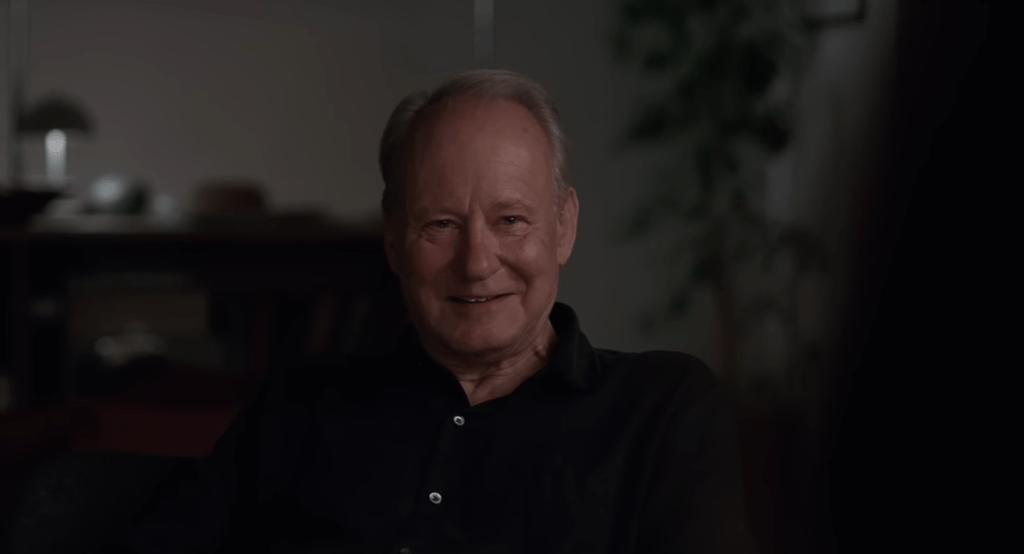
Stellan Skarsgård as Gustav Borg in Joachim Trier’s SENTIMENTAL VALUE — PHOTO: NEON / NORDISK FILM (Still image from trailers).
Directed by Joachim Trier — Screenplay by Joachim Trier and Eskil Vogt.
Like Thomas Vinterberg and Ruben Östlund, the Danish-born Norwegian auteur Joachim Trier is part of a select group of Scandinavian filmmakers who, in recent years, have broken through across the pond, exemplified by their prestigious Academy Award nominations. Trier, best known for his critically acclaimed Oslo trilogy (including the films (1) Reprise, (2) Oslo 31. August, and (3) The Worst Person in the World), has made several modern films that work as ruminations and meditations on the modern human experience, as his films cover themes, to name just a few, such as growing up, turning a corner in life, feeling unfulfilled, and feeling socially excluded. In recent years, some of my favorite reviews to write have been of the films in his excellent Oslo trilogy, two-thirds of which I consider genuine masterpieces (and, to add to that, Reprise is a fantastic debut film, despite arguably being the lesser of the three). Naturally, every new film of his is a major event to me. His latest film, Sentimental Value (original title: Affeksjonsverdi), continues Trier’s hot streak.
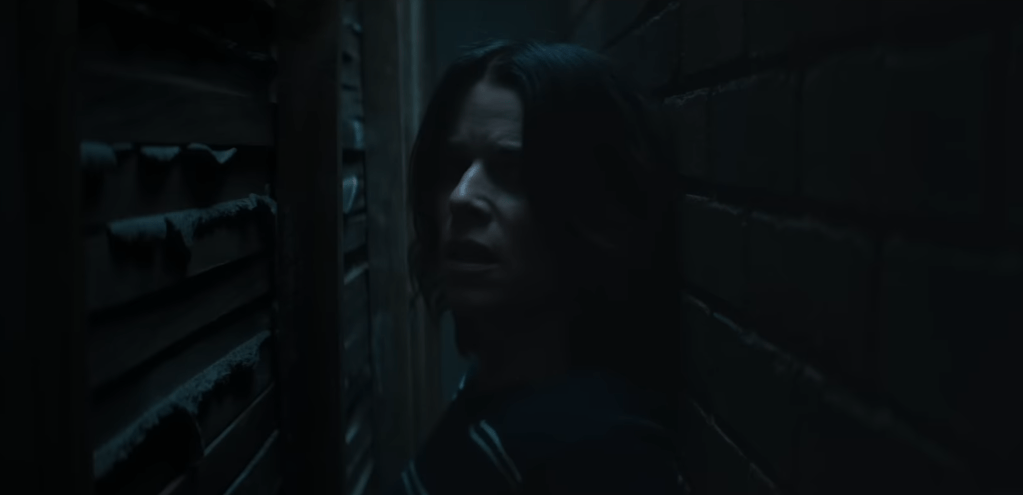
Neve Campbell hiding from the Ghostface killer in SCREAM 7 — PHOTO: Paramount Pictures (Still image from trailers).
Directed by Kevin Williamson — Screenplay by Kevin Williamson and Guy Busick.
When Matt Bettinelli-Olpin and Tyler Gillett (often referred to as Radio Silence) took over the reins to this long-beloved slasher franchise from the late, great master of horror Wes Craven — starting with 2022’s Scream legacy sequel — they did a good job of steering the film series in the right direction by creating two films (also including Scream VI) that successfully introduced a new core group of characters, inserted the effective meta-genre commenary that Craven’s films were known for, and earned strong box office returns and critical reception. That goodwill was dealt a significant blow when, after Radio Silence had already exited the seventh film in the series due to scheduling conflicts, the rebooted series’ lead, Melissa Barrera, was, shockingly, fired for pro-Palestinian posts on social media. Following this, co-lead Jenna Ortega announced that she would not return for the seventh film, and director Christopher Landon left the project (and was replaced by original Scream screenwriter Kevin Williamson). Recently, boycotts have been announced, and protests have been organized. The very public behind-the-scenes drama has led to a troubled production, and, among the fanbase, there were concerns that this seventh entry would suffer for it. After having seen the film, I can say that, well, ultimately, it’s not just drama behind the camera that’s holding Scream 7 back.
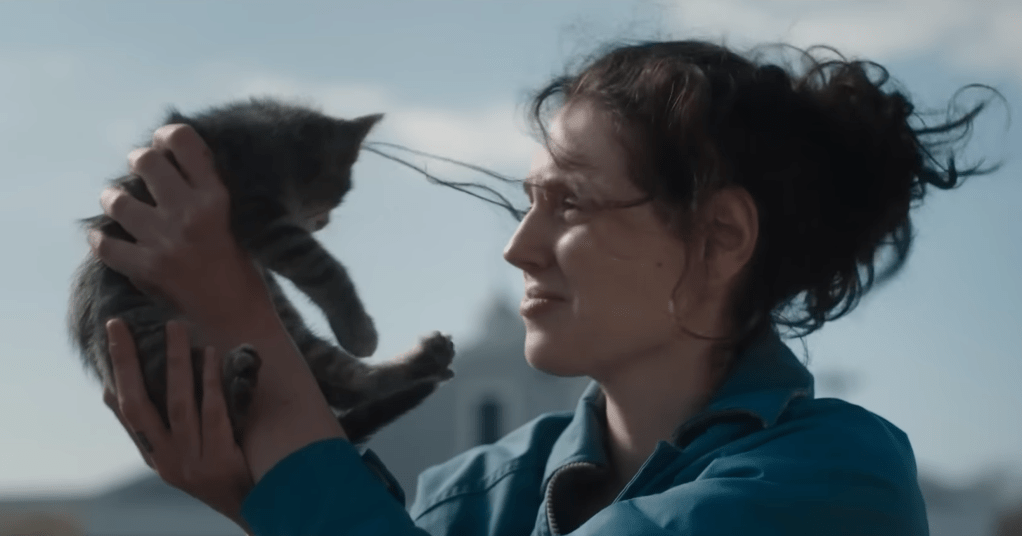
Eva Victor in SORRY, BABY — PHOTO: A24 (Still image from trailers).
Directed by Eva Victor — Screenplay by Eva Victor.
Earlier this week, I sat down to finally watch one of the most discussed and praised directorial debuts of 2025. Eva Victor’s Sorry, Baby has already been celebrated by the National Board of Review as the best directorial debut of last year, and it was recognized with nominations at both the Indie Spirit Awards, Critics’ Choice Awards, the DGA Awards, and the Golden Globes. As such, it is one of the most high-profile independent films of last year, which comes with some pretty high expectations. So, I was naturally very intrigued by it, and, as the film came to a close, I was also very impressed by the narrative and the incredible multi-hyphenate at the center of it.
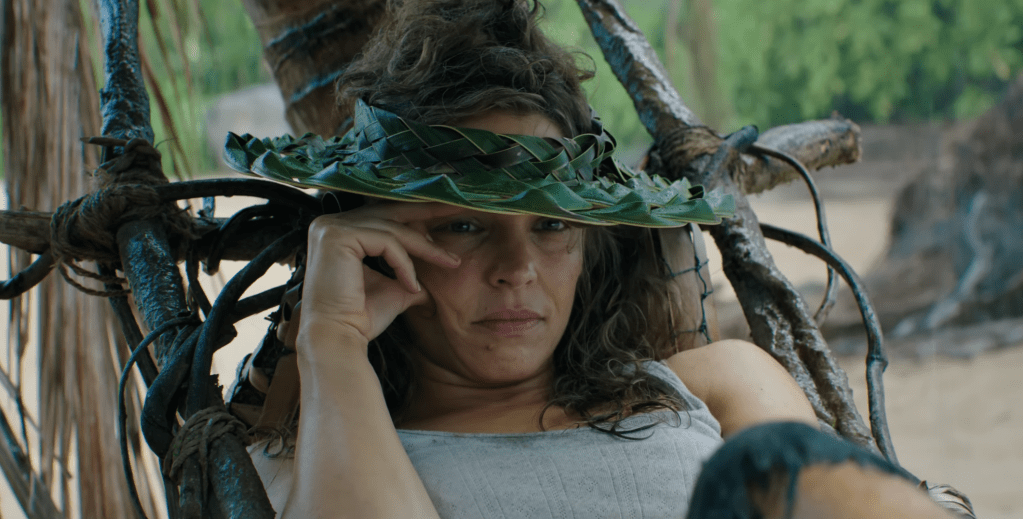
Rachel McAdams as Linda Liddle in 20th Century Studios’ SEND HELP — PHOTO: 20th Century Studios (Still image from trailers).
Directed by Sam Raimi — Screenplay by Mark Swift and Damian Shannon.
As I like to remind my readers, my dad had an open mind when it came to what movies my sister and I were ready to watch at a young age. So, as it turned out, when I was a kid, one of my favorite movie characters was Bruce Campbell’s Ash Williams from Sam Raimi’s Evil Dead films (I even dressed up as Ash for Halloween recently). Of those Evil Dead films, Army of Darkness, especially, holds a special place in my heart. As Sam Raimi then transitioned from indie horror to superhero spectacle (with several studio films in between) with his Spider-Man films, which were released as I was growing up, Sam Raimi quickly became one of my favorite filmmakers. Therefore, I was especially excited when I found out that Raimi was going to have an R-Rated original horror-comedy come out in early 2026. Send Help, in which Rachel McAdams re-teams with her Doctor Strange in the Multiverse of Madness director, is that film, and it is so exciting to be able to say that Raimi’s film not only works but is a strong reminder of what made so many of us fall for his brand of cinema in the first place.
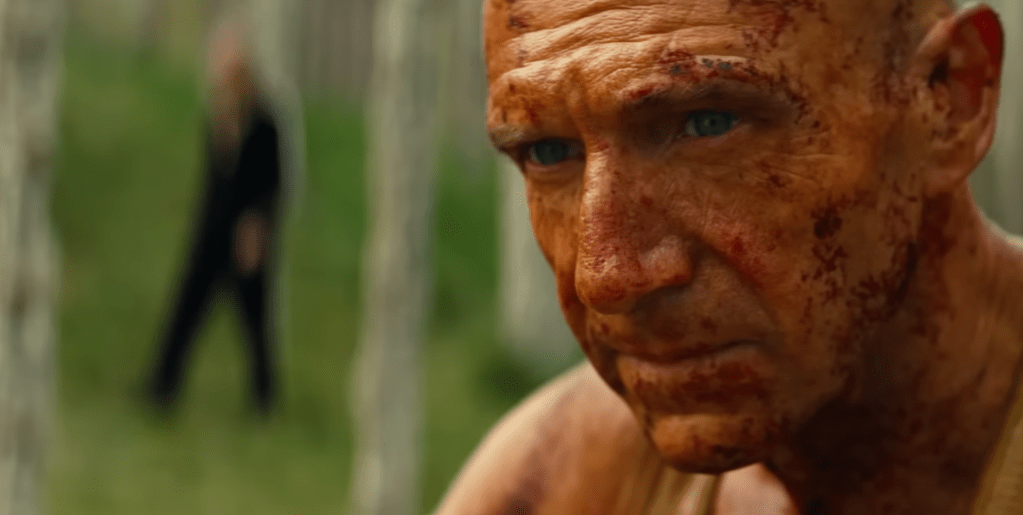
Ralph Fiennes (foreground) and Jack O’Connell (background) in Nia DaCosta’s 28 YEARS LATER: THE BONE TEMPLE — PHOTO: Sony Pictures Releasing (Still image from trailers).
Just seven months after the release of Danny Boyle’s long-awaited 28 Years Later, we already have a direct sequel. This second part in a proposed three-part follow-up to 28 Days Later and 28 Weeks Later is, notably, not directed by Danny Boyle, despite Alex Garland still having penned the screenplay. Instead, the director of 28 Years Later: The Bone Temple is Nia DaCosta, the Candyman (2021) and The Marvels director, who now must try to recapture the spirit of one of the most iconic zombie, or zombie-adjacent, film series ever made. Having been shot back-to-back, but by different filmmakers, it is only natural that some would be concerned about whether or not they could pull it off successfully. But, thankfully, Nia DaCosta has turned in what is easily her best franchise film. Despite its January release date (a release window most known for being filled with less-than-pleasing films), 28 Years Later: The Bone Temple is not only a worthy follow-up to Boyle’s sequel, but it is also the first great film of the year.
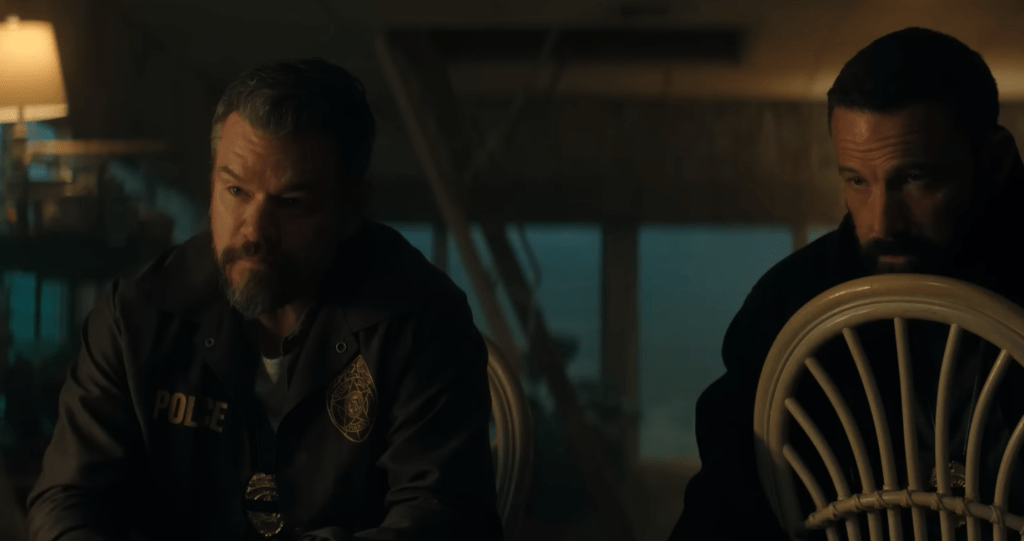
Matt Damon and Ben Affleck in THE RIP — PHOTO: NETFLIX (Still image from trailers).
Directed by Joe Carnahan — Screenplay by Joe Carnahan.
We’re only a few weeks into the new year, and we already have a freshly made and relatively high-profile action thriller to feast on. That high-profile feature is Netflix’s The Rip, which brings together famous friends Matt Damon and Ben Affleck in a film built around drug money, dirty cops, and snitches. The Rip, from The Grey-filmmaker Joe Carnahan (who, in recent years, has been making plenty of B-movie action films), is the first 2026 film that I am reviewing, and it also happens to be the first 2026 film that I thoroughly enjoyed. It’s not high art, but it is exactly the kind of straight-to-streaming action thriller star-vehicle that you would want to chew on in January.
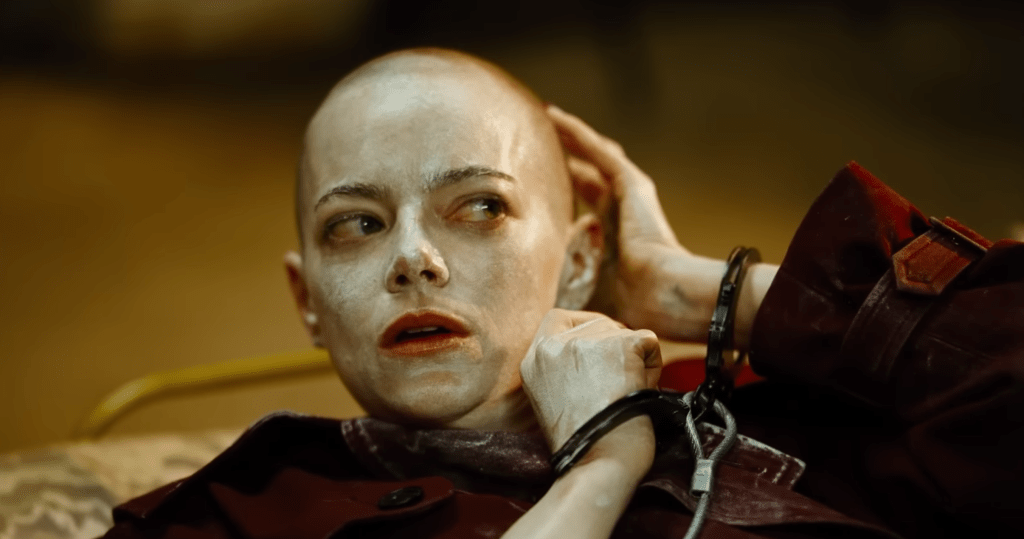
Bugonia marks the 4th collaboration between multiple Oscar-winning actress Emma Stone and the most famous filmmaker of the so-called ‘Greek Weird Wave’ (and in a row, no less). Their latest film together is an English-language remake of Jang Joon-hwan’s black comedy titled Save the Green Planet!, a South Korean film released in 2003. Though initially conceived as an opportunity for Jang, the original filmmaker, to direct the English-language remake of his own film for an international audience (not unlike what Ole Bornedal did with his English-language Nightwatch remake in the 1990s), it is now, instead, a fascinating instance in which a European auteur is adapting an Asian original story though in a North American setting. In a way, that almost intercontinental approach is fitting for a film about people who may or may not come from different worlds in more ways than one. It’s also, frankly, a really effective film.
Margaret Qualley, Jesse Plemons, and Willem Dafoe in KINDS OF KINDNESS — PHOTO: Searchlight Pictures.
Directed by Yorgos Lanthimos — Screenplay by Yorgos Lanthimos & Efthimis Filippou.
I consistently find Yorgos Lanthimos, the Greek filmmaker behind works such as The Lobster and Poor Things, to be one of the most fascinating rising auteurs of European cinema. I often think about the Lars Von Trier quote: “a film should be like a stone in your shoe,” and, when it comes to European artists breaking through to the Hollywood gravitational center, Lanthimos is perhaps the one auteur that best manages to adhere to that specific Trier-esque modus operandi or end goal, as his films constantly test boundaries, provoke, or work against conventionality. Despite the odd and boundary pushing premise of Poor Things, it can feel as if, as Lanthimos has been embraced more and more by American audiences, he may have gotten further away from his auteurist roots, but Kinds of Kindness, his 2024 anthology triptych film, does, at times, feel like the American output of his that shares the most DNA with his most famous Greek film, Dogtooth. The closest English-language comparison of his is probably The Killing of a Sacred Deer. Kinds of Kindness is a fascinating work that many will find challenging, as it sometimes explores depravity, features tonal shifts, and is quite lengthy at two hours and forty-four minutes.


 I'm Jeffrey Rex