
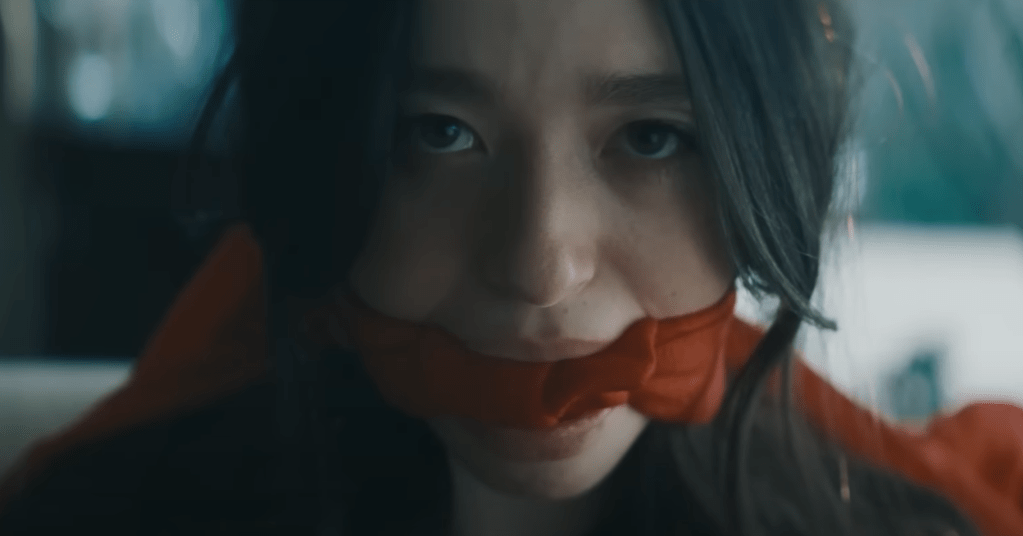
Directed by Sean Baker — Screenplay by Sean Baker.
When Sean Baker walked up to the stage to accept the Palme d’Or prize at this year’s Cannes Film Festival, he stood next to George Lucas, who had just received an honorary award. There the legendary creator of Star Wars, essentially the blockbuster film that changed the direction of American cinema for the next many decades, stood next to perhaps the most well-known American independent filmmaker who was enjoying the biggest moment of his career with his latest film, Anora. Arguably, no two filmmakers could better symbolize the vast breadth of American filmmaking, and here Baker was becoming the first American competitive Palme d’Or winning director in more than a decade (since Malick in 2011). Frankly, for Baker, Anora marks arguably his feature with the most public appeal.
Equal parts Garry Marshall’s Pretty Woman, Safdie brothers’ Uncut Gems, and Lorene Scafaria’s Hustlers, Sean Baker’s Anora follows Anora ‘Ani’ Mikheeva (played by Mikey Madison), a stripper n her early 20s living in Brighton Beach, New York. Like her colleagues, Ani has several clients that she sees to at the Manhattan-based strip club, at which she works. However, one night, she is singled out by her boss, as she is the only Russian speaker working there, and so she is asked to take care of the energetic and immature Russian patron Ivan Zakharov (played by Mark Eydelshteyn). Ivan, or Vanya as he is often called, takes a liking to Ani, and soon he hires her for private sex work. As the two start to know each other, Ivan spontaneously proposes. After they get hitched, however, reality rears its head when Ivan’s family hears that he has married a stripper. When the wealthy Russian family hires their middlemen in America to arrange for an annulment, Ani will have to fight to keep her marriage alive.
There’s almost a genre-bending nature to Baker’s Cannes-winner. The sex worker’s Cinderella story morphs from a sexually explicit romance dramedy to an outright screwball comedy in the second act, before the film later has a sobering effect. When I saw it in my local theater recently, I overheard someone comment something along the lines of: “I didn’t know it was a comedy,” during a key home invasion sequence, and it was almost as if the entirety of the moviegoing audience in the theater room shifted in their seats and started to understand the effective spellbinding movie magic that had allowed for Baker to achieve his career’s greatest achievement from an awards perspective. Although these shifts are distinct, it all nonetheless feels organic as a whole. This is partly because Baker has populated his film with actors capable of encompassing such a tonal and genre fluidity, despite the fact that none of them are particularly famous.
The most famous of the bunch, though, is inarguably the film’s lead, Mikey Madison. Madison, who was one of the many gifted young actresses in Quentin Tarantino’s Once Upon a Time in Hollywood (and who also had a memorable part in the 2022 Scream legacy sequel) turns in a truly outstanding performance in the titular role, for which she had to, bravely, really give all of herself in ways that must’ve been intimidating. If, however, she was intimidated, it doesn’t show. Madison is a showstopper. It’s a full-bodied, physical, emotional, hysterical, and fiery performance that completely holds your attention even when the film feels a little long. She is a whirlwind. She is supported by a lesser-known cast of actors who, nonetheless, leave strong impressions. The oligarch offspring is played by Eydelshteyn, who captures his character’s immaturity well, but it’s not just this Chalamet-lookalike that’ll stick with you. Karren Karagulian and Vache Tovmasyan play two Armenian henchmen who are tasked with ensuring the aforementioned annulment, but these aren’t your usual Eastern European henchmen, because, in actuality, they are woefully underprepared for the fight that Ani has in her. The second act, in which these two Armenian characters play a prominent role, makes this film one of the funniest films of the year largely because of what they add to the picture. Finally, Yura Borisov deserves a mention, as his Russian henchman manages to be both an indelible part of this hysteric second act, as well as a character with a lot more empathy. Borisov and Madison share some fantastic scenes.
It’s a rich film with fascinating performances and tonal, or genre, shifts, but, throughout, there’s also this texture and authenticity to it — a verisimilitude — that impresses and pulls you in, as Baker takes a fairy tale social mobility Hollywood storyline and puts it in a social-realist frame, or something similar to that, because, of course, the comedic elements do sometimes feel over-the-top (in a good way). That said, it does feel slightly too long. Some of this is due to a slight repetitiveness in the hijinks and stresses of the second act. But this blend of tragedy, screwball comedy, and social-realist class consciousness is undeniably powerful.
Sean Baker’s Anora is a stylish, genre-fluid film that manages to both deliver gut punches and rip-roaring comedy, in large part thanks to its relatively unknown supporting cast as well as its lead, Mikey Madison, whose central performance is of a star-making quality that burns and sparks with energy and attitude. Scattered throughout this total package is well-thought-out but subtle and effective social and class commentary that helps to give the Pretty Woman-esque narrative significant depth and weight in even its smallest moments and lines. For instance, and perhaps these are small moments, but, at some points, there is an intriguing sense that, in the central character’s dash and dream for social mobility, she is lashing out at certain individuals who, like her, provide a service for the more privileged, which speaks to an idea that in crafting a new class identity toxic traits are reproduced (e.g. how Ani begins to refer to a certain character as Gopnik, if I remember correctly). On top of this, there is an ambiguity to the emotional outburst of its final scenes that makes it an interesting film to discuss and pick apart. On the whole, it all adds up to some of the best filmmaking and storytelling this year.
9 out of 10
– Review Written by Jeffrey Rex Bertelsen.

 I'm Jeffrey Rex
One thought on “Anora (2024) | REVIEW”