
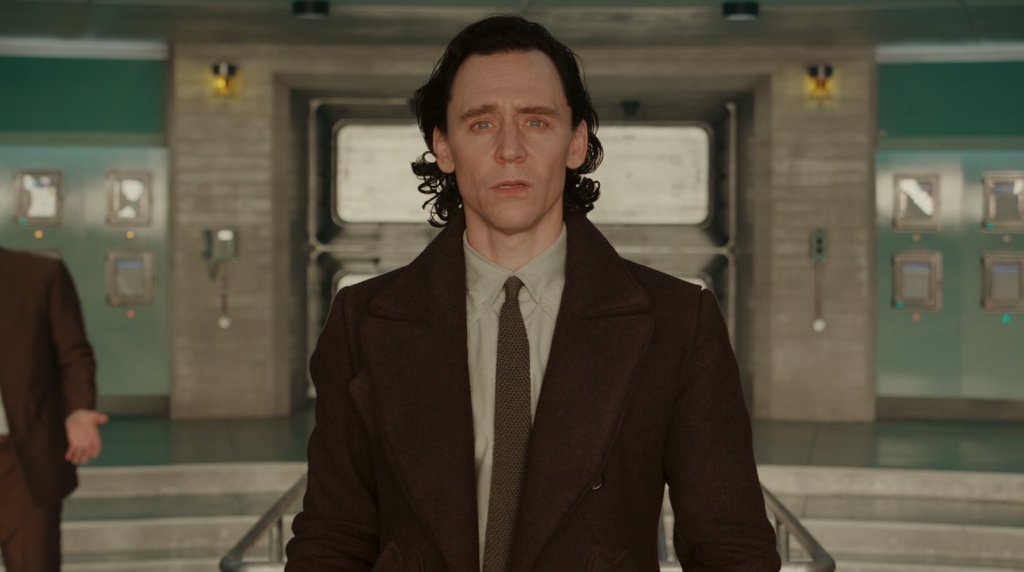
It’s no secret that since the launch of Disney+ required Marvel Studios to produce a litany of superhero series, the Marvel Cinematic Universe has been in a bit of an identity crisis, which is also partly due to how the Marvel films in the post-Avengers: Endgame era haven’t always felt like they were pushing the overarching story forward in exciting ways that also spoke to its characters and their growth. There are always exceptions — like Guardians of the Galaxy Vol. 3 on the film side or Wandavision on the streaming series side — but Marvel Studios has lately been feeling like it’s been stuck in mud, with the release of the star-studded but already forgotten Secret Invasion, which crash-landed, being a notable attempt that failed to really find an audience or audience excitement. Because of all of this it feels really good to be able to say that Loki: Season 2 is a return to form for Marvel — it’s a great show and one of the very best things that’s been put out by Marvel Studios since the release of the outstanding Avengers: Endgame.
Picking up right where season 1 left off, Loki: Season 2 opens with Loki (played by Tom Hiddleston), the Norse God of Mischief, in a TVA (Time Variance Authority) HQ that has changed drastically following the decision made by Sylvie (played by Sophia Di Martino) to kill He Who Remains (played by Jonathan Majors) and thus unleashing an intensely growing number of timelines — and making possible a multiversal war with variants of He Who Remains fighting for ultimate control. Loki finds himself slipping from past, present, and future and feeling like he is being ripped apart in the process. Loki must now find a way to stop himself from time slipping, but also warn the leaders of the TVA, including his friend Mobius (played by Owen Wilson), of the potential danger that He Who Remains’ variants pose.
In my review of the first season of Loki, I highlighted how the headquarters of the TVA has this impressive 1970s stuck-in-time aesthetic to it, and I greatly enjoyed spending more time with that look. Speaking of the visuals, I will say that the third episode leaned a bit too hard on the sepia tone for the purpose of establishing that the episode primarily took place in the past, but, in general, this is a really visually impressive show. The visual effects (e.g.,Loki’s terrifying time-slipping, the spaghetti-fication of characters and environments as they are erased from time, and the final green effects-heavy sequence) when paired with creepy sounds and Natalie Holt’s score help to create a haunting, mysterious, and often chill-inducing atmosphere that I thought was really special.
The season, once again, deals with the concept of multiverses and distinct timelines, but if I were to sum up the season with one concept it would be that of ‘ouroboros.’ Ouroboros is both the title of the season premiere, the name of Ke Huy Quan’s delightful character, and it also speaks to the timey-wimey-wibbly-wobbly nature of the season. While the previous season showed us multiple different types of Loki variants, this season is more so concerned with Loki travelling in time and being stuck in a Groundhog Day-esque loop. Ouroboros refers to an ancient symbol of a snake devouring its own tail, thus, in the show, symbolising the constant loop that Loki must try to control. This is a show concerned with infinity, free will, loneliness, friendship, and purpose. And, appropriately because of the focus on ouroboros, the title of the season finale — ‘Glorious Purpose’ — is also the title of the series premiere.
Through it all, we get to have so much fun with Tom Hiddleston’s Loki. Hiddleston has long been a fan favourite in the MCU thanks to his dedicated performances and him being in touch with his character — and in Loki: season 2, Hiddleston gets to take his character on one of the most satisfying character arc conclusions in the entire story collection of the Marvel Cinematic Universe. Owen Wilson still makes for a super entertaining partner with his feet planted on the ground to Hiddleston’s norse god. The addition of Ke Huy Quan to the cast is glorious as it allows for some deeply funny scenes because of how easily he fits into the tone of Loki and Mobius’ relationship that was established in season one. Where the season doesn’t always work as well is with supporting characters like Sylvie, B-15, and Ravonna Renslayer played by Sophia Di Martino, Wunmi Mosaku, and Gugu Mbatha-Raw respectively. Their character motivations don’t always seem clear, and the performers rarely have room to fully live up to the potential of their characters.
I should also mention the Jonathan Majors problem at the heart of the show. Once announced as the next great villain in the MCU, Majors — a really talented actor — was first introduced into the Marvel universe in Loki season 1, before he made a memorable appearance in Ant-Man and the Wasp: Quantumania. Majors gets to play two versions of the same character here in season two with each showcasing how he allows himself to take big swings with his character portrayals. But since Majors has found himself the subject of severe assault allegations his future as an actor and in this universe of stories has been called into question. I’m not going to speculate about whether or not he is guilty of wrongdoing — time will tell in a court of law — but what I will say is that these allegations did make his return to the show feel slightly uncomfortable. That said, the way this season of the show concludes, Marvel has an opportunity to course correct with his character, if they so desire, which I think is interesting.
I also think the way the show transforms itself is fascinating. The structure of the season is quite curious. In my social media notes for the show, I noted that the second episode felt like two episodes had been squeezed together, and I also noted how the fourth episode felt like a season finale that could potentially completely reboot the series. I wondered if the two final episodes could deliver on that exciting blank slate at the end of episode four, and I was so thrilled to see that the show delivered.
Like I wrote on Twitter, I thought the penultimate episode of Loki: season 2 — titled ‘Science/Fiction’ — was absolutely sublime. I was deeply fascinated by the development of the show’s timey-wimey nature, as well as the fact that the episode gave us different locales and aspects of the supporting cast of characters through the concept of time-slipping. It was at this point that, I think, the show’s visuals really blew me away with how chill-inducing they were. I found it to be an episode that elegantly and entertainingly put the puzzle pieces back together for a finale that would feature the titular character more powerful than ever before. It felt earned, and it was clear to see the kind of love that had been poured into the show.
The second season finale of Loki — again, appropriately titled ‘Glorious Purpose’ — was then absolutely phenomenal. Here it got the most out of the Groundhog Day-like mechanics with great musical choices and comedic beats. It all added up to a conclusion that was beautiful, tragic, and exactly how it should be. As mentioned previously, the show ties everything together in a way that makes it so that Tom Hiddleston, one of the shining lights of the MCU, is now one of the most fascinating characters in the entire franchise of stories with arguably the most satisfying arc.
The season as a whole was both powerful and poignant, as well as one of the best things Marvel Studios has put out in quite some time. And, frankly, the note that the show leaves us on — which could be the conclusion to the entire series, if they so desire — is in sync with the titular character and the trajectory of his arc since we were first fascinated by his complexities. The season’s conclusion speaks to the kind of outlook on his own potential that the character has been spouting off so many times previously. Burdened, indeed.
A-
– Review Written by Jeffrey Rex Bertelsen.

 I'm Jeffrey Rex
One thought on “Loki: Season Two (2023) | REVIEW”