
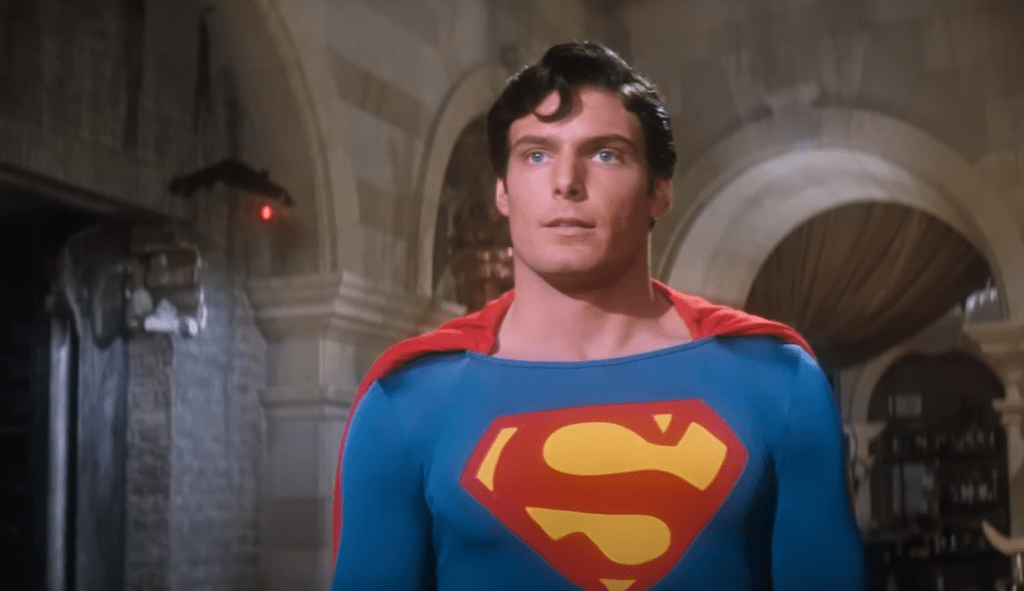
With a new film in theaters titled Superman, now feels like an appropriate time to take a closer look at the primary films that inspired it, namely the Christopher Reeve era of Superman films in the 1970s and 1980s. Below you’ll find reviews of both Superman: The Movie, Superman II, Superman III, and Superman IV: The Quest for Peace. But, as a special treat, I’ve also reviewed the 2006 Richard Donner cut of Superman II.
Superman: The Movie (1978)
Dir. Richard Donner.
Screenplay by Mario Puzo, David Newman, Leslie Newman, and Robert Benton.
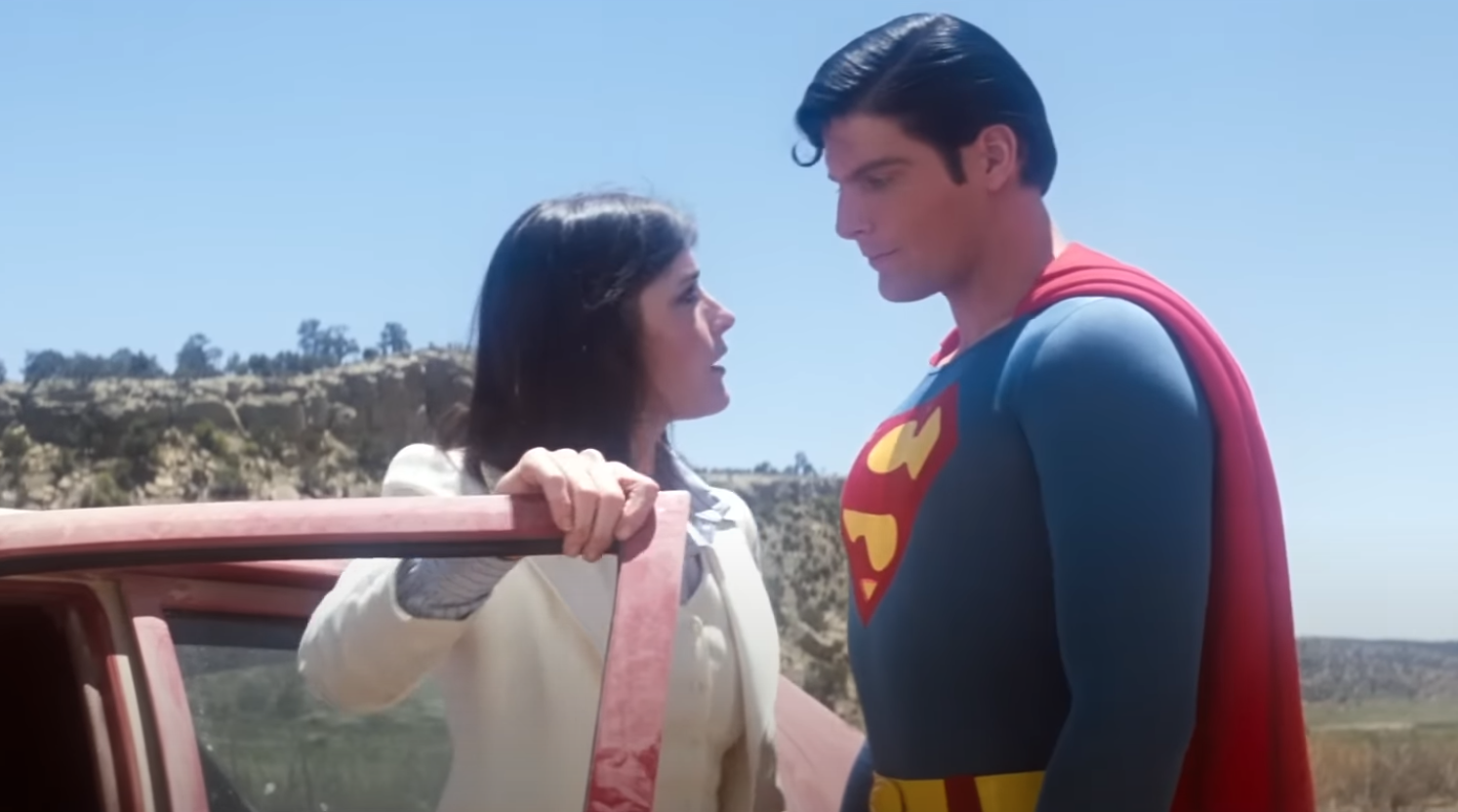
Although Kirk Alyn and George Reeves appeared as the titular character in film serials or shows, the proper feature-length theatrical film debut of Superman was in Richard Donner’s Superman: The Movie with Christopher Reeve as the titular hero (and Jeff East as the teenage version of the character, even though Reeve’s voice is used here as well). The film depicts the character’s origin story in relative detail with a lengthy opening detailing both his Kryptonian origin, with Marlon Brando’s Jor-El front and center, as well as a section of the film about his young adulthood in Smallville, Kansas, with his Earthbound adoptive parents, Jonathan and Martha Kent (played by Glenn Ford and Phyllis Thaxter, respectively).
Later, the film jumps forward to an adult Clark Kent (played by Christopher Reeve) being hired at the Daily Planet, where he quickly falls for reporter Lois Lane (played by Margot Kidder). As Clark doubles as a reporter and a superhero vigilante known as Superman, criminal mastermind Lex Luthor (played by Gene Hackman) has plans to target the San Andreas Fault with missiles. When Superman intends to confront him, he is shocked to find out that Luthor has acquired Kryptonite, a green meteorite that weakens Superman and lowers the probability that he can save the day.
From the outside looking in, Superman: The Movie is such a wild project. Here is a purely family-focused blockbuster flick from the director of The Omen, Richard Donner (who would go on to direct Lethal Weapon and The Goonies, among other things), the Oscar-winning writer of The Godfather, Mario Puzo, starring Oscar-winners like Gene Hackman and Marlon Brando, with music from John Williams, and with a colossal runtime of 143 minutes. But at the heart of it, you find then-relative unknowns like Reeve and Kidder. It’s a strange concoction, but it is also a magical one.
Superman: The Movie laid the foundation for the audiovisual pop culture understanding of the character for decades upon decades to come, featured quintessential character performances, and is full of iconic scenes and images. There’s the alley robbery, the helicopter, the fault line, and I could keep going. Like Star Wars before it, it is one of the decade’s most magical and imaginative works of cinematic fiction. Though certain visual elements, like the rear projection, don’t hold up perfectly today, the film still looks remarkably good, and you can’t miss how much money was put into it. The film also laid the foundation for all future superhero films going forward. It has both a lengthy section dedicated to a bang-on origin story, but also opens with immediate set-up for future films.
It has a Silver Age comic book tone running through it, with goofy character traits or sidekicks as well as an idealistic, saintly hero at the center. Donner was reaching for verisimilitude, and he gets about as close as he possibly could for 1978. It is astoundingly good. But, for me, the real magic of the film is in John Williams’ score, which you can basically sing along to (even though it has no lyrics, you can hear exactly when you’re meant to smile and cheer: “Superman!”), and in the performances delivered by Margot Kidder and, especially, Christopher Reeve.
Their dynamic and chemistry are so charming and have so much wit to them (there are even fairly risque jokes for that era, which I think is such a good choice). Kidder doesn’t get enough credit for how entertaining she is in this, and, frankly, my only real nitpick is that I think it feels off for Lois Lane to misspell words. Then there’s Reeve, who turns in one of the very best heroic lead performances of all-time. He sells every instant he’s on-screen as the idealistic picture-perfect version of Superman, and he is so much fun to watch as the deliberately goofy Clark Kent. As others have remarked, he has one of the most perfect scenes of physical acting in any superhero film here, when Reeve adjusts his stance and posture to switch between Clark Kent and Superman in one scene. It genuinely looks like a magic trick, and no one has ever been able to do that exactly like him. He’s flawless in this film. The tagline famously went: “You’ll believe a man can fly,” but let me say, Christopher Reeve is so good in his role that, when you see the film, you’ll believe a superhero can hide in plain sight.
Although I’ve given this a very high score, it isn’t without its flaws, which go beyond certain effects looking quite dated today. While I think the opening origin story is really capably executed with distinctive stylistic choices on Krypton, especially, I do think the first 40 to 45 minutes — i.e., right up until Christopher Reeve shows up on screen — flows somewhat awkwardly and is not as interesting to watch on rewatch. You feel this precisely because the rest of the film is so perfectly paced that you don’t ultimately feel the length of the runtime as much as the opening may have led you to believe. Like others have remarked, Marlon Brando’s performance both works and doesn’t work. While his presence does lend the film some gravitas, his performance is quite stiff. Then there’s the ending, which, although it is ultimately quite a satisfying note to end it, suffers from not making logical sense. It’s not just that he becomes overpowered here, but the internal rules of what he has achieved by turning back time are very unclear.
However, despite a few hiccups, so to speak, here and there, Richard Donner’s Superman: The Movie is sensationally good. Most of the film is paced extraordinarily well, the film features ‘all-timer’ performances, strong visual effects for its era, and it skillfully laid the foundation for the future of the superhero subgenre films to come. Oh, and it also just leaves you in such a good mood.
9 out of 10
Superman II (1980)
Dir. Richard Lester.
Screenplay by Mario Puzo, David Newman, and Leslie Newman.
Where do you even begin with Superman II? You’d think that a film sequel which was mostly shot back-to-back with the first film would be able to avoid major controversy or issues, but when the film wasn’t completed, grievances over the production of the first film ultimately ended up meaning that Richard Donner, the original director of the film was axed in favor of Richard Lester, the A Hard Day’s Night director, mid-production (when Donner had suppsedly finished 75% of the film). As a result, tonal changes were made, the original director’s vision was deliberately not fulfilled, and actors, some of whom chose not to return for reshoots, sometimes look different from scene to scene. Notably, some characters are sometimes played by body doubles or are dubbed in certain scenes, and Marlon Brando was cut out of the movie entirely over a pay dispute. Eventually, the chaos did birth a Richard Donner cut in the 2000s, but despite this and all the drama, the film was both a hit with critics and audiences.
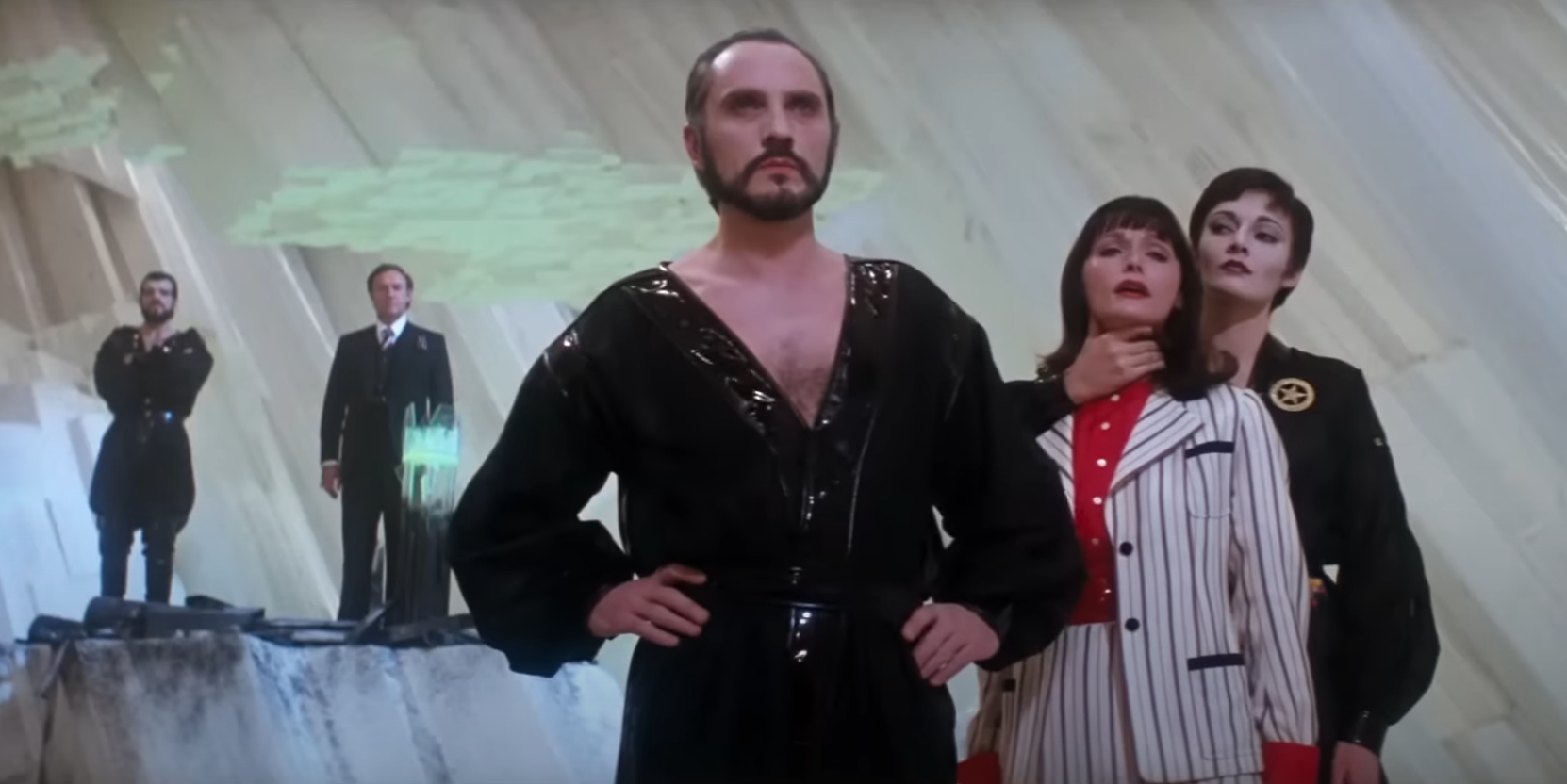
Set some time after the events of Superman: The Movie, Richard Lester’s Superman II follows Clark Kent / Superman (played by Christopher Reeve), as he tries to handle the double life whilst keeping it a secret. However, as a result of his growing love for Lois Lane (played by Margot Kidder), he is considering walking away from his superhero responsibilities if it means he can be with her. However, at the same time, General Zod (played by Terence Stamp) and his fellow Kryptonian criminals break free of the Phantom Zone when a bomb goes off in outer space, and they’re headed for Earth to secure world domination.
One of the first impressions I had rewatching the film was that, as they once again open with the story of Zod and his group’s banishment from Krypton, it is immediately apparent that something is off. Not only does it open with a goofy Kryptonian set scene where the group is apprehended (in a scene that features very dated green screen effects), but the subsequent sentencing, which we had already seen in the first film, is missing Jor-El all of a sudden (they try to introduce Superman’s mother as a character, but it just doesn’t work very well). It gets the film off on the wrong foot, especially when viewed today.
As the film progresses, it becomes clear that Lester opted to lean into the goofy and campy elements that were there in the first film. The opening Paris scene (which I actually enjoy somewhat), the Niagara Falls jump into the water, the hotel room scenes, the Lex Luthor breakout, and several moments with the Kryptonian brute are all instances when the film really leans into the campy aspect of the character, and while some of it works, it also goes a little bit overboard with the scene, like when Superman throws his logo and in several, continuous insert shots of crowd reactions during the third act. For me, it leans a little bit too hard in that direction primarily because most of the scenes with Terence Stamp’s Zod are played in a very serious, menacing manner. Terence Stamp is the main highlight of the film, for me. He really shines as this inverse version of Superman, who walks on water and demands that people kneel before him. It’s a delicious villainous turn, and even though I think Gene Hackman is even better in this film than he was in the previous film (despite sometimes being overdubbed in this version of the film), I am a little bit conflicted about how much we get of his character in this version of the film because it takes away from both Stamp’s thrilling performance and, notably, Clark and Lois’ dynamic.
Because one of the big issues with this film is that they’re simply not as good together here, and they don’t get enough time on-screen together to finish their relationship’s arc. When, eventually, Superman gives up his powers to be with her, it feels like they almost immediately get cold feet. Now, don’t get me wrong, I think the ‘hero prioritizes his own happiness over his responsibility’ is a tried and true formula that is compelling and that Sam Raimi’s Spider-Man 2 perfected, so I have some love for the subplot this film is trying to make work (and which it laid the foundation for Sam Raimi to be inspired by later). But this film rushes the subplot and fails to get the most out of it. It ends up feeling like a weird misstep because of the poor execution. That said, despite it generally being inferior to the first film, there is one area where it is an improvement on Superman: The Movie. Namely, the action. Superman actually has someone to fight in this film, and his foes are mostly really good. Sure, the action is dated, but I enjoy it all the same.
I do want to highlight some other issues (as well as some minor nitpicks) that I have with this film. For one, it bothers me that the film is wholly reliant on us not thinking about the fact that Superman should have superhearing. It makes little sense that he misses everything that is going on with Zod for so long. Secondly, I don’t think the film does a good enough job of communicating why he has to give up his powers to be with Lois Lane. I simply don’t buy it; it feels forced. I also just flat-out don’t think the ending works. I dislike that Superman II, like the first film, opts for a cheat in its ending. Back in the first film, he reversed time, and this time he removes a person’s memory. Not only does it once again make him overpowered, but it also feels really wrong to take away someone’s memory like that, especially given the nature of their relationship and what they did together. It also, sort of, makes everything the character went through feel pointless. I think Superman returning to beat up the rude diner patron was a bad move, as he’s essentially casually blowing his own cover. Oh, and though I’m sure it doesn’t stick out like a sore thumb as much to Americans, I think the extreme patriotism of Superman flying back the American flag to the US President is just too much.
Ultimately, I think it is, kind of, impressive that Richard Lester’s Superman II is as good as it is given its tumultuous production history. There are definite improvements to be found, as well as some really memorable performances. However, I do think the film is tonally misshapen and that it fails to properly execute the scenes featuring the central romantic partnership that the film is largely built on. It also feels like most of the things that work were actually scenes or performances delivered during Donner’s time on the project.
7.5 out of 10
Superman II: The Richard Donner Cut (2006)
Dir. Richard Donner.
Screenplay by Mario Puzo, David Newman, and Leslie Newman.
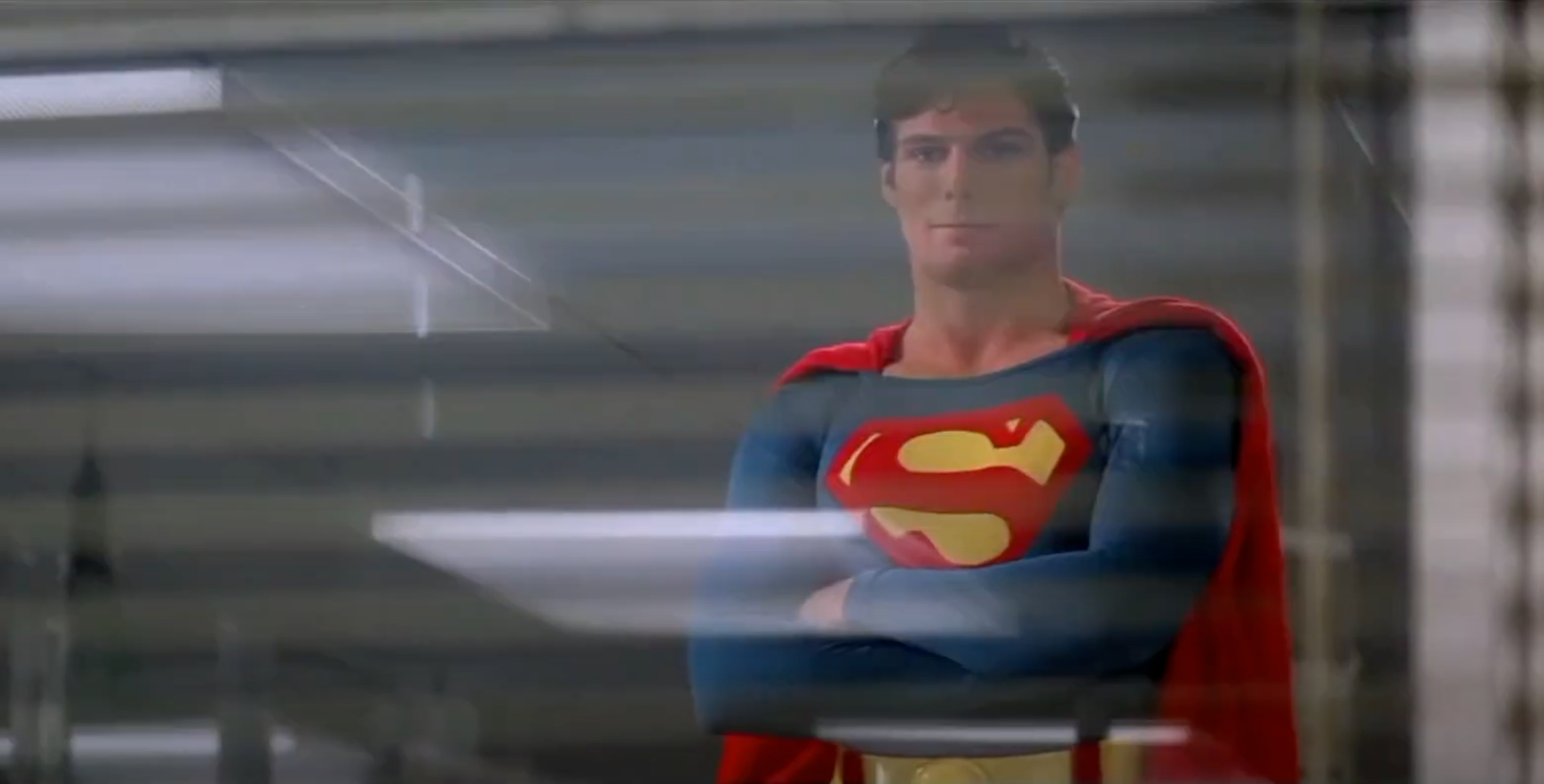
It’s important to mention that while Richard Donner is the credited director on this version of the film (and even though his name is a part of its title), it was primarily put together by Michael Thau, as Donner was mostly reluctant to take a very active part in toying with the film that was taken away from him once upon a time. Though he did supposedly sign off on this version, hence the title and credits. It should also be said that since Donner supposedly only finished 75% of Superman II back in the day, Thau had to merge Donner’s footage with some Lester material and some test footage. So, this must be regarded as more of a curiosity than a cohesive, complete film. Like Lester’s cut, the Donner cut is a patchwork. However, I have to admit that I do prefer Donner’s vision, despite some notable issues.
Though there are drastic changes (including being notably shorter), the basic premise remains the same as in the Lester cut. In Richard Donner’s Superman II, we follow Clark Kent / Superman (played by Christopher Reeve), as he tries to protect his secret identity while still pursuing a journalism career. However, as a result of his love for Lois Lane (played by Margot Kidder), Kent is considering walking away from his superhero responsibilities if it means he can be with her. Meanwhile, General Zod (played by Terence Stamp) and his fellow Kryptonian criminals are released from the Phantom Zone when a bomb goes off in outer space, and so they head for Earth to secure world domination.
The Donner cut restores the original opening scene from Superman: The Movie, which, like in the Lester cut, is what opens the film, though actually having Marlon Brando on-screen here in Donner’s version makes a positive difference. It’s a far less awkward opening, and instead, it feels like you’re on the same track that the previous film left off on. As the film properly begins on Earth, there are drastic changes. The Paris sequence is nowhere to be found in Donner’s version of the film, and while we do eventually see Niagara Falls, Lois doesn’t risk her life there. Instead, Donner’s version has Lois recognize that Clark is Superman in a way that makes her feel far more intelligent, and the way she tries to persuade Clark to reveal himself (here by jumping out of a window) makes for a much better scene.
I won’t go through each and every change in detail, but already in the changes to the opening described above, you can see a clear improvement that carries on through the rest of the film. Though Brando’s stiffness in the first film is a point of frustration for many, he improves every single scene that he is in compared to the Brando-less Lester cut. I also think his presence makes Christopher Reeve better in one key scene later in the film, where Reeve really gives it his all. The presence of Brando makes Reeve’s performance better, and the insistence on making Lois Lane smarter in this film improves your emotional engagement in their relationship. There’s a scene later in the film, which was clearly test footage shot when they were much younger, wherein Lois shoots at Clark to force him to prove that he is Superman, and she genuinely outsmarts him in a really clever way by revealing she was firing blanks. Although I still don’t think they have enough scenes together after he gives away his powers, this version of the film greatly improves their characters.
That said, many of my issues persist here. It forgets about his superhearing, he is still ridiculously overpowered, the final diner scene doesn’t make sense, and I don’t think it does a good enough job of establishing why he can’t just be with Lois and keep his powers. However, it does fix the tonal issues that Lester’s film has by removing most of the goofy humor or slapstick comedy. This makes Zod shine through better, and, frankly, I also think it helps to make Luthor’s involvement make more sense, as he and his crew fill out the role of the comic relief rather than having so much slapstick comedy around the film. Again, Hackman and Stamp are really great in this, and here Hackman is thankfully not overdubbed.
The biggest problem with the film, for me, though, is that it opts to end with the very same reverse time ending that Superman: The Movie had. Now, there is a fair enough reason for why that is, which is that they sought to complete Donner’s original vision for the sequel with the Donner cut, and the reversing time ending was originally meant for the sequel and not the first film. However, given that this film is still a sequel to the original Donner superhero flick, it feels really odd to have the same ending twice.
But, by and large, I think that Richard Donner’s Superman II is the superior version of the film, as it handles the tonal balancing act much better and improves upon not only the main performances but also the central relationship and characterizations. It’s very much a patchwork, but it is nonetheless a very good one.
7.9 out of 10
Superman III (1983)
Dir. Richard Lester.
Screenplay by David Newman and Leslie Newman.
Richard Lester’s Superman III follows Gus Gorman (played by Richard Pryor), a struggling American unable to find work until he turns out to be a computer genius, who is persuaded by billionaire Ross Webster (played by Robert Vaughn) into helping him accomplish his criminal schemes. Meanwhile, Clark Kent (played by Christopher Reeve) returns home to where he grew up in Smallville, Kansas, where he attends a school reunion. Here he meets his school crush, Lana Lang (played by Annette O’Toole), and they start spending time together. When Webster is concerned about what Superman could do to prevent him from getting what he wants, he has Gus synthesize Kryptonite. However, it has a strange effect on our titular hero.
After having just rewatched Superman III for the first time as an adult, the main thought that comes to mind, other than my own evaluation of the film, is that Superman III was all about replacements. After Superman II, director Richard Donner, co-writer Mario Puzo, co-star Marlon Brando, and co-star Gene Hackman opted not to have any creative involvement (though Hackman did return for Superman IV). In addition to this, Margot Kidder’s role was significantly diminished and, though they eventually succeeded in getting him to play the title role again, Christopher Reeve was reportedly unhappy with the creative direction of the film and there were supposedly talks about a plan b, if he opted not to come back.
Even with all of this drama and all of these significant changes, this film very well could’ve worked. ‘Replacement’ isn’t necessarily a negatively-loaded word. However, in the case of Superman III, all those changes ultimately led the project down the wrong path, and it all starts with the direction and writing. Without the pressure of having to finish another person’s work, returning director Richard Lester steered away from Donner’s epic verisimilitude approach and, instead, he took the slapstick comedy quirks that he inserted into the theatrical cut of Superman II and built Superman III with that sense of direction in mind. As a result, so much of the film is designed not to be majestic or true to life but rather with an improv comedian’s sensibilities and a reliance on comedic absurdities like seeing Metropolis, in the opening title sequence, fall apart with a slapstick-driven domino effect. This opening feels relatively indicative of the rest of the film; it’s the rest of the film in a microcosm. We’re left with maybe 20% of good Superman moments and then around 80% that is either slapstick comedy, bits that go on for too long, or uninteresting developments that’ll make your eyes glaze over.
Of course, a big problem is that the film is trying to be two different films at once. On the one hand, you have an almost television episode-esque plot (it even looks more like a TV show than a film, when you compare it to Star Wars: Return of the Jedi, which also came out this year) about Clark Kent going home to rekindle an old, small town romance and, on the other hand, you have a villain plot built entirely around Richard Pryor’s stunt cast co-lead appearance as a bumbling unemployed American turned criminal computer genius (with so many unconvincing and dated computer eleements to his narrative). Let me get one thing straight: I think Richard Pryor is a very funny comedy actor. But he should not have been in this movie (in moments, it feels more like a Richard Pryor movie than a Superman movie), and when you watch him in this, it’s like watching a top-tier comedian failing his prepared set or improvised comedy.
Pryor is surrounded by so many replacements. Robert Vaughn is just a rebranded, less interesting, and not nearly as funny version of Lex Luthor, and he is even surrounded by his own Otis and Ms. Teschmacher types, none of which are particularly memorable. So every time the film would cut from Christopher Reeve and to Pryor’s unsuccessful comedy or Vaughn’s faux-Luthor, I genuinely grimaced out of discomfort and dislike. Other than the writing with them (or improvisation) being bad, the connective tissue with the Clark Kent A-plot is also disappointing. Although there are a small handful of scenes of saving people, there isn’t a lot of action here, and the small amount of action that we get naturally in the narrative is obscured or hindered by the visual execution. There’s a long scene where we see the villains shoot at Superman with old video game-esque computer effects that don’t work, and then there’s the scene where, instead of showing Superman saving people from a catastrophe, we only get short glimpses and instead Lester opted to show Pryor explain what happened. It doesn’t work at all, and neither does the third-act computer-based climactic action.
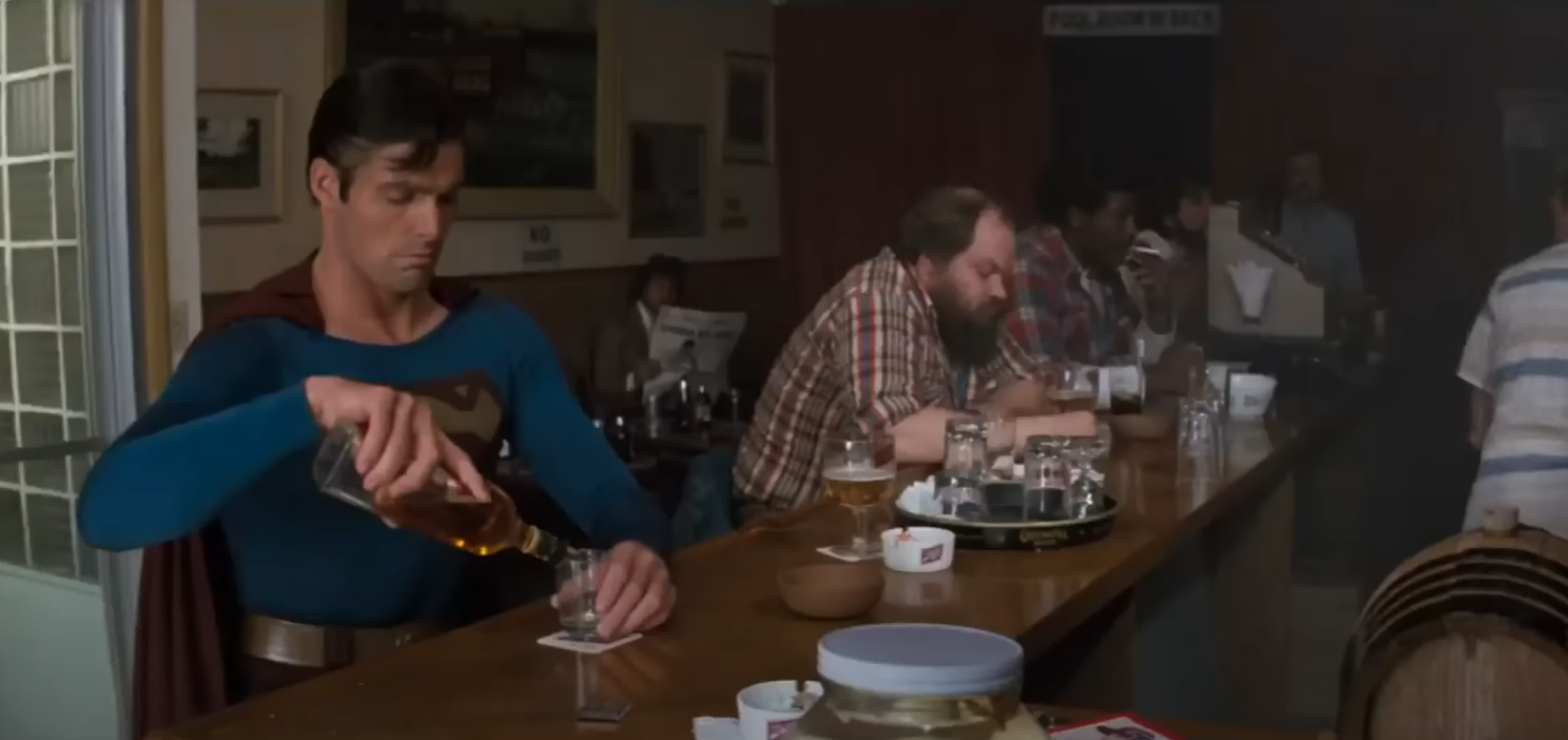
Don’t get me wrong, there’s also a lot that doesn’t work in the Clark Kent A-plot (e.g., sidelining Margot Kidder, turning the Daily Planet into an unnecessary vacation bit, and Clark Kent mistaking pâté for dog food and being overly goofy), but, at the same time, what little works in this film all happens in this part of the film. Although I miss Margot Kidder (who is in, like, two scenes), I genuinely enjoy Annette O’Toole in this film, and I enjoy the scene with Reeve’s Clark pretending to sneeze to save a kid’s reputation during bowling. I guess I should also mention that since the lack of a superhearing ability bugged me so much, it’s quite interesting that it makes such a prominent appearance here. Then there’s the concept of an increasingly corrupted Superman, which I think is easily the best part of the film. Although seeing Reeve fly around in a darkened Superman suit with five o’clock shadow to annoy people by moving the leaning tower of Pisa or blowing out the Olympic flame is very silly and laughable, I do kind of enjoy it as ‘a boy scout’s idea of being bad’ actions. And, although the junkyard sequence has odd elements, it’s also really well-executed, and Christopher Reeve is really good and transfixing here.
Those elements are what I want to remember this film for (as well as the elements that clearly inspired Marc Webb’s The Amazing Spider-Man 2 and Sam Raimi’s Spider-Man 3), but I have to say that I think the bad outweighs the good in this by a significant amount. Richard Lester’s Superman III shows that the people overseeing the creative direction of this franchise at this time took the wrong lessons from the production of Superman II. The film relies too heavily on sometimes even reality breaking, unsuccesful slapstick comedy (e.g., the green and red pedestrian traffic light men get into a fight in one of the film’s most stupid moments), focuses too much on its expensive guest co-lead star (whose comedy fails here), and fails to find anything visually interesting for Superman to do for most of the film. On the whole, it is a boring, uninspired, and unfunny sequel that fumbles almost everything that worked about the previous films, with only Christopher Reeve and Annette O’Toole standing out for positive reasons.
3 out of 10
Superman IV: The Quest for Peace (1987)
Dir. Sidney J. Furie.

Screenplay by Lawrence Konner and Mark Rosenthal.
Following negative reactions to Superman III and the commercial failure of Supergirl, the Salkinds — who had had the rights to, and creative control of, the Superman films starting with Richard Donner’s Superman: The Movie — opted to sell the cinematic rights to the Man of Steel to the Cannon Group (0f Cobra and Masters of the Universe fame, the latter of which was released a month after Superman IV). To get back a reluctant Christopher Reeve, Cannon supposedly gave him a hefty pay rise, in addition to financing a passion project of his (Jerry Schatzberg’s Street Smart) and giving Reeve the right of approval over story and director for Superman IV. Eventually, Cannon put The Ipcress File director Sidney J. Furie in the director’s chair, while Reeve got a story by credit for his nuclear arms race pitch.
Though Cannon also got Kidder, Hackman, and others to return, the film’s production was mired in controversy as producers opted to have the film shoot in England and, shortly before they started filming, the $36 million budget was shortened by more than fifty percent to $17 million. How obvious are these budgetary and location changes? To tell you the truth, unfortunately, it’s quite obvious, and I think the budgetary issues are the main reason why this film failed with as loud a thud as it did back in the day.
In Sidney J. Furie’s Superman IV: The Quest for Peace, when a kid sends Superman (played by Christopher Reeve) a letter asking him to find a solution to the nuclear arms race, our titular hero speaks before the United Nations, where he proclaims that he intends to remove all nuclear weapons from our world. Meanwhile, with the help of his nephew (Lenny, played by Jon Cryer), Lex Luthor (played by Gene Hackman) escapes confinement during forced labor, and now the ambitious master criminal has come up with a plan to create an equal to Superman, which he can control.
This is a Razzie-nominated film that is widely regarded as the worst film featuring Superman, so that this movie doesn’t work won’t surprise anyone. Nevertheless, I’d like to unpack where it falls apart. First and foremost, the visual effects are second-rate even for that era. The film reuses the same shot of Superman flying over and over again, the action fight scenes look rough and incredibly hastily made, and this film’s take on a Superman and Lois flying scene is such a serious step down from the one in Donner’s Superman: The Movie both visually and narratively that it will make your jaw drop (so, let me get this straight, Superman reveals himself to Lois again by putting her in danger, taking advantage of her, and then taking away her memory all over again? That’s horrendous).
Furthermore, not only is the dialogue generic and not thought out, but several scenes are just lesser versions of previous films. The narrative also has incredible leaps in logic, and you constantly get the feeling that there are scenes missing as the film rushes through its last half hour so fast that it feels like Superman is near death and with grey hair mere minutes after it looked like he was just suffering from a cold. Like with previous films, the film’s understanding of science is more than merely questionable, and its own internal logic also makes you raise an eyebrow. Then you have the actors, many of whom look like they’re on autopilot. Margot Kidder, especially, deserved so much better than what she was given to work with here. Also, despite the autopilot comment, I still think Christopher Reeve’s performance makes it out of the film alright in this, though, even if the writing lets him down.
All of that having been said, I do think there are glimpses that indicate that this could’ve been a pretty decent 1980s Superman sequel, if it had been given more of a chance with a higher budget, more time and money spent on visual effects, and with proper scenes included that would ensure that the film has that missing connective tissue. Though let’s be honest, that is a lot that would have to go in its favor, given how much Cannon botched this production. So, what works in Superman IV? Frankly, I think the film’s opening, maybe, twenty to twenty-five minutes, isn’t half bad. Unlike Superman III, this flick has a proper Superman opening title sequence, and the cosmonaut opening is a fascinating table setter, while the early scene on the Kent family farm does a decent enough job of setting a more serious tone than what Richard Lester opted for in the previous film. Though it should be said that it still features a lot of goofy moments (the double date conundrum is a quite silly television episode-type idea, but I actually think it is a very entertaining sequence), it is much less tonally misshapen than was the case in previous sequels.
I also think Christopher Reeve’s idea was a good one. To have this powerful alien decide to command the nations of the world that he will ensure his version of world peace by taking away their weapons of mass destruction is a complex narrative development that is far more interesting than what the previous films have been aiming for. Unfortunately, the excellent premise is let down by bad and sometimes nonsensical writing and overall poor execution. While a significant portion of the United Nations may be in favor of his idea, the film does not at all treat this rich idea with the kind of seriousness of thought that it merits. There would be riots, there would be uproar from certain political leaders, and there would be blowback, none of which this film is interested in tackling intelligently. In fact, modern Superman films, including James Gunn’s Superman, have clearly been inspired by these ideas and executed them much, much better. It’s interesting to view this as the cinematic superhero film originator of that idea, which even Captain America: Civil War toyed with, in a way. Although the film doesn’t have enough time to flesh it out at all, I also think the journalism subplot here was ahead of its time.
Although it is built on an intriguing premise and even though it strikes a better tone than the previous film, Sidney J. Furie’s Superman IV: The Quest for Peace fails to tackle its ideas with the kind of weight they merit. Furthermore, from a technical standpoint, it is as much of a trainwreck as its reputation suggests, with laughably bad visual effects, rushed pacing that indicates there are several missing scenes, and writing that betrays the film’s characters. Not only is it less polished than the previous film, but it feels chopped up and unfinished. As such, it is the technical low point of this era of Superman films. Ironically, however, even though Superman IV is the worst-made film of the bunch (hence the lowest final score), it is a more entertaining rewatch than the improv-heavy and tediously paced Superman III (though not always for the right reasons).
2.5 out of 10
– Reviews written by Jeffrey Rex Bertelsen.

 I'm Jeffrey Rex
2 thoughts on “Christopher Reeve’s Superman Films | REVIEWS”